


Marco Polo
The teenager who arrived in China
Today we can cross the planet in just a few hours. A plane takes off in the morning and, before the day ends, it can land on the other side of the world. But more than 700 years ago, traveling was a completely different adventure. There were no airplanes, cars, or trains. The roads were slow, dangerous, and filled with mountains, deserts, and unknown territories.
Even so, a teenager named Marco Polo decided to embark on one of the most extraordinary journeys in history.
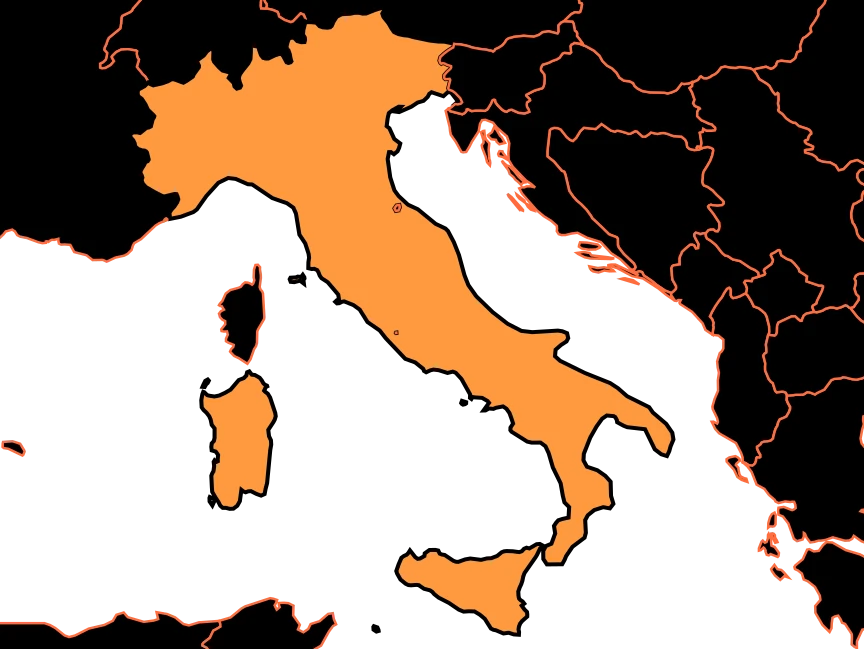
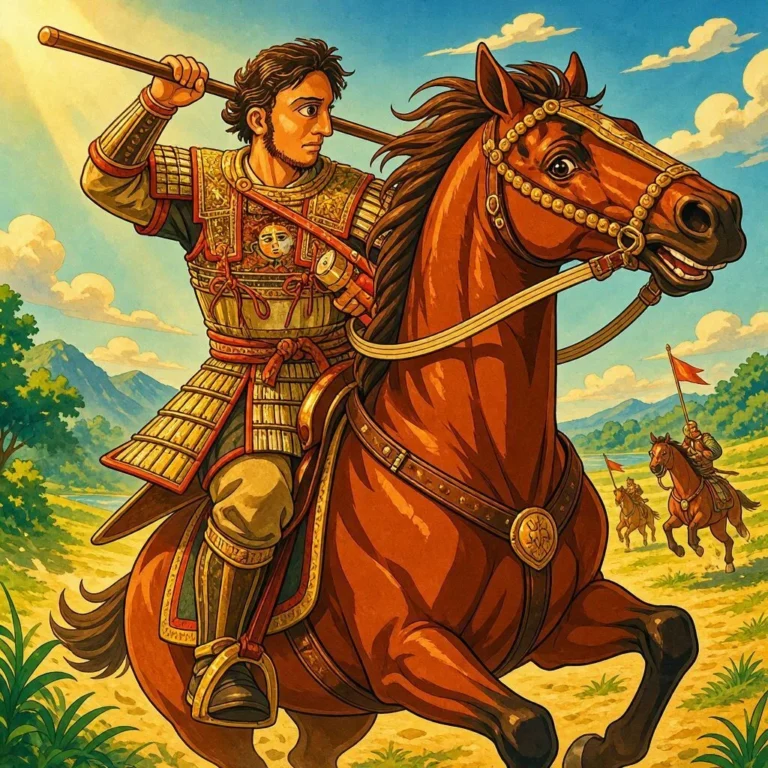
It all began in 1271, when he left Venice, Italy. He was about 17 years old and traveled with his father and his uncle. His destination was a place that almost no European knew anything about: China.
A journey into the unknown
The route did not follow a single path. For years, the family advanced along a vast network of trade routes known as the Silk Road, which connected Europe and Asia.
They crossed what is now Turkey, traversed Persia, and continued toward the immense mountains of Central Asia. Some days they walked under a scorching sun, and other days they endured the cold of the high peaks. They spent entire weeks without seeing any major city and depended on caravans to find water, food, and shelter.
One of the greatest challenges was crossing the Gobi Desert, one of the largest in the world. There, the landscape seemed never-ending. The wind raised enormous clouds of sand, and it was easy to lose the way. Each day presented a new challenge.
When Marco Polo left Venice, he was a teenager. When he arrived in China, he was already a young man who had traveled thousands of kilometers and seen landscapes that very few Europeans had ever witnessed.
Arrival at the court of the Great Khan
After nearly four years of travel, Marco Polo finally arrived at the court of Kublai Khan, emperor of the vast Mongol Empire.
Everything was different. The cities were enormous, the palaces impressive, and the markets were filled with products unknown to a European. There were silks of every color, spices with new aromas, and objects Marco Polo had never imagined.
Kublai Khan was impressed by the young traveler’s curiosity and intelligence. For many years, he entrusted him with missions throughout various regions of the empire. Thanks to this, Marco Polo traveled through much of China and visited places that almost no European had ever seen.
A world full of surprises
Marco Polo discovered a country far more advanced than what was imagined in Europe.
He saw huge canals where boats loaded with goods sailed, gigantic bridges, and cities with hundreds of thousands of inhabitants. He also learned about paper money, something that seemed incredible to Europeans, who were used to paying only with metal coins.
He explained how the emperor’s postal system worked, described the use of coal for heating, and spoke of products like silk and spices, which traveled thousands of kilometers before reaching Europe.
When he returned home, many people thought he was inventing those stories. It seemed impossible to them that such large cities existed or that a simple piece of paper could be used as money. However, time proved that many of his descriptions were completely true.
The long journey back
After spending almost 17 years in Asia, Marco Polo began the return trip. This time he returned by sea. He sailed through Southeast Asia, crossed the Indian Ocean to Persia, and from there continued overland along the ancient trade routes until he reached Venice again. When he got home, 24 years had passed since his departure.
A journey that sparked Europe’s imagination
Marco Polo wrote a book recounting everything he had seen during his adventure. His stories allowed Europeans to discover an almost unknown continent and sparked the curiosity of merchants, explorers, and navigators.
Many years later, Christopher Columbus carried a copy of that book with him when he set out on his own journey westward, searching for a new route to Asia.
Although some details of his story are still debated by historians, no one doubts that his adventure was extraordinary.
Why does he remain famous?
Marco Polo did not conquer empires or lead great armies. His greatest achievement was daring to travel to the other end of the world and return to tell what he had seen.
While most young people of his time barely knew the cities near their homes, he crossed entire continents, traversed some of the most difficult landscapes on the planet, and reached the court of the most powerful man in Asia.
His story shows that curiosity can take us much further than we imagine. Even to the other side of the world.