

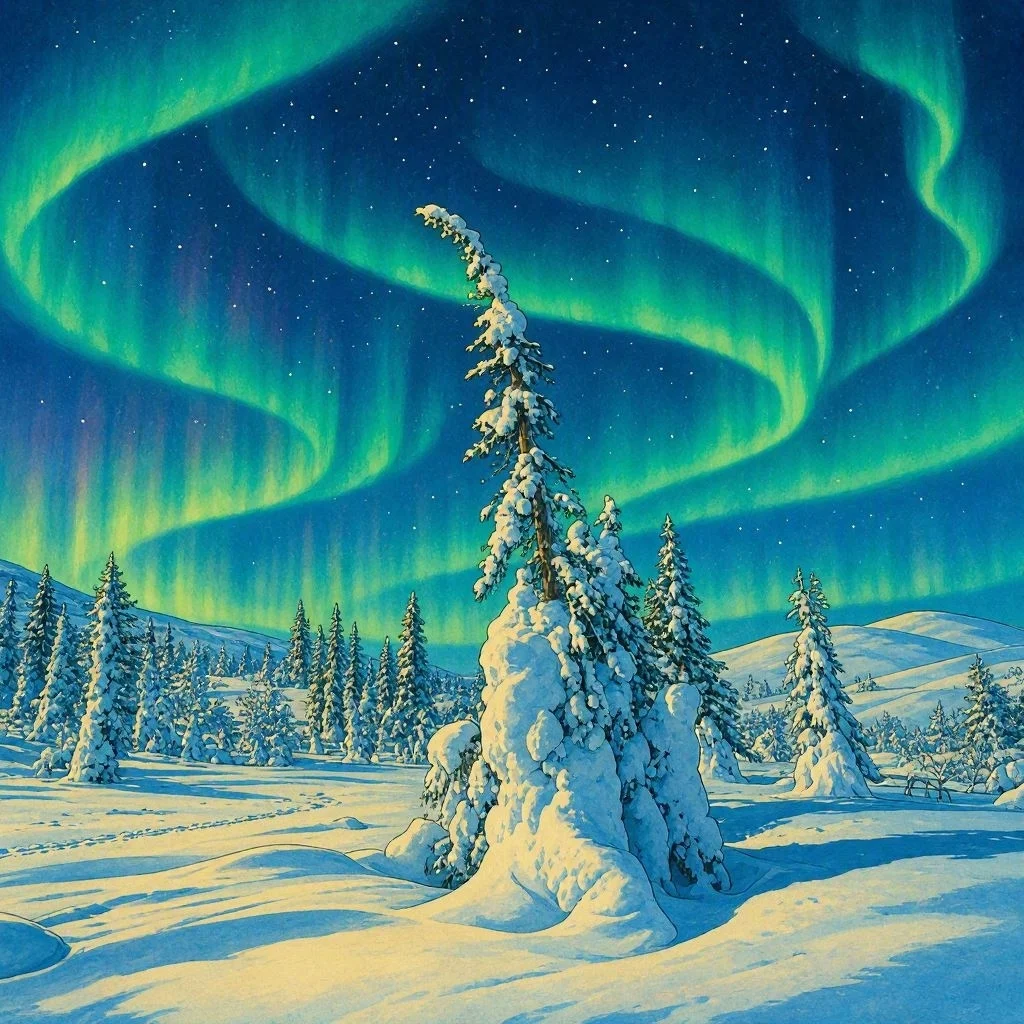
Lapland
The place where the Sun never sets
For weeks, the sky in Lapland can remain lit at midnight. You can check the clock, see that it’s twelve at night, and still find the Sun shining over the landscape. It seems impossible, but it’s one of the great demonstrations of how our planet works.
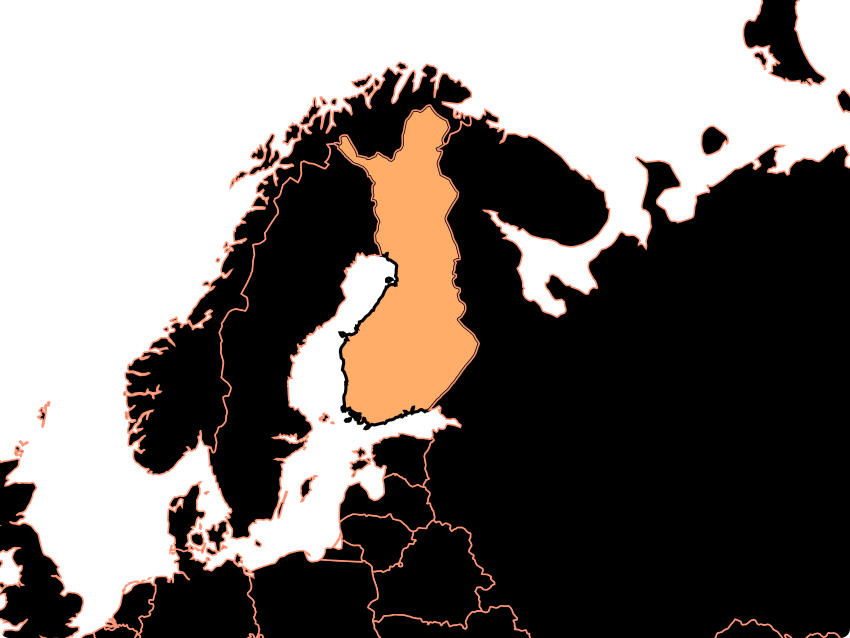
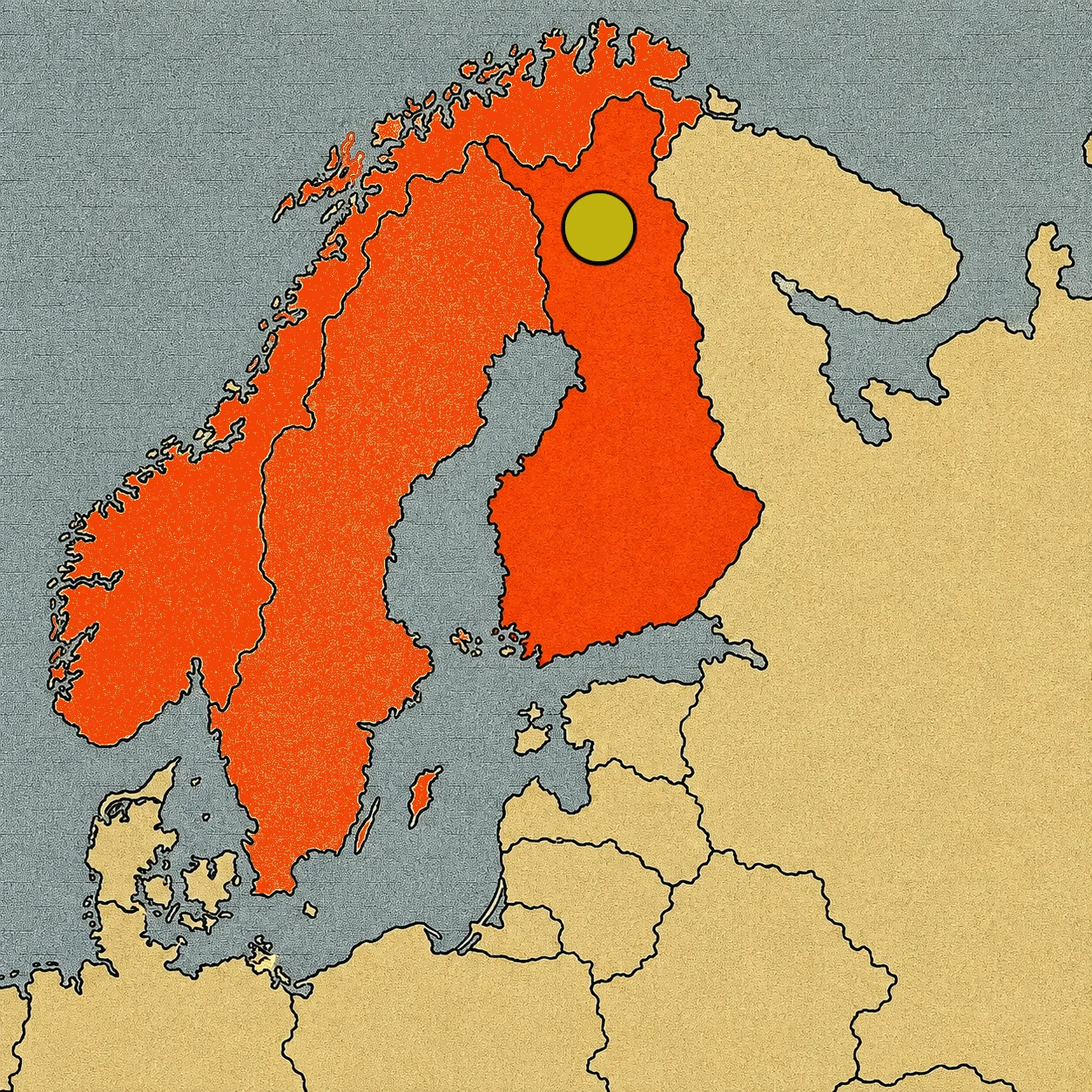
Lapland stretches across northern Finland, Sweden, Norway, and part of Russia. There, near the northern tip of Europe, a phenomenon occurs that completely transforms the idea we have of day and night: the midnight sun.
The Earth is tilted
The explanation begins far away from Lapland, although it is actually right beneath our feet. The Earth spins on its axis, but its axis is not completely vertical relative to its orbit around the Sun. It is tilted by about 23.5 degrees.
That tilt is responsible for the seasons. When the Northern Hemisphere is tilted toward the Sun, it receives more hours of daylight, and summer arrives. At the same time, the Southern Hemisphere receives less light, and it is winter there.
But the further north we travel, the more extraordinary the effect becomes. There is an imaginary line called the Arctic Circle, located approximately at 66.5 degrees north latitude. Crossing it to the north, places appear where, during part of the summer, the Sun can stay above the horizon for all 24 hours.
How can it be night and day at the same time?
Imagine you are in Lapland in the middle of summer. During the afternoon, the Sun slowly sinks toward the horizon. You expect it to disappear as it does in any other city. But it doesn’t disappear.
It gets close to the horizon, seems to graze it, and then starts climbing again. Midnight arrives while the sky continues to be lit. There is no sunrise and sunset separated by a dark night: the Sun simply makes a huge loop across the sky.
This happens because, during the Northern Hemisphere’s summer, the upper part of the Earth is tilted toward the Sun. In regions located inside the Arctic Circle, that tilt allows the Sun to remain above the horizon for a whole day. And the further north you are, the longer it can last.
Weeks of light
The duration of the phenomenon depends on latitude. In places located right near the Arctic Circle, it can last about a day. Further north, the period increases.
In the far north of Finland, for example, the Sun can remain above the horizon for several weeks. Near the North Pole, the situation reaches an extreme: the Sun can stay above the horizon for approximately six months.
Then the opposite happens. When winter arrives and the Northern Hemisphere is tilted away from the Sun, some Arctic regions can go days or even weeks without the Sun appearing at all. This is the polar night.
So Lapland can offer two completely opposite experiences: a summer where night seems to disappear and a winter where day can disappear for long periods.
A Sun that never truly leaves
The midnight sun also doesn’t mean the sky always looks the same as it does at noon. In many areas of Lapland, the Sun stays quite low during midnight. That creates a special light. The landscape can take on golden, orange, and reddish tones while the clock strikes twelve. Then, the light slowly changes and increases again. It’s as if sunset and sunrise have merged into a single spectacle.
For someone used to living far from the Arctic, it’s hard to imagine. Our brains automatically associate darkness with night. That’s why, when the sky is still lit at midnight, the clock seems to be wrong. But the clock is right.
The forest notices the difference too
Constant light doesn’t just surprise people. It also changes the lives of plants and animals. During the short Arctic summer, many plants take advantage of the long hours of daylight to grow quickly. The landscape of Lapland transforms: flowers, insects, and intense activity appear in forests, lakes, and wetlands.
Animals also take advantage of this time of year to feed and reproduce before the long winter returns. Among the best-known inhabitants are reindeer, which are also fundamental to the culture of the Sámi people, who have lived for centuries in various areas of northern Europe.
For them, the rhythm of the light is not a tourist curiosity. It is part of the environment where their lives, migrations, and traditional activities have developed.
Sleeping when the sky looks like daytime
For visitors, the midnight sun poses a rather curious problem: how do you know it’s time to sleep if it looks like daytime outside? The human body uses light and darkness to regulate its daily rhythms. When it doesn’t get dark for hours, some people may have trouble knowing when night has arrived.
That’s why very thick curtains, blinds, and other systems are used in homes and accommodations in the north to block out the light. It’s a small example of how humans modify our environment to adapt to extraordinary natural phenomena.
The invisible border of the Arctic
One of the most surprising things is that the Arctic Circle cannot be seen. There is no wall, no fence, and no painted line on the ground. It is an imaginary mathematical border that roughly marks the latitude starting from which at least one day of midnight sun and one polar night can occur each year.
It’s another reminder that maps are full of lines that don’t physically exist, but that help us understand the planet.
An out-of-this-world experience
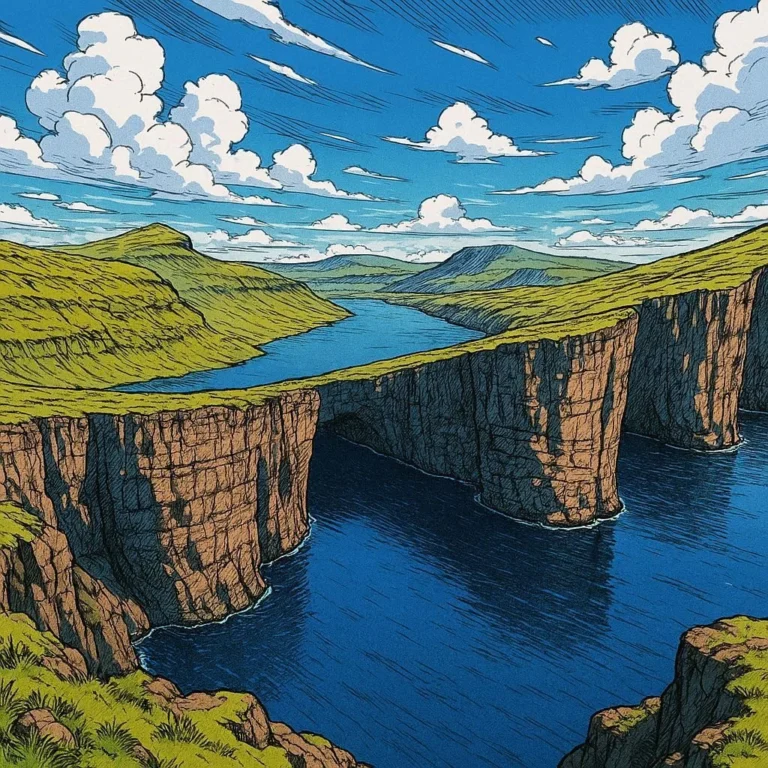
Imagine walking through a Lapland forest at midnight. There are lakes, trees, and hills all around. The clock says the day should be over, but the sky is still lit.
You don’t need a spaceship to experience something that feels otherworldly. The midnight sun turns a simple summer night into a completely different experience and lets you see, with your own eyes, a consequence of the Earth’s tilt. Because there are few places on Earth where you can check the clock, discover it’s midnight, and, upon looking up, find the Sun still in the sky.