

Alexander the Great
The young king who changed the maps
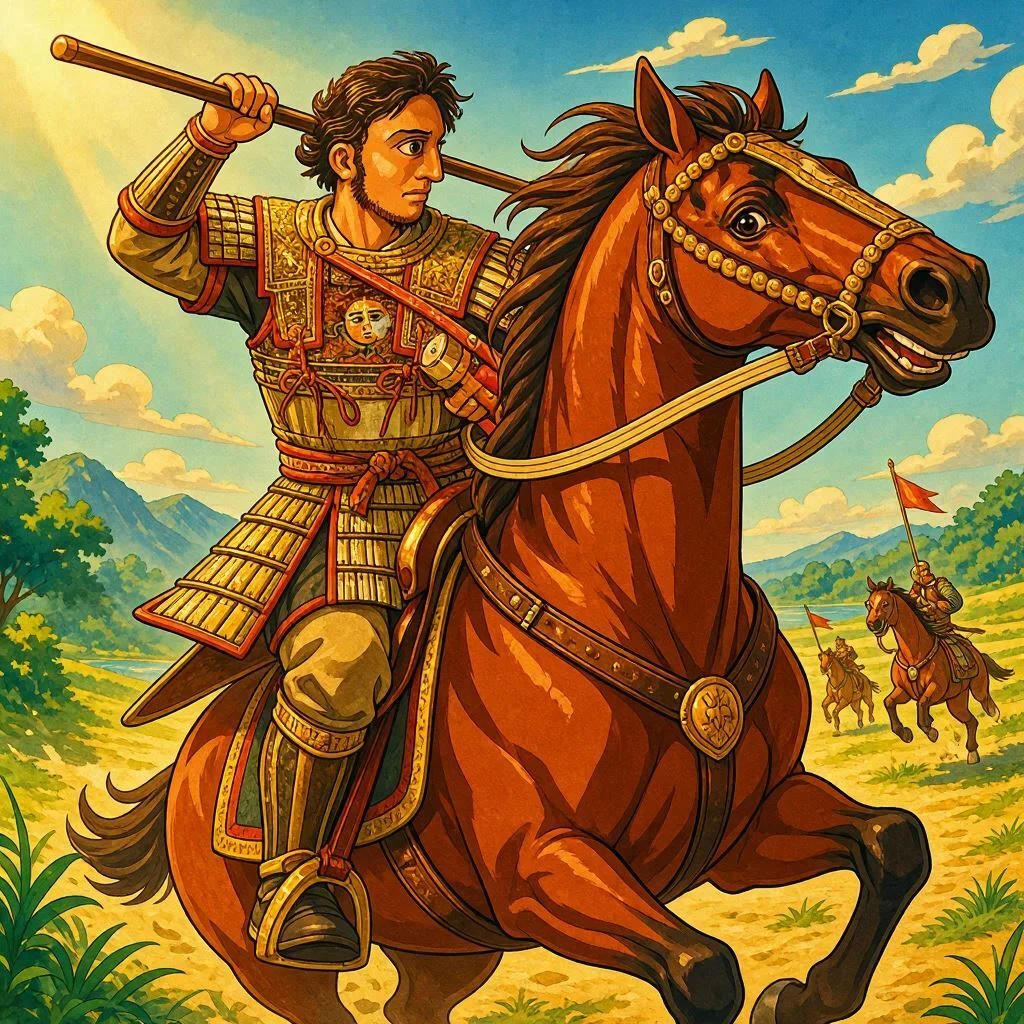
Imagine being 20 years old and becoming a king. Now imagine that, instead of staying in your kingdom, you gather an army and begin advancing toward one of the most powerful empires on Earth. That is what Alexander the Great did.
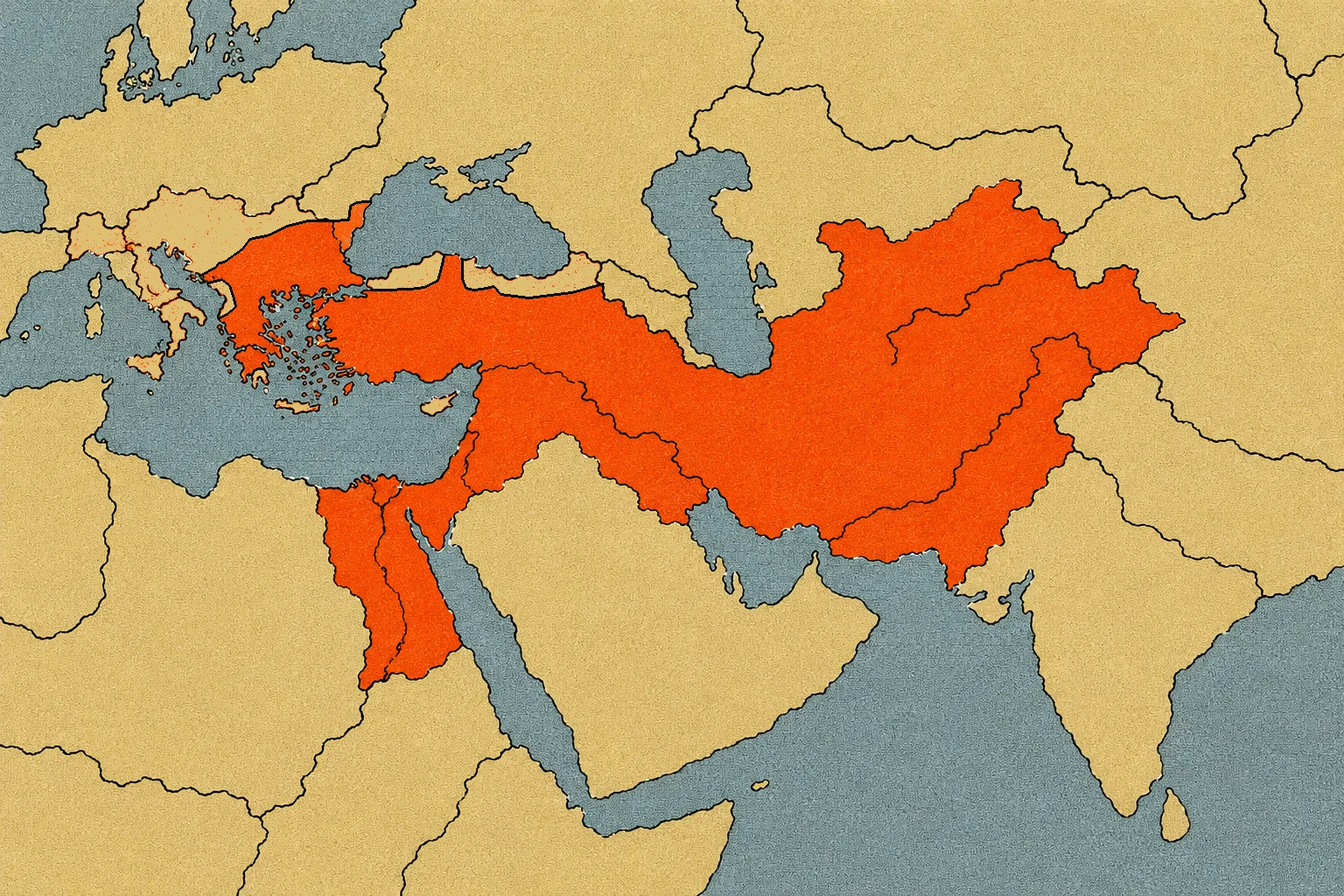
In just over a decade, he traveled thousands of kilometers, defeated huge armies, and extended his rule from Greece to India. His campaigns changed borders and brought cultures into contact that until then had been separated by huge distances.[1]
A 20-year-old king
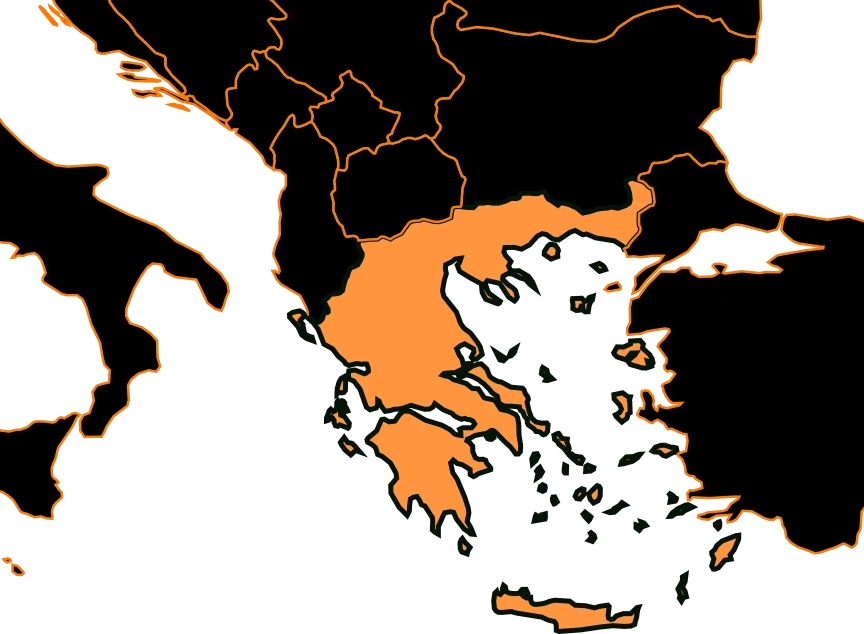
Alexander was born in 356 BC in Pella, the capital of the ancient kingdom of Macedonia. He was the son of Philip II, one of the great kings and military leaders of his time.[1]
His education was also extraordinary. During part of his youth he received teachings from Aristotle, one of the most important philosophers of Antiquity.[2]
In 336 BC, Philip II was assassinated and Alexander, at only 20 years old, became king.[1] His position was dangerous. Some Greek cities tried to take advantage of Philip’s death to rebel, but Alexander acted quickly and consolidated his authority.[1] Then he looked to the east.
The great enemy: Persia
On the other side of the Aegean Sea was the Persian Empire, a huge power that controlled territories from Asia Minor to Egypt and far beyond.[3] Alexander began his great campaign against Persia in 334 BC. He crossed the Hellespont, the strait we know today as the Dardanelles, and entered Asia with his army.[1]
His first major clash was the battle of the Granicus River. Alexander achieved victory and opened the way to Asia Minor.[1] But that was only the beginning.
A battle that changed the course
In 333 BC, Alexander faced the Persian king Darius III at the Battle of Issus.[1] The Persian army was huge, but Alexander managed to defeat it. Darius fled, leaving behind his family, who were captured by the Macedonians. Alexander, according to ancient sources, treated the Persian royal family with respect.[4]
After Issus, Alexander continued south. He conquered cities on the Mediterranean coast and reached Egypt.
The pharaoh who came from Macedonia
In Egypt, Alexander was welcomed as a liberator from Persian rule and was recognized as pharaoh.[5] There he founded a city that would bear his name: Alexandria. The city was located next to the Mediterranean, in a strategic position. Over time it would become one of the great cultural and commercial centers of the ancient world.[5]
Alexander also visited the famous oracle of Amun in the Siwa oasis. The experience helped reinforce his image as a ruler chosen by the gods.[4] But he did not stay long in Egypt. His goal was still Persia.
The battle that decided an empire
In 331 BC, Alexander and Darius III faced each other again. This time it was at Gaugamela, in modern-day Iraq.[1] The battle was decisive. The Persian army was superior in number, but Alexander used cavalry movements and carefully coordinated maneuvers to break through the enemy lines.[4] Darius escaped again.
After Gaugamela, Alexander entered Babylon and later occupied important cities of the Persian Empire, among them Susa and Persepolis.[1] The huge empire that had seemed almost impossible to conquer was falling under his control.
To the end of the known world
But Alexander did not stop. He continued into Central Asia, crossing difficult territories and facing increasing resistance.[1] He founded new cities and established settlements in different regions. He also incorporated local soldiers and administrators into his huge imperial structure.[6]
His army kept advancing east. In 326 BC, Alexander crossed the Indus River and faced King Porus at the Battle of the Hydaspes.[1] It was an especially difficult battle. Porus’s army even used war elephants, animals the Macedonians were not used to encountering in their previous campaigns.[4]
Alexander won again. And he wanted to keep going.
When the soldiers said enough
But this time his soldiers were not willing to go on. They had been away from their homes for years. They had traveled thousands of kilometers and participated in numerous battles. When Alexander wanted to continue east, his troops refused to advance beyond the Hyphasis River, in the region of the modern-day Beas River.[7]
Alexander had to accept their decision. The army then began the long journey back. That demonstrates something important: even the conqueror who seemed to have no limits had a limit he could not surpass.
A gigantic empire
When his campaign ended, Alexander’s rule stretched from Greece and Egypt to Central Asia and the northwest of the Indian subcontinent.[1]
Pero su conquista no significó simplemente dibujar nuevas fronteras. Durante sus campañas, griegos y macedonios entraron en contacto con pueblos de Egipto, Persia, Asia Central y la India. Se fundaron ciudades, se mezclaron tradiciones y el griego se convirtió en una lengua muy importante en amplias zonas del Mediterráneo oriental y Asia.[6]
After Alexander, that blended world received the name of the Hellenistic world. Its influence would last for centuries.
The map after Alexander
Alexander died in Babylon in 323 BC, when he was only 32 years old.[1] His empire did not stay united. His generals fought for control of his territories and ended up dividing them into different kingdoms.[6]
However, something had changed forever. The routes between Greece, Egypt, and Asia were now more important. The cities founded during his campaigns connected distant regions. Ideas, languages, goods, and customs could travel across a much larger space.
Alexander did not personally draw all those maps. But his campaigns made maps have to be redrawn.
Sources:
- Life of Alexander, military campaigns, conquests, and death in Babylon — https://www.britannica.com/biography/Alexander-the-Great
- Alexander’s education and relationship with Aristotle — https://www.worldhistory.org/Alexander_the_Great/
- Extent and organization of the Persian Empire — https://www.britannica.com/place/ancient-Iran
- Alexander’s campaigns, Issus, Gaugamela, Persia, and relations with conquered populations — https://www.worldhistory.org/Alexander_the_Great/
- Alexander in Egypt and foundation of Alexandria — https://www.britannica.com/biography/Alexander-the-Great
- Cultural expansion and formation of the Hellenistic world after Alexander — https://www.metmuseum.org/toah/hd/haht/hd_haht.htm
- Army mutiny at the Hyphasis River and end of the expansion toward India — https://www.livius.org/articles/person/alexander-the-great/alexander-3.20/