
Mont-Saint-Michel
The city that turns into an island
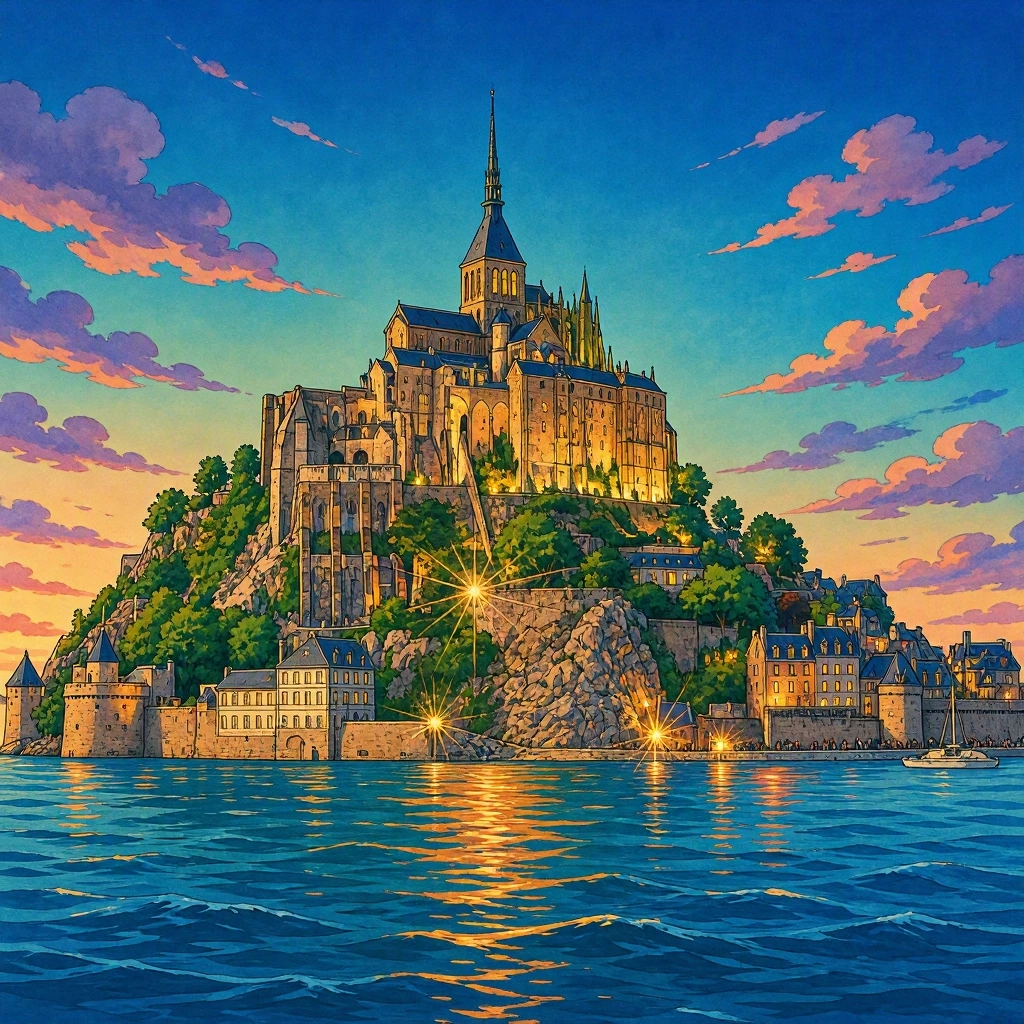
Imagine you are walking along a huge beach when, in the distance, a stone mountain appears, crowned by an abbey with pointy towers. At its feet, houses, narrow alleys, and defensive walls are piled together. It looks like a castle straight out of a fairy tale, but there is something even stranger: when the tide comes in high, water can completely surround the mountain and turn it into an island.
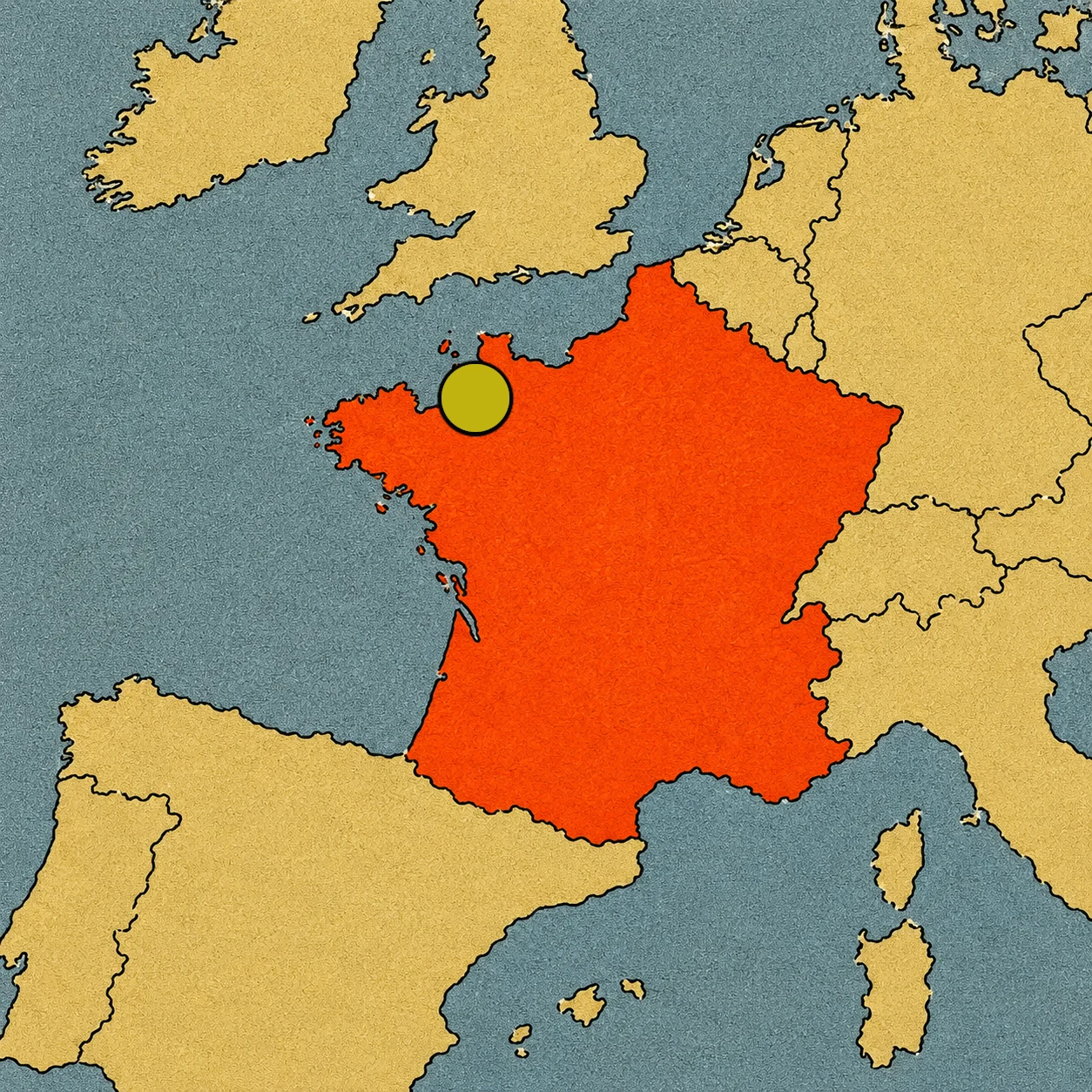
This place is truly real, and it is called Mont-Saint-Michel. It is located on the coast of Normandy, in France, near the border with Brittany. Its silhouette has been amazing travelers, pilgrims, and artists for centuries. But it is not just pretty: it is a place where nature, architecture, and history have blended in an extraordinary way. The abbey was built and expanded between the 11th and 16th centuries, making the most of every corner of a rock that offered very little space to erect buildings.[1]
A mountain with a special mission
The story of Mont-Saint-Michel begins with a legend. It is said that in the year 708, the archangel Michael appeared in a dream to Aubert, bishop of Avranches, and asked him to build a sanctuary in his honor on that rock. According to tradition, Aubert received the message several times before deciding to fulfill it.
What we know for sure is that in the year 966, a community of Benedictine monks settled there. Over time, the small sanctuary grew into a large abbey and an important medieval pilgrimage destination.[2]
Pilgrims came from different places to pray and pay homage to the archangel Michael. The journey could be long and difficult, especially because the bay changes constantly with the tides. Little by little, a village emerged at the foot of the abbey, with houses and businesses that served those who arrived. Thus, a settlement was born that grew around a religious center located in an almost unbelievable spot.
A town that climbs toward the sky
As you approach, perhaps the first thing you will notice is the spire of the abbey, which seems to point directly at the clouds. But upon entering the village, you will discover that the path to the top is an adventure in itself.
The main street climbs among old houses, small shops, and stone buildings. From it, stairs and passageways branch off, leading toward the walls and the upper levels. As you climb, the views change: first you see the rooftops of the village; then the stone defenses; higher up, the bay opens up in all directions.
At the top is the abbey, built on different levels to make the most of the rock’s limited space. Its churches, halls, staircases, and galleries display different architectural styles because each generation added or modified parts of the complex. One of its most famous spaces is La Merveille (The Wonder), a set of Gothic buildings erected on the north side of the mountain during the 13th century. Its different floors housed spaces for monastic life and for welcoming visitors.
Building such a complex on an irregular rock was a huge challenge. Instead of spreading out over a wide terrain, the builders had to take advantage of the slopes, lean on the rock, and stack buildings one on top of another. The result looks like a vertical city, as if the houses and the abbey were climbing the mountain.[1][2]
The sea that appears and disappears
The true spectacle of Mont-Saint-Michel does not depend solely on its buildings. The ocean also plays a starring role.
The bay has very intense tides. When the water level drops, vast areas of sand and sediment appear, and the mountain is surrounded by a landscape that looks like an endless beach. When the tide rises, the water advances and can isolate the Mount from the surrounding land.
During exceptional tides, the sea can retreat up to about 15 kilometers in some sectors of the bay. Then it returns, and the landscape changes its appearance in just a few hours. The rise of the water can reach an average speed close to six kilometers per hour under certain conditions. That is why crossing the bay without knowing the terrain is dangerous: soft spots, channels, and areas that flood quickly can hide beneath the sand.[3]
And why does the sea rise and fall? Tides are produced mainly by the gravitational pull of the Moon and, to a lesser extent, the Sun, along with the movement of the Earth. The shape of the coastline and the seabed influences how the water behaves. In this bay, those conditions can generate very large differences between high and low tide.
A fortress surrounded by water
During the Middle Ages, Mont-Saint-Michel was not just a religious place. It also held a very valuable defensive position. Its walls, its narrow entry points, and the difficulty of approaching it during certain tides helped protect it.
During the Hundred Years’ War, which pitted the kingdoms of France and England against each other for long periods, Mount Saint-Michel withstood English attacks and became a symbol of resistance for the French. The combination of fortifications and tides made conquering the place especially difficult.[2]
But its history was not always heroic. During the French Revolution and the 19th century, the abbey was used as a prison. It came to be known as the “Bastille of the Seas.” In 1863, the prison closed, and efforts began to restore and preserve the monument. The place that had welcomed pilgrims and monks began to attract more and more visitors interested in its architecture and history.[2]
Did it stop being an island?
For a long time, getting to Mont-Saint-Michel was complicated. In 1879, a raised road was built that allowed easier access, but it also altered the natural movement of the water and encouraged the accumulation of sediments around the mountain.
Over time, the landscape lost part of its insular character. To recover it, major works were carried out: the raised road was replaced by a footbridge, and hydraulic facilities were built, including a dam on the Couesnon River, which help clear sediments from the bay. The main construction work was completed in 2015.
Today, visitors arrive on foot or use a shuttle service from the access area. The footbridge makes it possible to reach the mountain without blocking the water’s flow as much, and the tides can once again surround the Mount during the most intense episodes.[1]
A city that defies nature
Mont-Saint-Michel looks like something out of a fantasy world: a medieval city with houses, walls, and a huge abbey, built on a rocky islet that the sea continuously transforms. When the tide rises, the water can surround the mount and temporarily isolate it; when it recedes, expanses of sand appear, allowing you to contemplate the landscape from another perspective.
What is extraordinary is that everything functions in a tiny space, where every street, every staircase, and every building seems to climb toward the peak. It is not a city built on just any mountain, but a place where architecture had to adapt to the tides and the terrain. A corner where land, sea, and human ingenuity combine to create a landscape that seems impossible to exist.
Sources
- UNESCO: Mont-Saint-Michel and its Bay, architecture, landscape, and restoration works — https://whc.unesco.org/en/list/80/
- Mont-Saint-Michel Abbey: history of the monument — https://www.abbaye-mont-saint-michel.fr/en/discover/history-of-the-monument
- Mont-Saint-Michel Abbey: the high tides — https://www.abbaye-mont-saint-michel.fr/en/discover/the-high-tides