
Chambord
The Impossible Staircase
Imagine you are playing hide-and-seek in a castle and decide to go up a staircase while your friend uses the exact same one to go down. You catch glimpses of each other through windows, hear each other’s footsteps, and think you are about to meet… but you never actually cross paths!
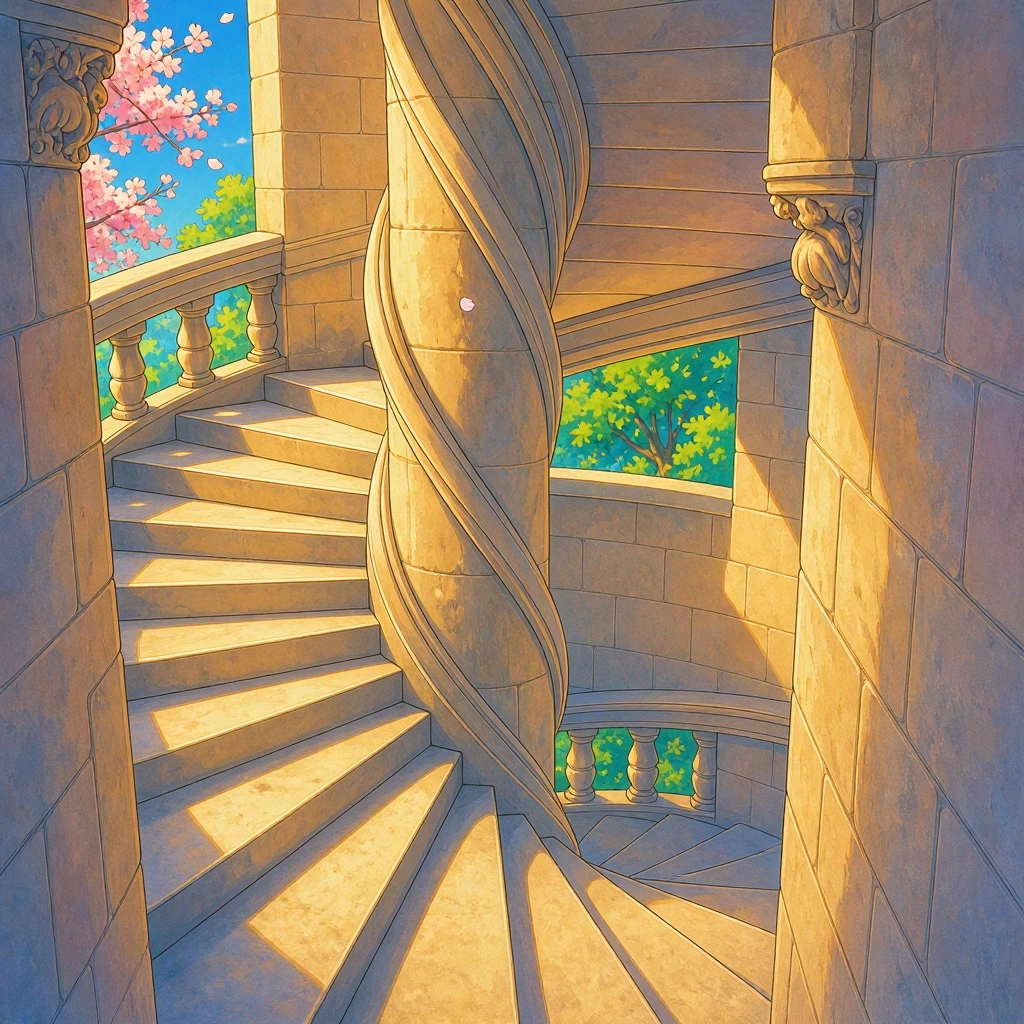
It’s not a magic trick: it’s one of the architectural wonders of the Château de Chambord in France. In the center of the building, there are two staircases that twist around each other, like two huge stone corkscrews. They allow people to go up and down between the floors without ever meeting on the same flight.
And that’s just the beginning. Chambord has towers, chimneys, terraces, and roofs that look like they came straight out of a fairy tale. But behind its fantastic appearance lies a real history of kings, inventions, and enormous ambition: to build a palace capable of leaving anyone who looked at it completely speechless.[1]
A Castle to Impress the World
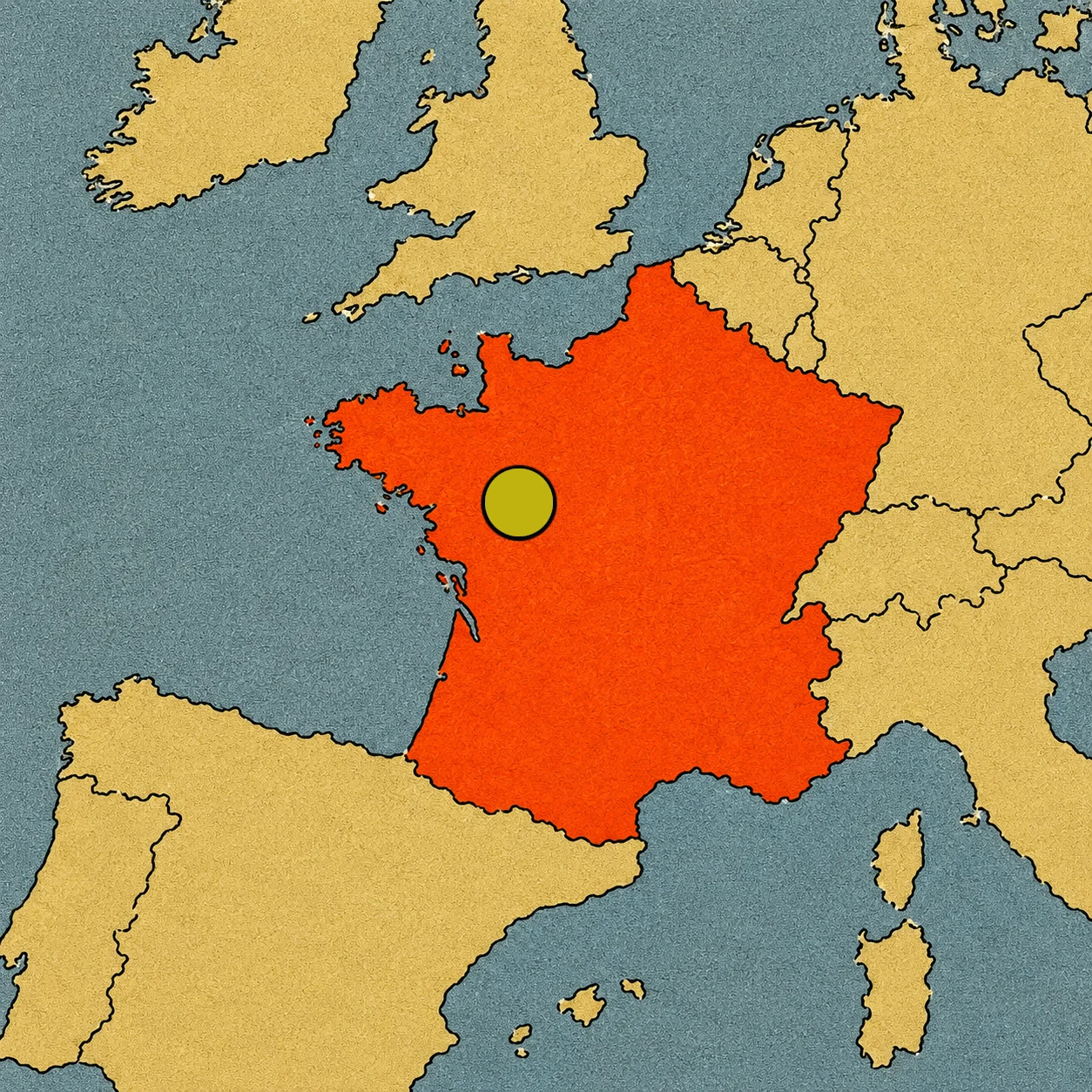
Let’s travel back to France in the year 1519. King Francis I wants to build an extraordinary residence in the Loire Valley, a region famous for its rivers, forests, and castles. The chosen site is located in the Sologne area, surrounded by wetlands and woods. That is where Chambord begins to grow, a building so monumental that it looks like a city made of stone.
Francis I is young, passionate about art and architecture, and wants his palace to showcase the power of the French monarchy. This isn’t a house to live in all year round: the king only spends relatively short periods there, especially when organizing hunting trips and receiving guests. The castle is also a kind of royal showcase, a way of telling other rulers: “Look what we are capable of doing.” Its construction combines elements of medieval castles with new ideas from the Renaissance, a time when art, science, and architecture were undergoing huge changes.[2]
The Staircase That Seems Like Magic
The great star of Chambord is hidden inside. From the outside, you can admire the towers and roofs, but once you step into the central building, the surprise appears: a double staircase that twists around an empty space.
Each path forms a spiral, and both move in parallel without crossing. If two people start climbing at the same time on opposite stairs, they can see each other through the openings in the center, but they never meet as they follow their respective routes. One goes up and the other goes down, and both can reach different levels of the castle.
Why build something so complicated? The staircase isn’t just a fun curiosity: it organizes the heart of the building and leads to its main floors and upper terraces. Plus, its central position allows the rooms and grand halls to be distributed all around it. It’s an idea that mixes utility, geometry, and spectacle. Visitors have been fascinated by this design for centuries, and even today many try to figure out how the two routes work without losing sight of their companion.[1]
Did Leonardo da Vinci Have Anything to Do With It?
When such an ingenious staircase appears, it’s easy to think of Leonardo da Vinci, the famous Italian artist and inventor known for his paintings, drawings, and machines. And there is an interesting connection: Francis I invited Leonardo to live in France in 1516, and Chambord’s designs show architectural ideas similar to those found in his notebooks. The double staircase especially echoes his way of imagining spaces and pathways.
However, we have to be careful about one thing: there is no definitive proof that Leonardo personally designed the staircase or the entire castle. He died in 1519, the very year construction on Chambord began.
Experts believe he may have influenced the project, but the building was the result of work by architects, master builders, and numerous artisans. So we can imagine Leonardo as a possible inspiration, not as the sole author of such a massive work. History becomes even more interesting when we remember that great constructions usually require many minds, many hands, and years of hard work.[1]
A Roof That Looks Like a Stone Forest
Step outside and look up. Chambord has so many small towers, chimneys, staircases, and decorations that its roof looks like a miniature village placed right on top of the castle. Some chimneys rise up like columns; other small turrets seem to be keeping watch over the landscape. In the center rises the lantern tower, which crowns the building and serves as the highest point of the composition.
This silhouette blends two worlds. The towers and certain features recall medieval fortresses, while the arrangement of the rooms and the symmetry of the whole reflect the new ideas of the Renaissance.
However, by the 16th century, large fortresses were no longer as useful against artillery as they once were. At Chambord, many of those old forms functioned primarily as symbols: they evoked chivalry, fairy-tale castles, and the power of kings. The result is a building that looks ready for a medieval adventure, but also boasts the most modern ideas of its time.[1]
Water Was Also Part of the Design
Chambord isn’t limited to its walls. A huge estate with forests, gardens, and waterways stretches out all around it. The Cosson River flows through the estate, and its course was partially modified during construction to help shape the terrain.
The surroundings were important to the king, who enjoyed hunting and could organize large hunting parties in the nearby woods. The castle and the landscape were designed as a single unit: the building impressed guests, while the estate provided space for walking, hunting, and hosting gatherings.
The location also presented challenges. The Sologne area was damp, and the ground required a lot of work to make construction possible. Raising a palace of this size meant preparing foundations, transporting materials, and organizing hundreds of workers. Every tower that today looks light and elegant rests on a structure built with hard work and precision. The marvel we see from afar therefore hides a massive engineering feat.[2]
A Palace That Took Generations
Although Francis I got the project started, Chambord was not finished during his lifetime. Work continued in various stages, and the building was finally completed during the reign of Louis XIV in the 17th century. The Sun King visited the castle with his court, and spectacles and parties were held there. The playwright Molière presented his comedy The Would-Be Gentleman at Chambord in 1670 before the monarch himself. Imagine the scene: actors on a stage, musicians, elegant guests, and a monumental palace as the backdrop.
Over the centuries, the castle changed owners and uses. There were times when it received less attention, and others when restoration work was done to preserve it. In 1930, it became the property of the French state. Since then, it has become one of the country’s most famous monuments, visited by people who come to discover its rooms, its terraces, and, of course, the famous double staircase.[2]
An Adventure Among Towers and Staircases
Visiting Chambord is like stepping into a huge stone labyrinth. Its towers look like they came out of a storybook, its roofs are full of surprising shapes, and its hallways invite you to imagine who walked through them hundreds of years ago. But the greatest mystery is inside: a double-helix staircase that allows people to go up and down via different paths without ever crossing. Two people can move at the same time, see each other, and hear their footsteps without meeting on the same path!
Francis I wanted to build a castle that would surprise his guests and showcase the power and creativity of his time. That is why Chambord isn’t just a place to admire from the outside: it’s also a space to observe, ask questions, and discover how Renaissance architects worked.
And here the adventure begins: would you dare to explore its staircases, count its towers, and look for hidden details among its roofs? You might not find a treasure or a secret passageway, but you will find something just as exciting: the feeling of exploring a place designed to awaken your curiosity.
Sources
- Architecture of Chambord, double staircase, and possible influence of Leonardo da Vinci — https://www.chambord.org/en/history/the-chateau/architecture/
- History of the castle, construction, and completion under Louis XIV — https://www.chambord.org/en/history/the-chateau/as-history-unfolds/
- UNESCO: Inscription of the Loire Valley and the presence of the Château de Chambord — https://whc.unesco.org/en/list/933/