

Brasilia
Brasilia, an Unexpected Capital: A Journey to the Geographic and Architectural Heart
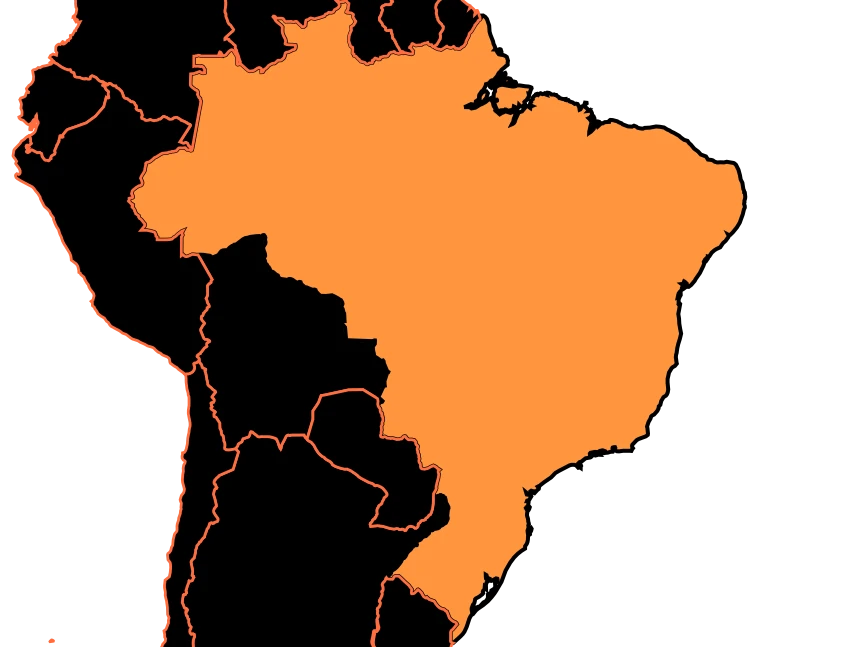
Brazil, the vibrant and colossal South American nation, is home to one of the most unique and bold capitals in the world: Brasilia. Conceived with a futuristic vision and built in record time during the 1950s and 1960s, Brasilia is not only the seat of the Brazilian government, but also a monumental experiment in urban planning and modern architecture, a testament to human ambition and creativity. Strategically located in the geographic heart of the country, on the central plateau, this city was designed to be the administrative and political epicenter, bringing together a vast and diverse nation under the same symbolic and functional roof.
The geography surrounding Brasilia offers a plateau landscape, characterized by rolling terrain and cerrado vegetation, a unique biome of the Brazilian tropical savanna. This location was no accident. A central point was sought to break with the traditional concentration of power and population on the coasts, thereby promoting a more equitable territorial integration and the development of the country’s interior. The city sits on relatively flat land, which made it easier to implement its bold urban design, but it is also surrounded by extensive green areas and artificial reservoirs, such as Lake Paranoá, which not only beautify the landscape but also play a crucial role in the region’s climate and water supply.
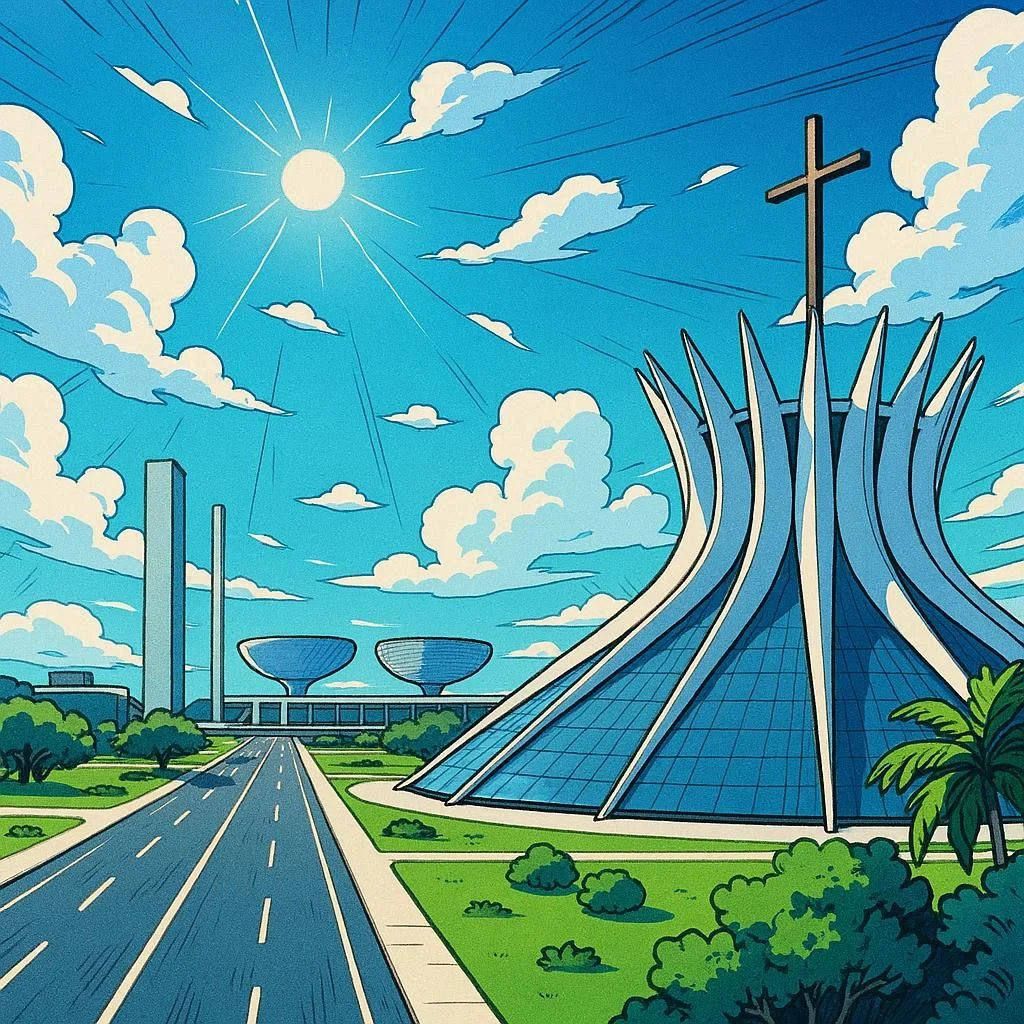
Brasilia’s conception is, in itself, a masterpiece of planning. The famous “Pilot Plan,” designed by Lucio Costa, has the shape of an airplane or a bird, with the ministries’ esplanade and government buildings forming the “fuselage” and the residential and commercial areas distributed along the “wings.” Oscar Niemeyer, for his part, brought this plan to life with his iconic architectural structures. Buildings such as the National Congress, the Palácio do Planalto, the Cathedral of Brasilia, and the Palace of Alvorada are true monumental sculptures, characterized by their curved and bold forms, innovative use of concrete, and harmonious integration with the surroundings.
The city was conceived as a “garden city,” with broad avenues, extensive green spaces, and a clear zoning of functions. Each residential “superblock” is designed to be self-sufficient, with schools, shops, and leisure spaces integrated into a safe and family-friendly environment. This organization, although innovative, has also sparked debates about mobility and social life, but there is no doubt about its uniqueness as a model of urban design.
Brasilia: An Impossible City to Replicate
What makes Brasilia a genuinely astonishing city and, in many ways, impossible to replicate, lies in a convergence of unique and unrepeatable factors. First, its very conception was an unprecedented act of audacity. The political decision to move Brazil’s capital from the historic coastal city of Rio de Janeiro to the inhospitable central plateau was a monumental gamble, driven by a vision for the future and a desire to unify the country. Few nations in history have undertaken a task of such magnitude: building a capital from scratch in a relatively short period of time (less than a decade for the main construction phase).
The synchronization of talent was another crucial factor. The convergence of Lucio Costa’s urban vision and Oscar Niemeyer’s architectural genius created a synergy that resulted in a coherent and visually striking design. Both, prominent figures in Brazilian modernism, shared a bold and utopian vision that was materialized in every corner of the city, from the grandeur of the government buildings to the harmonious functionality of the residential areas.
The urgency and political momentum of the era also played a decisive role. President Juscelino Kubitschek’s government strongly backed Brasília as a symbol of progress and modernization. This political and financial support, combined with the mobilization of thousands of workers, many of them from the impoverished northeast of Brazil (the “candangos”), made it possible for the city to rise at a dizzying pace. Rarely has a project of such scale been carried out with such speed and determination.
In addition, the historical context was fundamental. Brasília was born at a time of great optimism and faith in technological progress and in humanity’s ability to shape the future. Architectural modernism was at its height, and the city became a showcase for its principles: functionality, clean lines, the use of new materials, and a vision of the city as an efficient and aesthetically pure machine. UNESCO recognized this uniqueness by declaring Brasília a World Heritage Site in 1987, making it the only city built in the 20th century to receive such a distinction.
Finally, the social fabric and character of a city are, by nature, organic and often unpredictable evolutions. Brasília, conceived as a planned model, has developed its own identity and dynamic over the decades. Human interactions, cultural adaptations, and later interventions have shaped the city in ways its creators may not have fully anticipated. Trying to replicate not only the architecture and urban planning, but also the spirit, history, and context that gave rise to Brasília would be a titanic task, if not an impossible one. It is a product of its time, of its visionaries, and of its bold drive, which cements it as a unique urban jewel in the world landscape.