
Lençóis Maranhenses
The desert where it rains and thousands of lagoons appear
Imagine walking through a desert. White sand as far as the eye can see. Enormous dunes that change shape with the wind.
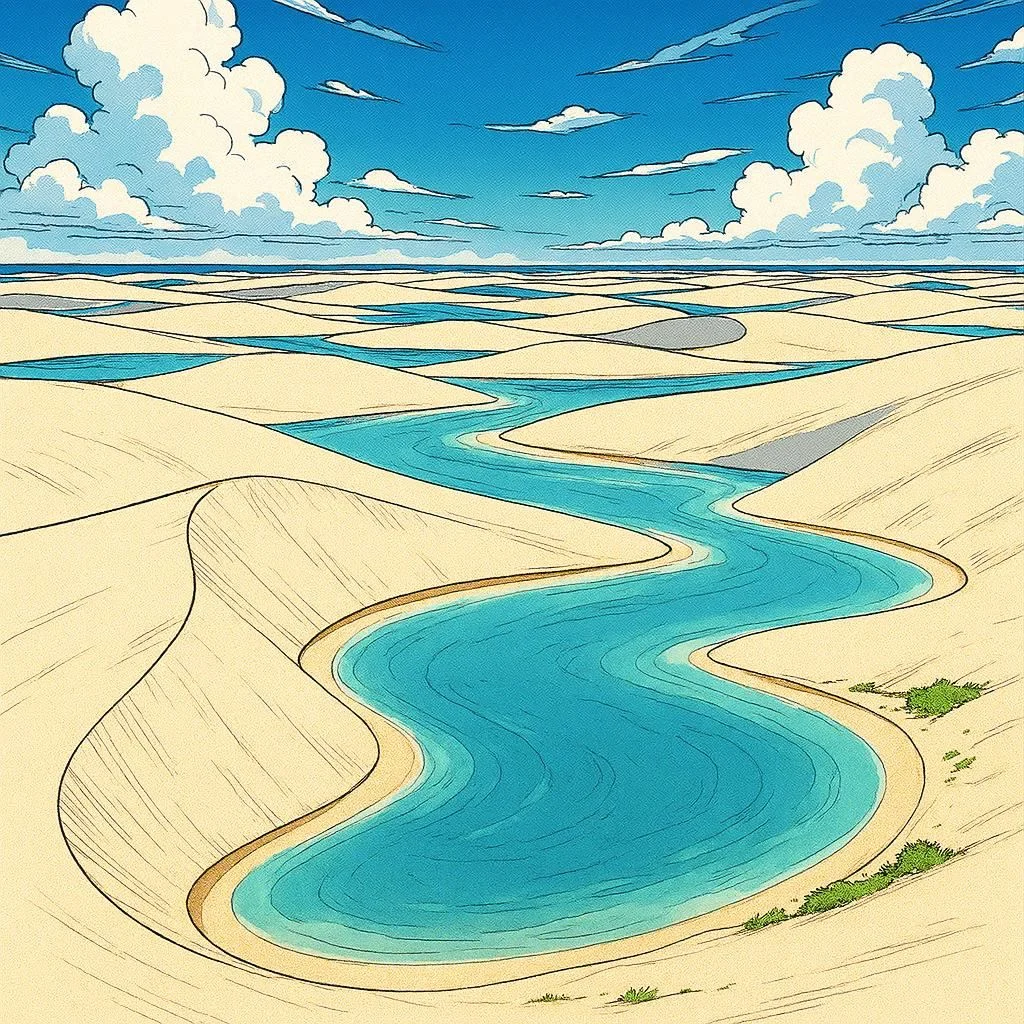
But suddenly, between one dune and another, a lagoon of crystal-clear water appears. And then another. And another one. It seems impossible. But this strange landscape exists in Brazil. They are the Lençóis Maranhenses, a place where a sandy desert fills with water during part of the year and seems to transform into another planet.
A desert that doesn’t look like a desert
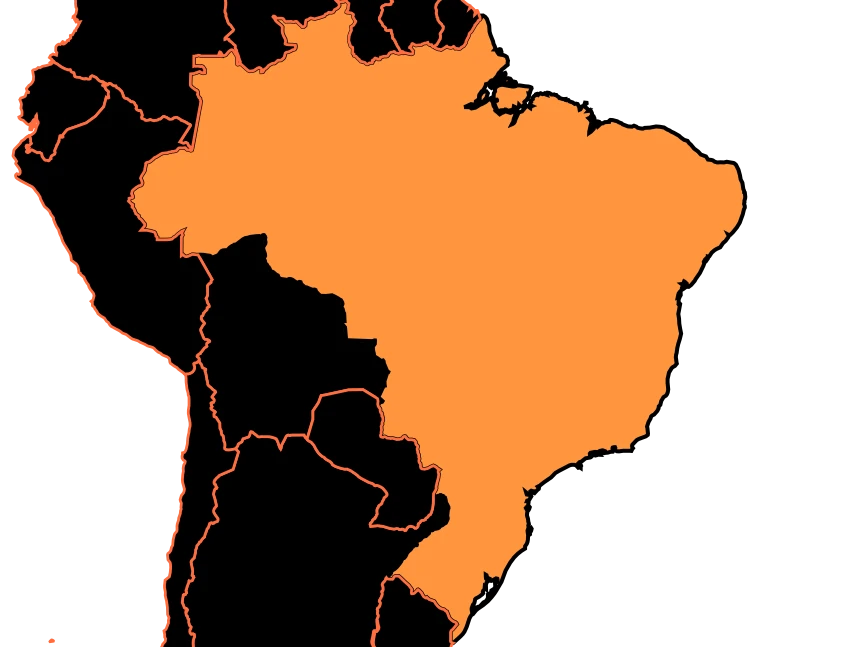
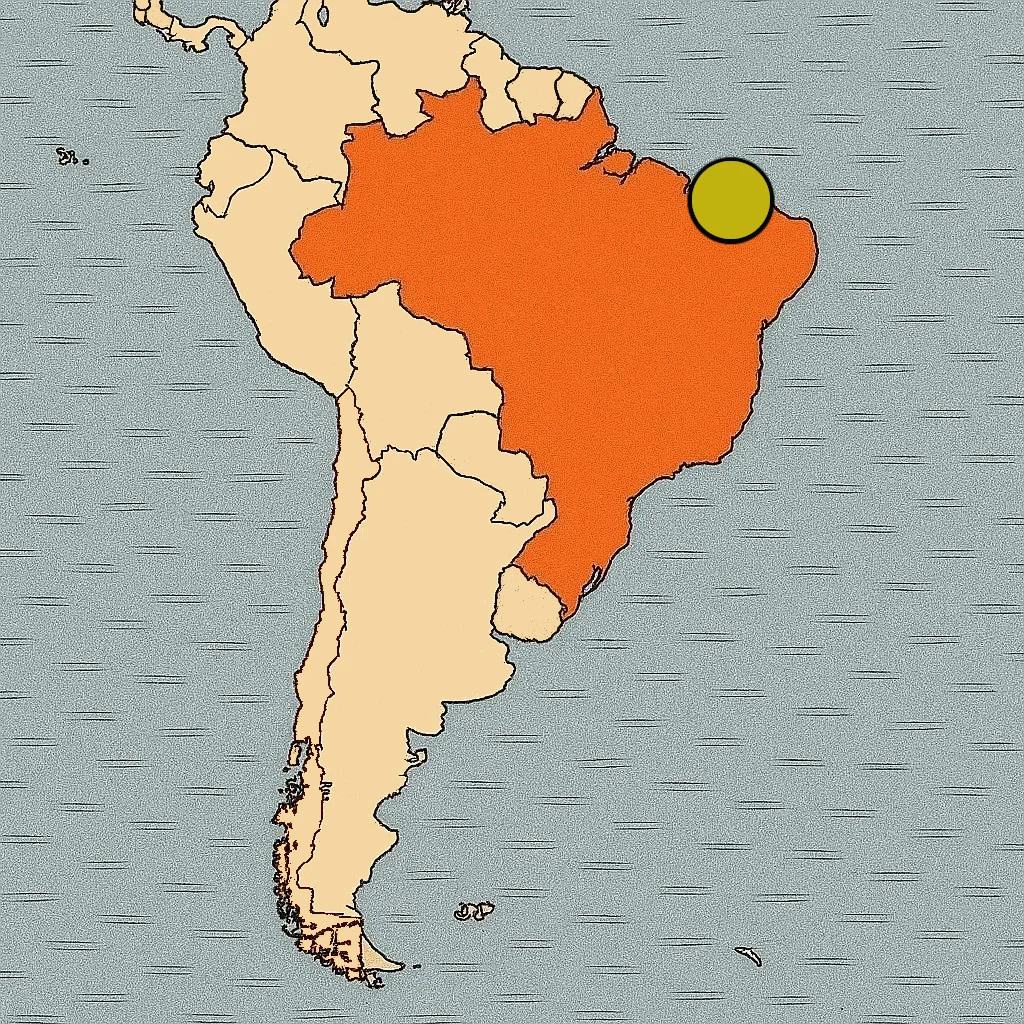
The Lençóis Maranhenses are located in the state of Maranhão, in northeastern Brazil. From afar, they look like a gigantic white desert. But there is a fundamental difference. Here it rains a lot.
During the rainy season, water accumulates between the dunes and forms thousands of temporary lagoons. For a few months, the landscape changes completely. Where there was only sand before, enormous natural freshwater pools now appear.
How do the lagoons form?
The secret lies in the shape of the terrain. The Lençóis Maranhenses are covered by enormous sand dunes. When the rainy season arrives, water falls on the surface and seeps into the subsoil. But some of it becomes trapped between the dunes.
That’s how the lagoons begin to form. Some are small. Others can reach large dimensions. And since the dunes keep moving, the landscape never remains exactly the same. It’s a desert that changes every year.
Sand and water
The strangest thing is the contrast. The sand is white and shiny. The water can be bluish or greenish. And between the two, virtually nothing appears that reminds you of humans. There are no roads crossing the dunes. There are no large buildings.
Only sand ripples and lagoons that seem to have been placed there by someone. From the air, the landscape is even more surprising. It looks like an enormous white sheet splattered with hundreds or thousands of water stains.
Is it really a desert?
Here’s a little surprise. Although the Lençóis Maranhenses are popularly referred to as a desert, it is not a desert in the traditional climatic sense. It receives too much rain to be considered a true desert.
And that is precisely what makes it so special. It is a landscape of dunes that receives abundant rainfall and, thanks to it, periodically fills with water. A place that looks like a desert but behaves like something completely different.
A landscape that disappears
The lagoons are not there forever. When the rainy season ends and evaporation increases, many begin to shrink. Some disappear completely.
The dunes once again dominate the landscape. Then comes another rainy season… And the lagoons reappear. It’s as if the landscape had its own calendar.
Every year, the Lençóis Maranhenses are transformed.
What animals live there?
Although at first glance it may seem like a place too extreme for life, there are animals and plants adapted to this environment.
During the rainy season, the temporary lagoons can shelter fish and other organisms. Some species have developed surprising strategies to survive the changes in the landscape. Fish and small crustaceans from the temporary lagoons lay eggs that withstand the hot, dry sand for months. These eggs hatch quickly when the rains fill the landscape once again. Amphibians and reptiles such as the Pleurodema frog burrow into the sand or dig holes during the dry season. In this way, they manage to protect themselves from the high temperatures and the lack of water.
Life appears when the water arrives and adapts when drought returns. Even a landscape that seems empty is full of life.
A landscape that is never exactly the same
The wind constantly moves the sand. The dunes advance slowly. The rains fill some lagoons while others disappear. That is why the Lençóis Maranhenses are not a landscape frozen in time. It is a place that is continually changing. The same lagoon can have a different shape the following year. And a dune that seems enormous today can gradually shift over time.
From another planet
The Lençóis Maranhenses belong to the From another planet category because they seem to combine two landscapes that should not exist together. A sand desert and thousands of freshwater lagoons: white dunes, crystal-clear water, blue sky, and a landscape that changes with the seasons.
Perhaps the most incredible thing is that we are not seeing a rarity created by human beings or a science fiction setting. Nature itself created a desert that fills with water every year. And for a few months, northeastern Brazil seems to have its own planet of sand and lagoons.