

Mount Roraima
The Mountain That Looks Like It’s From Another Planet
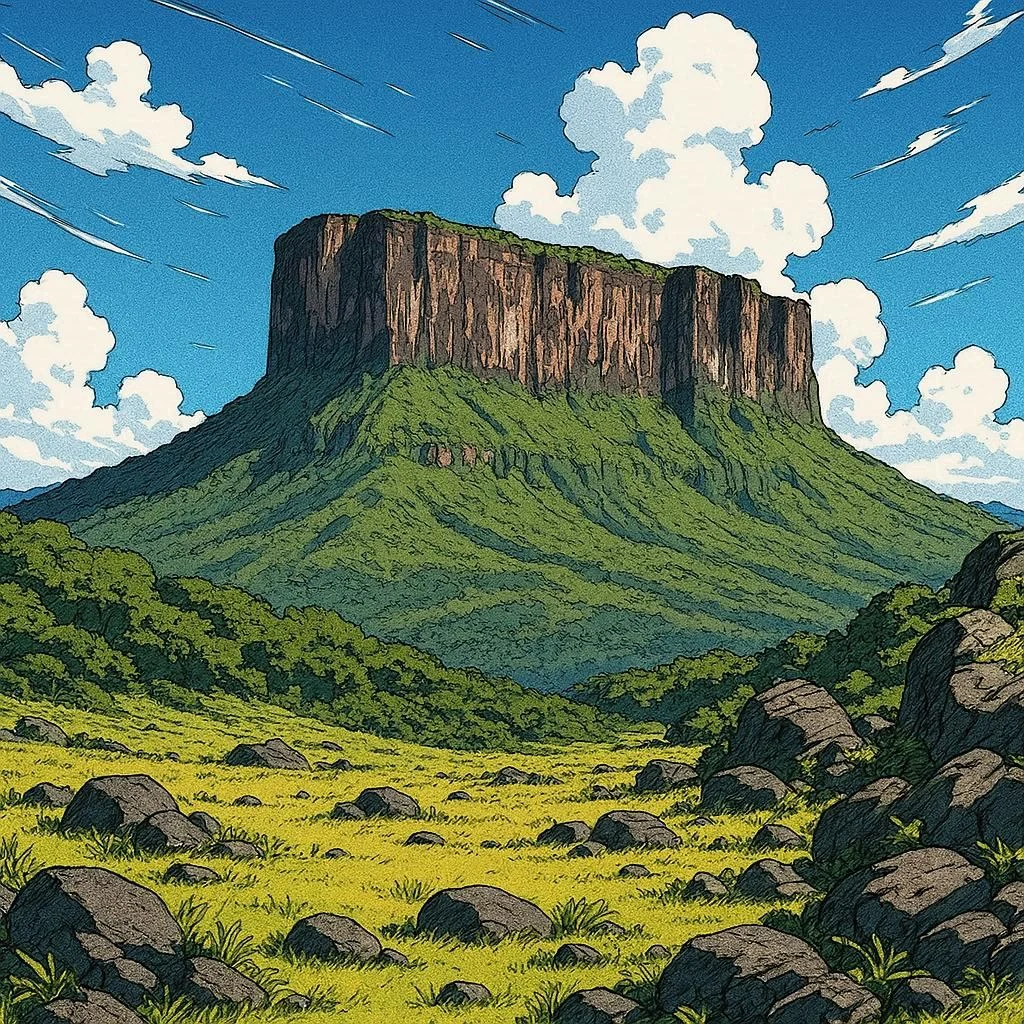
In the heart of South America, there is a mountain that seems not to belong to Earth. Its walls are almost vertical. Huge clouds often surround its summit. And at the top, instead of finding a pointed peak, a gigantic rocky plateau appears that looks like a fortress lost above the clouds.
It is Mount Roraima, one of the most extraordinary mountains and one of the strangest landscapes in South America. It looks like the summit of another planet.
A Mountain with a Cut-Off Summit
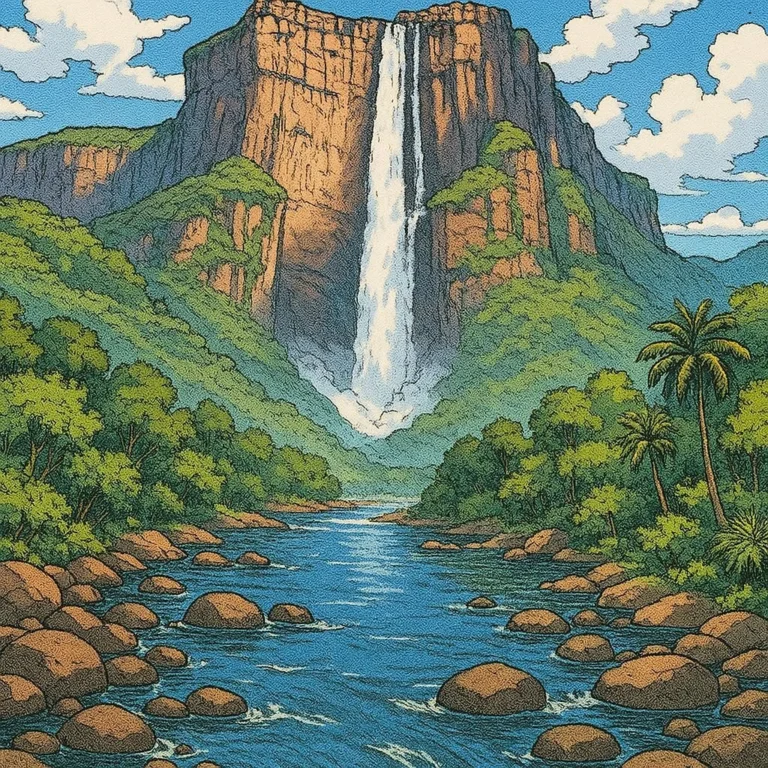
Roraima belongs to a formation known as a tepui. Tepuis are enormous rocky plateaus with steep walls that rise above the landscape. Roraima reaches about 2,800 meters in height, but the most surprising thing is not its height. It is its shape.
While most mountains end in a peak, Roraima seems to have been cut off with a gigantic tool. At the top, there is a huge rocky surface, full of cracks, caves, waterfalls, and strange formations. A mountain that looks like a gigantic table.
An Ancient Rock
The rocks of Roraima are part of one of the oldest geological formations on Earth. They have withstood billions of years while the landscape around them changed. Wind, water, and erosion slowly wore away the rock.
But some areas resisted better than others. Over millions of years, the vertical walls and the enormous plateau became isolated from the surrounding terrain. The result is a landscape that seems impossible.
A World Above the Clouds
Climbing Roraima means gradually entering a different world. First, the forests appear. Then, the vegetation changes. Finally, you reach the enormous upper plateau.
There, the landscape can be covered in fog and clouds. There are black rocks, pools, small rivers, and waterfalls that disappear over the edges of the mountain.
At times, the clouds remain below the summit. It is like walking on an island floating in the sky.
A Mountain Full of Water
Roraima receives enormous amounts of rain. The water accumulates among the rocks and finds paths to cross the plateau. That is why there are numerous streams, pools, and waterfalls.
In some places, the water falls directly from the edges of the tepui. From below, the waterfalls seem to come out of the clouds. And from above, you can watch how the water disappears into the void.
Animals That Live Nowhere Else
Roraima’s isolation has also had consequences for its inhabitants. Some species of plants and animals evolved separately for a very long time from the populations that lived in the lowlands.
There are endemic species that are only found on certain tepuis. Among them are small frogs adapted to this environment. One of the most famous is the Oreophrynella quelchii, known as the Roraima black frog. It cannot jump like many other frogs. Its world is this strange landscape of rock, rain, and fog.
A landscape that inspired a novel
The appearance of Roraima is so extraordinary that it inspired the writer Arthur Conan Doyle to imagine his novel The Lost World. In the story, an expedition arrives at an isolated plateau where prehistoric creatures survive.
The story is fiction. But the idea has a very real basis: the tepuis are true ecological islands separated from the world that surrounds them. For millions of years, the life that remained isolated on their summits had opportunities to evolve in different ways.
An adventure to reach the summit
Roraima is not a mountain you can simply visit by parking your car. Reaching its summit requires a hiking expedition and several days of travel. The path crosses forests, rivers, and increasingly difficult terrain. Then the enormous wall of the tepui appears. And finally comes the climb up to the plateau.
At the top, the landscape changes completely. There is no traditional peak. There are kilometers of rock, fog, water, and formations that look like natural sculptures. It is like arriving in another world after several days of walking.
Where did the name Roraima come from?
The name has indigenous roots and comes from the combination of roroi (meaning greenish-blue) and ima (meaning big or large). That is, Roraima means “the great greenish-blue one”.
For the indigenous peoples of the area, the tepuis are not simply mountains. They are part of a landscape full of stories and meanings. The enormous silhouette of Roraima dominates the territory from afar and has been an important presence for the communities that have known these lands long before the arrival of European explorers.
From another planet
Mount Roraima belongs to the category From another planet because it brings together features that seem to belong to an imaginary world: a mountain with vertical walls, a completely flat summit, clouds surrounding the plateau, waterfalls falling from the heights, unique plants and animals, and rocks that have been part of the history of our planet for billions of years.
You do not need to travel to Mars to find an alien landscape. Sometimes it is enough to climb to the top of a mountain that looks like a lost island above the clouds.