

The Andes
The mountain range that runs along the edge of a continent
There are enormous mountains. There are extremely long mountain ranges. And then there are the Andes.
For thousands of kilometers, a gigantic chain of mountains runs along the west of South America, from Venezuela to the southern tip of Chile and Argentina. It is the longest continental mountain range in the world.
And along that entire route, its appearance changes again and again: volcanoes, glaciers, deserts, valleys, lakes, and some of the highest mountains on Earth.
A gigantic mountain range
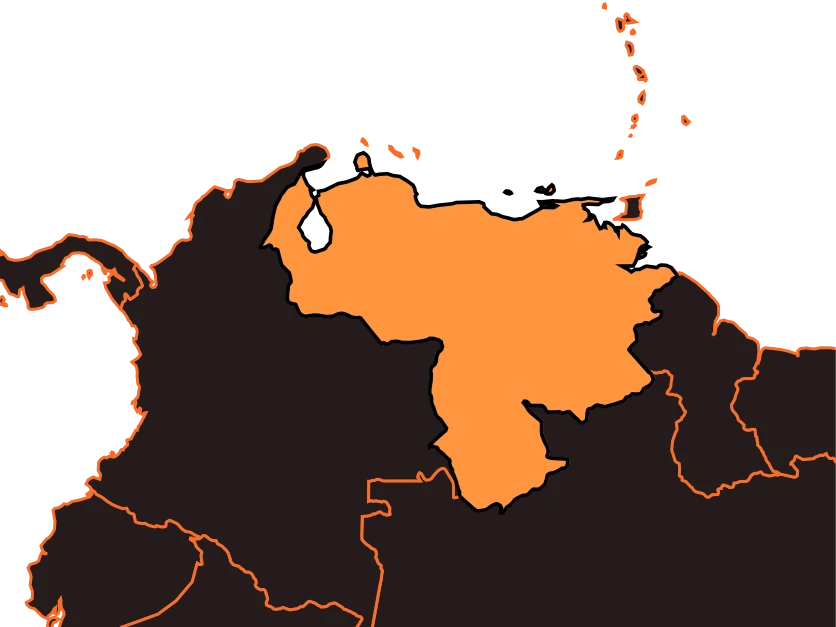
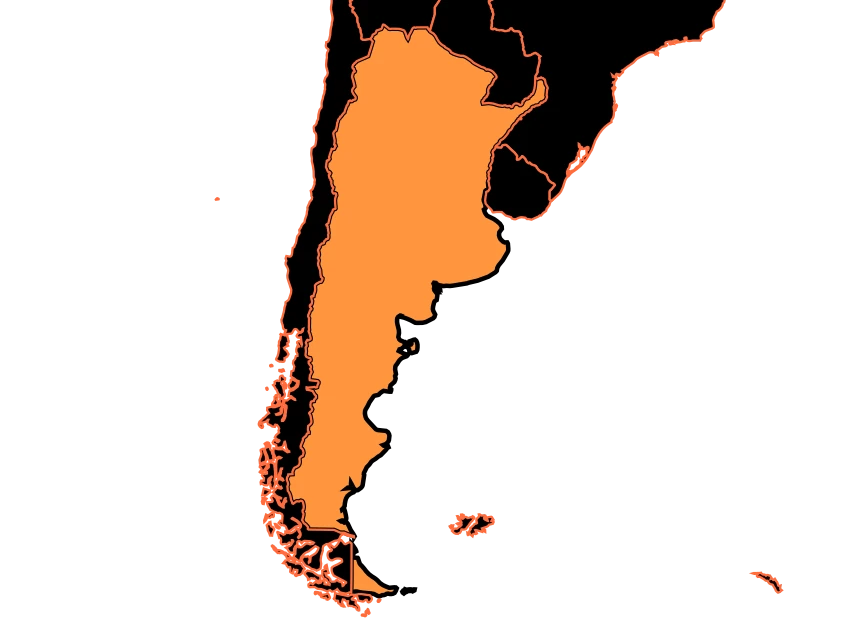
The Andes extend for more than 7,000 kilometers across South America. They cross Venezuela, Colombia, Ecuador, Peru, Bolivia, Chile, and Argentina.
That means a person could travel thousands of kilometers while following practically the same great mountain chain. But the Andes are not a single row of mountains. In different places, they split into large ranges and branches, forming some of the most varied landscapes on the planet.
Mountains born from the movement of the Earth
The Andes exist because the surface of the Earth is in motion. A huge oceanic plate, the Nazca Plate, slides beneath the South American Plate. This process, called subduction, compresses and deforms the Earth’s crust. Over millions of years, the mountains were pushed upward. And the process continues.
That is why the Andes have so many volcanoes and are one of the most seismically active regions on the planet. The mountain range is not just a landscape: it is a part of the Earth that is still changing.
The roof of the Andes
In the Andes lies one of the most famous mountains in the world: Aconcagua. At about 6,961 meters high, it is the highest mountain in the Americas and one of the highest peaks on Earth outside of Asia.
But it is not the only gigantic mountain. Along the mountain range, numerous peaks exceeding 6,000 meters appear. From below, they can look like endless walls of rock and ice.
A desert beside the mountains
The Andes produce some extraordinary contrasts. In northern Chile, for example, lies the Atacama Desert, one of the driest places on the planet. The mountains help create these conditions. In other areas, however, the Andes receive abundant rainfall and are covered in forests. And further south, glaciers and enormous ice fields appear.
The same mountain range can go from a desert with almost no rain to a world of ice.
The place where water is born
The Andes are also essential to the water supply for much of South America. The snow and ice accumulated in the mountains feed rivers and lakes. Numerous major rivers have their origins directly or indirectly in the Andes.
In regions where rainfall is scarce, water from the mountains can be essential for populations and crops.
Mountains do not only dominate the landscape. They also help determine where life can exist.
A mountain range full of life
Despite the enormous heights and extreme conditions, the Andes host an extraordinary variety of ecosystems. Animals such as the llama, the alpaca, the guanaco, the Andean condor, and the spectacled bear live on its slopes. There are also plants adapted to places where it is very cold, there is little oxygen, or it barely rains.
Life changes as we climb. Different landscapes appear at different altitudes. The Andes are almost like several worlds stacked on top of one another.
Civilizations among the mountains
The Andes are not only nature, either. For centuries, different peoples built their communities in this enormous mountain system.
The most famous example is the Inca Empire, which came to control a gigantic territory in the Andes. The Incas built roads, agricultural terraces, and cities adapted to extremely difficult terrain. One of their most well-known sites is Machu Picchu, built among the mountains of the Peruvian Andes.
The mountains that seemed impossible to inhabit ended up becoming the heart of a great civilization.
A mountain range that changes its face
The Andes do not have a single landscape. In Colombia, green and humid mountains can appear. In Peru, we find deep valleys and large high plateaus. In Bolivia, landscapes of enormous altitude appear. In Chile and Argentina, we find volcanoes, deserts, glaciers, and some of the highest peaks in the Americas. And toward the southern tip, the mountain range becomes a landscape of fjords, ice, and mountains.
It is one single mountain range with hundreds of different faces.
A world champion
The Andes belong to the World champion category because they are the longest continental mountain range in the world, stretching over 7,000 kilometers.
But their record is not the only extraordinary thing. They are mountains that influence the climate, water, ecosystems, and the lives of millions of people. They have seen civilizations rise. They have created deserts. They have fed rivers. And they continue to rise slowly as the Earth’s plates keep moving.
The Andes are not simply a chain of mountains: they are a gigantic backbone that runs through South America from north to south.