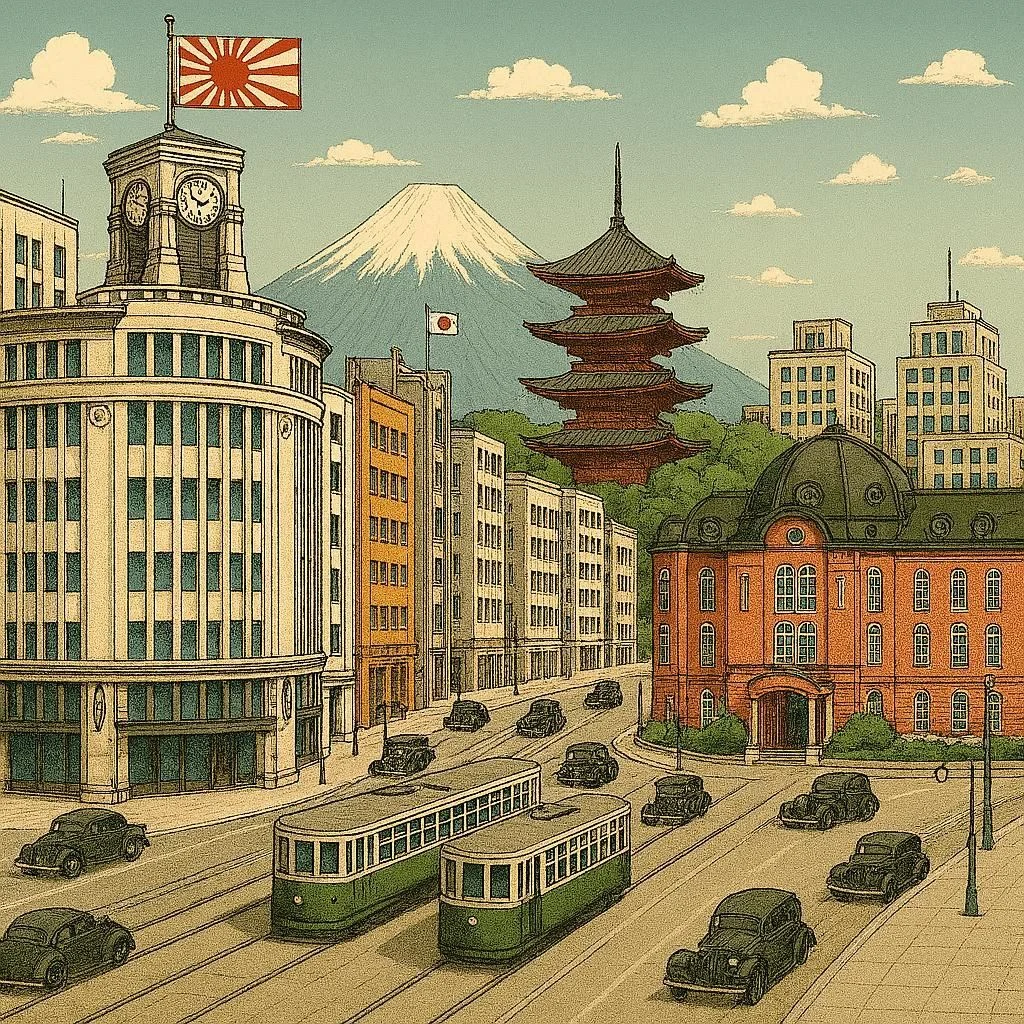
Japanese Empire
The Japanese Empire: A Historic Giant
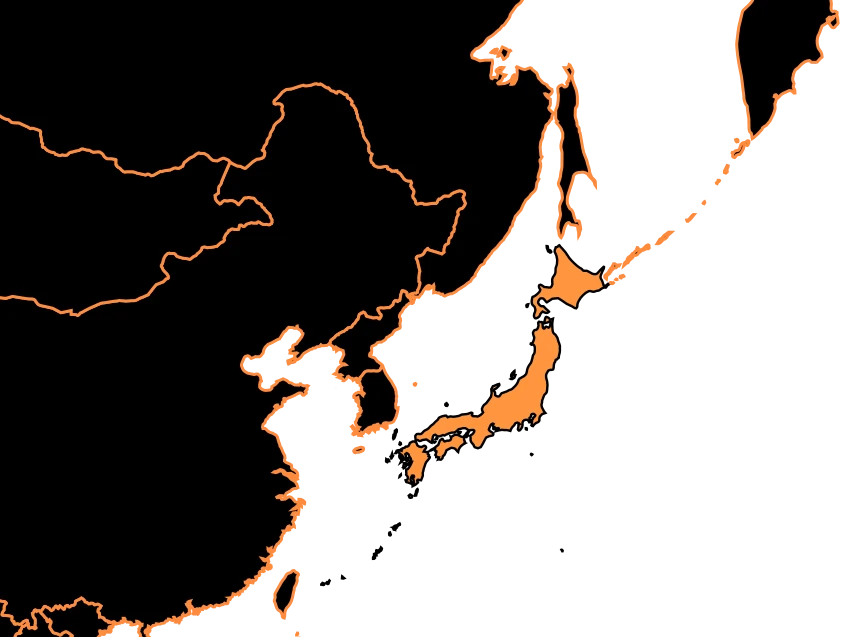
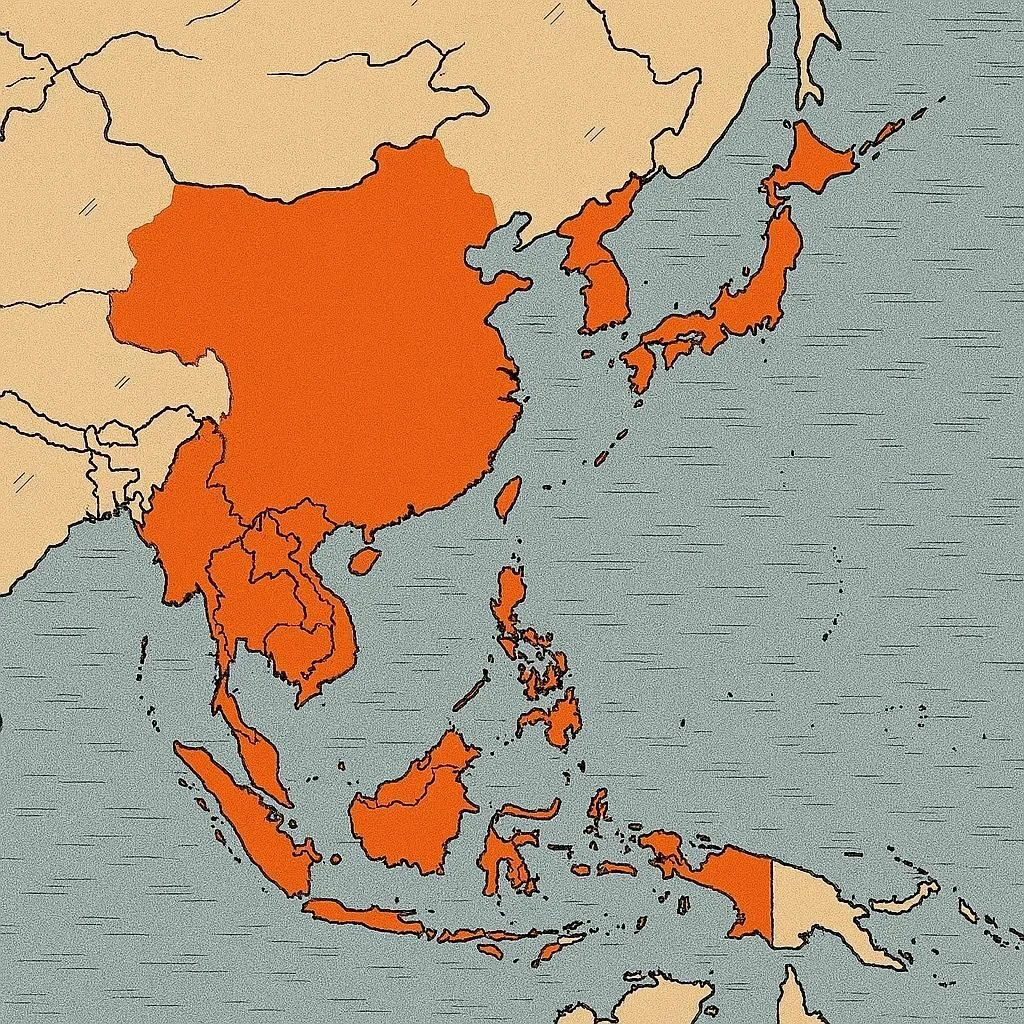
The Japanese Empire, a political and military entity that dominated vast territories during much of the 20th century, stands as one of the most extensive and significant empires of modern history. Its geographic reach was astonishing. At its apex, after decades of aggressive expansionism, the Empire of Japan controlled a land area exceeding six million square kilometers. This included not only the main islands of Japan (Honshu, Hokkaido, Kyushu, and Shikoku) but also territories conquered and colonized on the Asian continent and in the Pacific. Among its most important dominions were Korea (annexed in 1910), Taiwan (ceded by China in 1895), Manchuria (converted into the puppet state of Manchukuo in 1932), large portions of eastern China, and a vast chain of islands in the Pacific, including the Philippines (briefly administered), the Dutch East Indies (present-day Indonesia), Burma, Malaysia, and Singapore. This territorial expansion also comprised strategic areas rich in natural resources, vital for sustaining its military and industrial machinery.
Development of the Japanese Empire
The achievement of this vast territorial extent was a long and largely violent process, driven by a combination of nationalist ambition, resource necessity, and an expansionist vision. The foundations of this empire were laid after the Meiji Restoration in 1868, a period of rapid modernization and Westernization that allowed Japan to break its isolation and become a power comparable to European nations. The first major territorial leap occurred with the First Sino-Japanese War (1894-1895), from which Japan emerged victorious, obtaining Taiwan and influence over Korea. Shortly thereafter, in the Russo-Japanese War (1904-1905), Japan demonstrated its military prowess by defeating a European power, gaining control of Manchuria and the Liaodong Peninsula. World War I offered Japan the opportunity to expand further in the Pacific, seizing German colonies. However, it was in the 1930s and early 1940s, with the invasion of Manchuria and the subsequent World War II, that Japan reached its maximum territorial expression. The attack on Pearl Harbor in 1941 marked the beginning of a global conflict in which Japan sought to establish the “Greater East Asia Co-Prosperity Sphere,” a bloc dominated by Japan that, in theory, would free Asia from Western colonialism, but in practice meant the imposition of a brutal and exploitative Japanese rule. Japan’s surrender in 1945 brought this vast empire to an end, stripping it of all its conquered territories.
The Significance of the Japanese Empire
The importance of the Japanese Empire lies in its transformative impact on the geopolitics of Asia and the Pacific, as well as its uniqueness as a non-Western power that managed to emulate and, in certain aspects, surpass European powers. Its rapid industrialization and modernization set a precedent for other Asian nations, demonstrating that it was possible to resist Western domination. The Japanese Empire’s own characteristics included an exacerbated nationalist ideology, centered on the figure of the Emperor as a divine entity and the superiority of the Japanese race. Samurai culture, with its emphasis on honor, duty, and sacrifice, was reinterpreted and fused with modern militarism to create a highly disciplined and war-ready society. The Japanese imperial economy was characterized by its dependence on the import of raw materials (such as oil, rubber, and metals) and the export of manufactured products, a structure that made it vulnerable to blockades. Its army and navy, highly efficient and technologically advanced for their time, were key instruments in its expansion. However, the cruelty of its military campaigns and the exploitation of subjugated peoples left deep scars on the region, marking its legacy indelibly. The defeat in World War II represented a turning point, leading Japan to adopt constitutional pacifism and focus on its economic reconstruction, becoming a global economic power but without imperial ambitions.