
Adrspach
The Stone Labyrinth
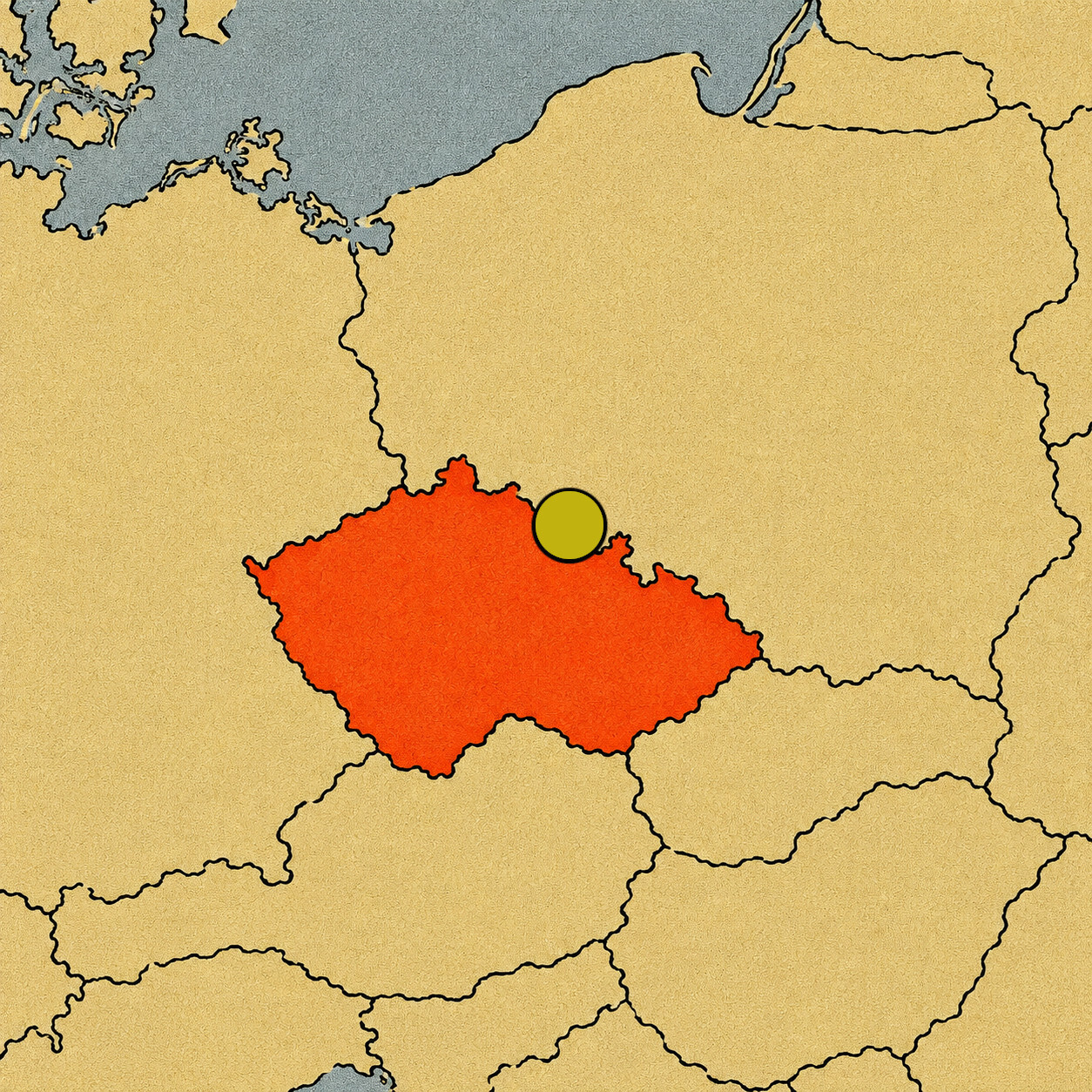
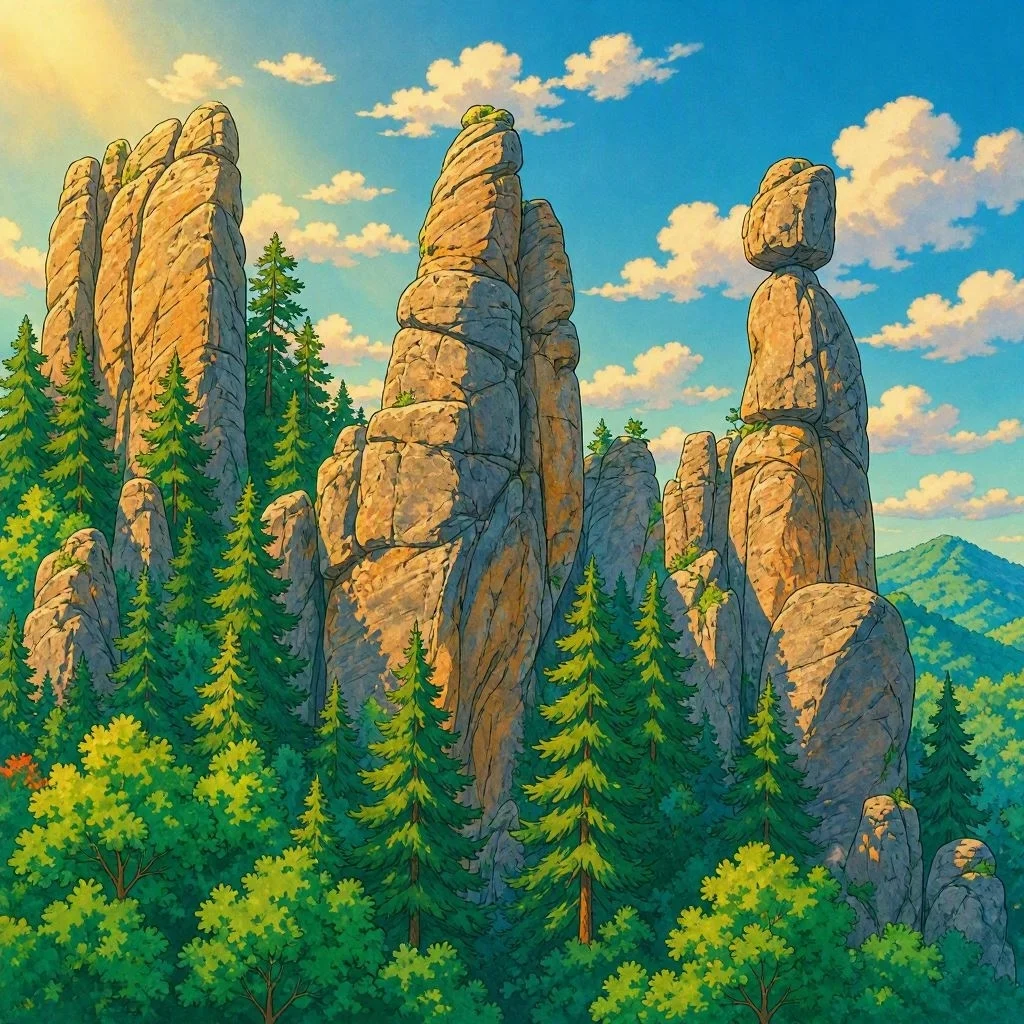
In the north of Czechia there is a place where the mountains do not look like mountains. They are enormous blocks of rock that rise up among the trees like towers, walls, and petrified giants. Some have names of their own because their shapes resemble people, animals, or things.
Between them open passageways so narrow that they barely let a single person through. This place is Adršpach, a gigantic natural rock labyrinth that looks as though it was designed for a science fiction film.
A Landscape Built by Water and Time
The rocks of Adršpach are formed mainly of sandstone, a sedimentary rock that accumulated millions of years ago. Over time, water, ice, wind, and changes in temperature slowly eroded the stone.
But sandstone does not wear away uniformly. Some areas are more resistant than others. The softer parts disappeared first, while the harder ones remained standing. That is how the enormous columns and walls we see today were born. They were not built. They were sculpted by nature over millions of years.
When There Was a Sea Here
To understand how strange this landscape looks, you have to travel much further back in time. Around 90 million years ago, this region was covered by an ancient sea.
On its floor, large quantities of sand gradually accumulated. Over millions of years, that sand was compacted and turned into sandstone. Much later, the sea disappeared. The rock was left exposed and another stage of its history began: erosion.
Water began to open cracks and wear down the walls. Ice worked its way into small fractures and, as it froze and expanded, helped to separate blocks of rock. Little by little, the ancient seabed ended up transformed into a landscape of stone giants.
Rocks with Impossible Shapes
The most fun thing to do at Adršpach is to look at the rocks and try to figure out what they resemble. There are formations known as the Lovers, the Mayor and Mayoress, the Krkonoše Tooth, and the Sugar Head, among many others.
Some look like enormous standing people. Others resemble animals or buildings. The result of hundreds of years of erosion is a collection of shapes that look like giant sculptures.
A Labyrinth to Explore
Adršpach is not a place that can be fully understood by looking at a photograph. You have to go there.
The trails wind between the rock formations and pass through narrow corridors where stone walls rise several meters above your head. At some points, the space suddenly opens up and great sandstone towers appear. At others, the path narrows again.
It is that combination that makes the visit feel like an expedition: you never know what formation will appear after the next bend.
Stone and forest
The rocks are not alone. The forest grows among them and covers the lower parts of the landscape. The trees, moss, and vegetation contrast with the enormous sandstone walls. In some places, the rock appears covered in green. In others, the bare walls rise almost vertically.
When there is fog, the effect is even stranger. The stone towers partially disappear among the trees, and it feels as if you are walking on an unknown planet.
Ice also builds the landscape
Winter adds another element to the adventure. When temperatures drop, water trapped in the cracks of the sandstone freezes and expands. That process exerts pressure on the rock and can help small pieces break off.
It is extremely slow work. It does not happen before our eyes. But repeated over thousands and thousands of winters, it can completely transform a rock wall. Every crack tells a small part of the story of Adršpach.
From another planet
Adršpach seems extraterrestrial because it brings together something we normally do not see in one place: gigantic stone towers, narrow passageways, forests, and shapes that look like sculptures.
But its origin is completely terrestrial. Perhaps that is the most fascinating thing. You do not need to travel to another planet to find an alien landscape. You just have to walk among the rocks of Adršpach and let the Earth show you what it is capable of.