Meet: Sand-Box
That’s how Philippines would be if it was a superhero:
Sand-Box

Population:
117.724.471,00 inhab
Pop. Growth:
12,44 %
Area:
298.170,00 km2
Density:
395,00 hab/km2
Wealth:
3.984,80 $/person
Literacy:
98,47 %
Largest city:
Manila - 24,735,305 inhab
Urban population:
49,90 %
Life expectancy:
70,17 years
Average age:
26,60 years
Highest peak:
Apo - 2,954 m
Largest river:
Cagayan - 505 km
Rainfall:
2.348,00 mm/m2
What are the defining characteristics of Philippines?
The country of Sand-Box

Jeepneys
"Jeepneys" are a unique form of public transport in the Philippines, the result of the creative adaptation of surplus US military jeeps from the Second World War.
Culture

Catholicism
Catholicism is the predominant religion in the Philippines, making it the only Asian country where this is the case. This faith is expressed during Holy Week through processions, flagellations and re-enactments of the Passion of Christ.
Culture

The bre months
Christmas in the Philippines is a celebration that begins in September and lasts until January (during the ‘ber’ months), filled with festivities and joy.
Culture

Bayanihan
"Bayanihan" is a Filipino spirit of community unity, where people help one another, especially when moving house.
Culture

Mega-fauna
The Philippines is one of the countries described as megabiodiverse, noted for its high concentration of endemic species and marine ecosystems that are unique in the world.
Nature

Respect
In the Philippines, respect is expressed in language through words such as "po" and "opo", reflecting a culture that values courtesy and honour.
Culture
Philippines: featured
The file of Sand-Box tells us...
Philippines
Official language(s): Filipino, English
Currency: Filipino peso
Government: Presidentialism
Main religion: Christianity Catholicism
Demonym: Filipino
Manila
Hab. 24,735,305
Manila is located on the island of Luzon. It is a major economic and cultural hub with a rich history. Highlights include Intramuros, the Spanish colonial walled city, and the Church of San Agustín, a UNESCO World Heritage Site. Its strategic location makes it a key hub for trade in Asia.
Davao City
Hab. 2,077,050
Davao City is a metropolis in Mindanao, known for its strategic location between mountains and coastline. It offers a variety of landscapes, from the peaks of Mount Apo to the beaches of Samal. Its vibrant markets, nature reserves and the warmth of its people are particularly noteworthy.
Zamboanga City
Hab. 1,014,070
Zamboanga City is a melting pot of cultures with a rich Hispanic heritage. Its landscape is diverse, featuring beautiful beaches and lush mountains. Notable attractions include Fort Pilar, a historic site, and the Grand Mosque, which reflects the city’s religious and cultural diversity.
Cebú
Hab. 1,081,840
Cebu, the jewel of the Philippines, is an island that captivates visitors with its diverse landscape, ranging from white-sand beaches to lush mountains. As the cradle of Spanish colonial history, the city of Cebu boasts attractions such as the Basilica del Santo Niño and Fort San Pedro, which bear witness to a fascinating past.
Archipelagic country
The Philippines is an archipelago and ranks second in the world for the number of islands, surpassed only by Indonesia. Its territory comprises approximately 7,641 islands, of which around 2,000 are inhabited. This vast archipelago boasts rich biodiversity, stunning landscapes and a unique cultural mix, shaped by indigenous, Spanish, American and Asian influences.
Ring of Fire
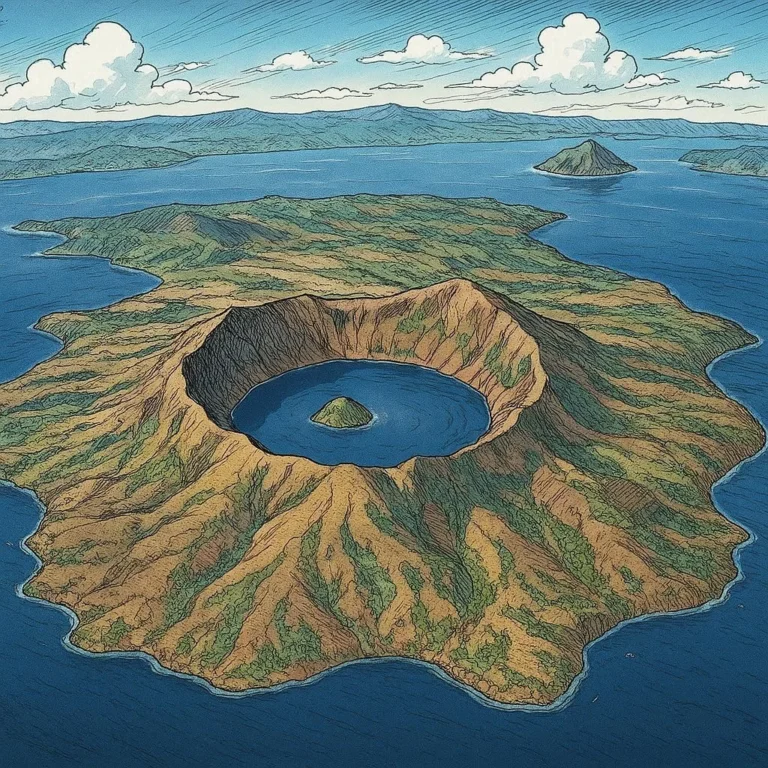
The Pacific Ring of Fire, an area of high seismic and volcanic activity, affects the Philippines. Its location within this belt makes it prone to frequent earthquakes and volcanic eruptions. This geological reality influences daily life and disaster preparedness in the country.
Luzon and Mindanao
Luzon and Mindanao account for approximately two-thirds of the Philippines’ total land area. These islands are home to major urban centres such as Manila and Davao, respectively. Together, they are home to a significant proportion of the Philippine population, accounting for over 70% of the national total.
Neighbouring countries
Superheroes who help each other
Philippines has no land borders with any other countries.
Superhero stories
Interesting facts about Philippines





To take away
Would you like a hard copy?
One Philippines worksheet, ready to print. You print it, curiosity does the rest.