
Budapest’s Parliament
A country wanted to show who it was by building a gigantic palace next to its river.
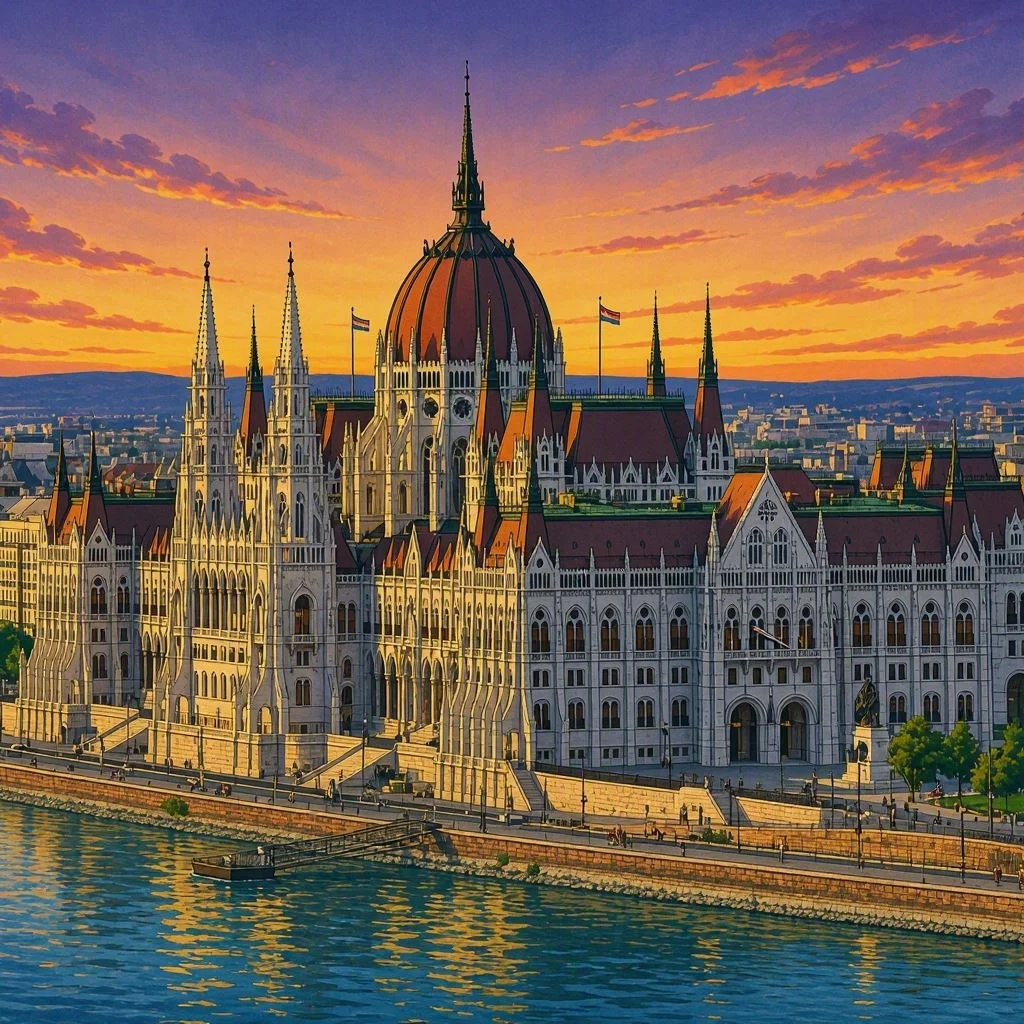
Imagine arriving in Budapest and seeing, next to the Danube, a building that looks like a fairytale castle. It has pointed towers, red roofs, hundreds of windows, and an enormous dome in the center. When its silhouette is reflected in the water, it seems even larger. But no king ever lived here. It is the Hungarian Parliament, one of the most recognizable buildings in Europe. And its story begins with a very simple question: how could a country demonstrate its importance with a building?
Budapest wanted a grand seat
At the end of the 19th century, Budapest was changing rapidly. In 1873, Buda, Pest, and Óbuda united to form a single city. The Danube became the centerpiece of the new capital, surrounded by bridges, avenues, and large buildings.
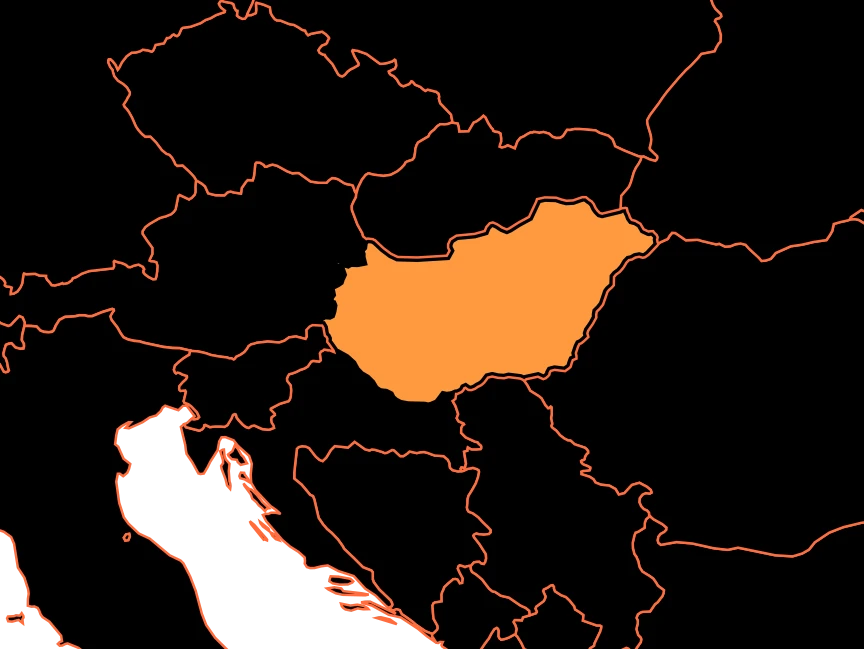
Hungary was then part of the Austro-Hungarian Empire, but it had a strong identity of its own. Its leaders wanted the capital to have a parliamentary seat capable of representing that identity. They were not merely looking for a place to hold meetings. They wanted a building that would impress anyone who arrived in the city. That is why they chose one of the best possible locations: the bank of the Danube.
A competition to create a symbol
In 1882, a competition was held to choose the design. The winner was the Hungarian architect Imre Steindl. His proposal was enormous and was mainly inspired by the neo-Gothic style.
Construction began in 1885 and lasted for nearly two decades. Thousands of workers, sculptors, and craftsmen took part in it. The building was partially inaugurated in 1896, during the celebrations of the millennium of the Magyars’ arrival in the Carpathian Basin.
It was finally completed in 1904. By then, Budapest had something that was not easy to ignore: a stone palace next to the river.
A giant with 691 rooms
The size of the Parliament is difficult to imagine. It has 691 rooms, 27 entrances, and a dome about 96 meters high. The dome occupies the center and helps visually organize the entire building.
Its height also has a historical meaning: the 96 meters recall the year 896, traditionally associated with the arrival of the Magyars. It is a detail very characteristic of the Parliament. Even a measurement can become part of a story. Architecture also serves to remember where a country comes from.
Built to face the Danube
The Parliament’s location was no accident. Its main facade faces the river, so that it can be admired from the other bank, from the bridges, and from the water. From Buda, the structure appears complete on the Pest bank. From a boat, its towers seem to grow from the edge of the river. At night, the lighting changes the scene and turns the facade into a long line of light. The building was designed to be seen. And more than a century later, it remains one of the best views in Budapest.
Every corner holds a detail
Approaching the Parliament is very different from observing it from afar. From a distance, its size is striking; up close, the sheer number of details is what surprises you.
The facade is full of arches, sculptures, columns, windows and small ornaments. There are numerous towers and pinnacles that make the silhouette appear almost endless. Depictions of historical figures and symbols related to Hungary also appear. The craftsmen had to work on thousands of decorative elements. This is a construction that rewards looking slowly, because it always seems to hide a new detail.
Inside, it looks like a palace
The interior maintains the same idea of grandeur. There is a grand ceremonial staircase, decorated corridors and halls where marble, carved wood, stained glass and gilded details are combined.
One of the most striking spaces is the Dome Hall, located beneath the great central roof. There, the decoration recalls different moments in Hungarian history.
When the Parliament was built, monumental public buildings also served to convey prestige. Entering the Parliament means moving from an ordinary city into a place designed to represent an entire country.
A history written in stone
The building’s decoration has a purpose that goes beyond making it beautiful. The architects used motifs, sculptures and symbols related to the history and culture of Hungary. They wanted to connect modern Hungary with a much older past.
This is why references appear to kings, historical figures, animals and elements from different traditions. The building was constructed at a time when national identity was of enormous importance. Hungary was part of a great monarchy, but it wanted to clearly show its own character. The Parliament could do so in a highly visible way: by turning the country’s history into architecture.
The Crown of Saint Stephen
Inside the building, one of the most important objects in Hungarian history is kept: the Holy Crown of Hungary, known as the Crown of Saint Stephen. It is associated with Saint Stephen, considered the first king of Hungary.
For centuries, the crown was much more than a jewel. It represented the continuity of the kingdom and became one of the country’s great symbols. Today it is kept in the Dome Hall along with other royal regalia. The Parliament represents modern political Hungary, while the crown recalls the centuries of history that existed before the building was constructed.
A building that survived a complicated century
The Parliament was born in an era of confidence, but the 20th century brought wars and enormous political changes. Budapest suffered severe damage during World War II, and the Parliament was also affected.
Afterwards, Hungary fell under a communist regime. The building remained a political center, although some of its symbols changed. During that period, a red star was even placed on the dome.
After the political changes of 1989, that symbol disappeared. The Parliament stood firm while the country changed its system and its era.
More than the seat of a Parliament
Today, the Parliament remains the seat of the National Assembly of Hungary. But for Budapest, it is much more than a workplace. Its silhouette has become one of the city’s symbols. It appears in photographs, books, and souvenirs of travelers from around the world. The Parliament, the bridges, and the Danube together form one of the most famous urban images in Europe. And it all began with a very concrete decision: to build a seat that would represent the importance and identity of Hungary.
A wonder that wanted to tell who it was
The Budapest Parliament does not impress only because it is enormous. It impresses because almost everything in it has an intention. Its position faces the Danube. Its dome recalls a moment in Hungarian history. Its sculptures and decorations speak of the country’s culture. Inside, the Crown of Saint Stephen is kept. And its towers turn the seat of a political institution into a silhouette that seems to come out of a fairy tale.
That is why it fits perfectly into the Wonder category. It is not just a famous building or a place where politicians meet. It is a construction created to represent an entire country. A country wanted to demonstrate who it was by building a gigantic palace next to its river. And more than a hundred years later, the Danube still reflects that answer.