

Bullet train
The Train That Shrank Japan
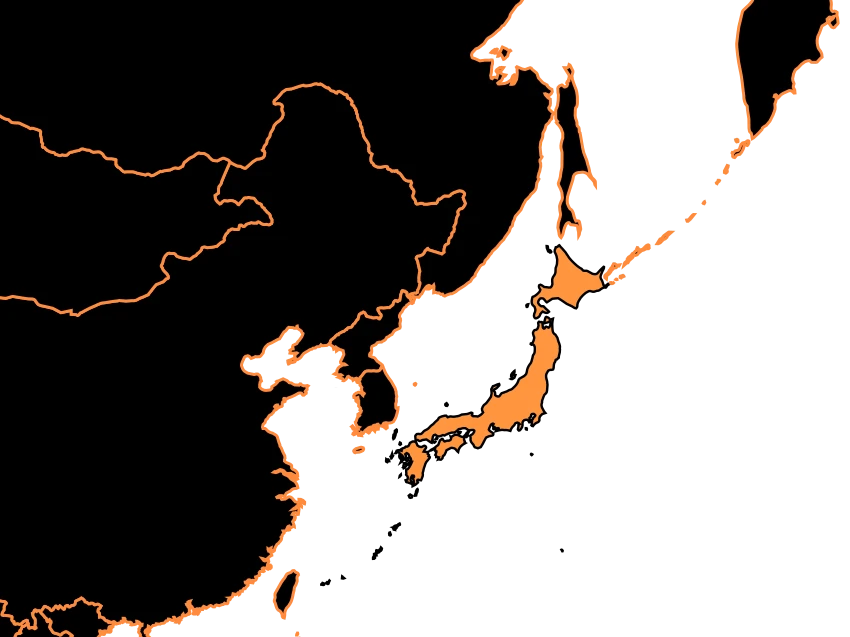
Imagine that Japan is a huge map and that Tokyo and Osaka are very far apart. Now imagine that you can board a train in one of those cities and arrive in the other in just a few hours. That was precisely what the Shinkansen, Japan’s famous bullet train, achieved.
When it began operating in 1964, it was not simply a new train. It changed the way Japanese people traveled within their own country.
A Train That Seemed Impossible
In the early 1960s, Japan was growing rapidly. Its major cities needed better connections, and the existing railways were already handling enormous numbers of passengers.
Japanese engineers had an ambitious idea: to build a new railway line designed specifically for trains capable of reaching much higher speeds. The result was the Shinkansen.
Its first route connected Tokyo and Osaka in 1964, precisely the year Tokyo hosted the Olympic Games. The train could reach speeds of 210 km/h, which seemed extraordinary for the time.
Tokyo and Osaka Draw Closer
Before the Shinkansen, traveling between Japan’s major cities could take many hours, around 10. With the new train, the journey between Tokyo and Osaka was reduced to about two and a half hours. Suddenly, two cities separated by a great distance began to feel much closer together.
People could travel for work, study in another city, visit relatives, or make round trips with far greater ease. The map remained exactly the same. But the distance in terms of time had changed.
Japan Gets Smaller
After the line between Tokyo and Osaka, the Shinkansen network began to expand. New lines connected other regions of the country and made it possible to travel quickly between many of Japan’s major cities.
For travelers, that had a curious effect. Tokyo had not moved. Neither had Osaka. The mountains and the kilometers between the two cities were still there. But the time needed to cover them had been drastically reduced.
It was as if Japan had shrunk.
The Train and Economic Development
The new railway connections not only made travel easier. They also helped connect markets, businesses, and workers. Cities linked by the Shinkansen could interact more easily and attract visitors and economic activity.
The railway became a fundamental piece of Japan’s economic transformation during the second half of the 20th century. Shinkansen stations became gateways to many regions of the country.
A New Way of Traveling
The Shinkansen also changed the image of the railway. The trains were fast, frequent, and known for their punctuality. Over time, the bullet train became one of Japan’s great technological hallmarks.
And its success drew the attention of other countries. The idea of using railway lines specially designed for high-speed trains began to spread to other parts of the world.
Europe and Asia developed their own high-speed systems, following, in different ways, the path that Japan had opened.
It changed the maps
The Shinkansen belongs to the It changed the maps category because it did not need to modify any borders to change the geography of a country. It did something different. It reduced distances in time.
Tokyo, Osaka, and many other cities were still in the same places, but now they could be reached much more quickly.
The bullet train made Japan a more connected country and, for millions of people, made places that once seemed distant feel much closer. That is why the Shinkansen was much more than a fast train. It was a train that made Japan’s map seem smaller.