
Japan’s isolation
Tokugawa and the Country That Closed Its Doors
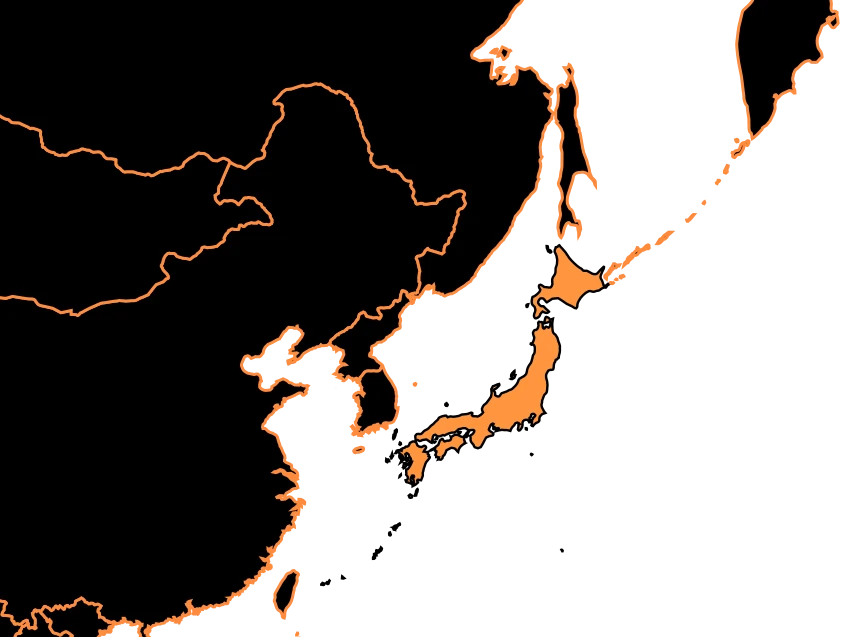
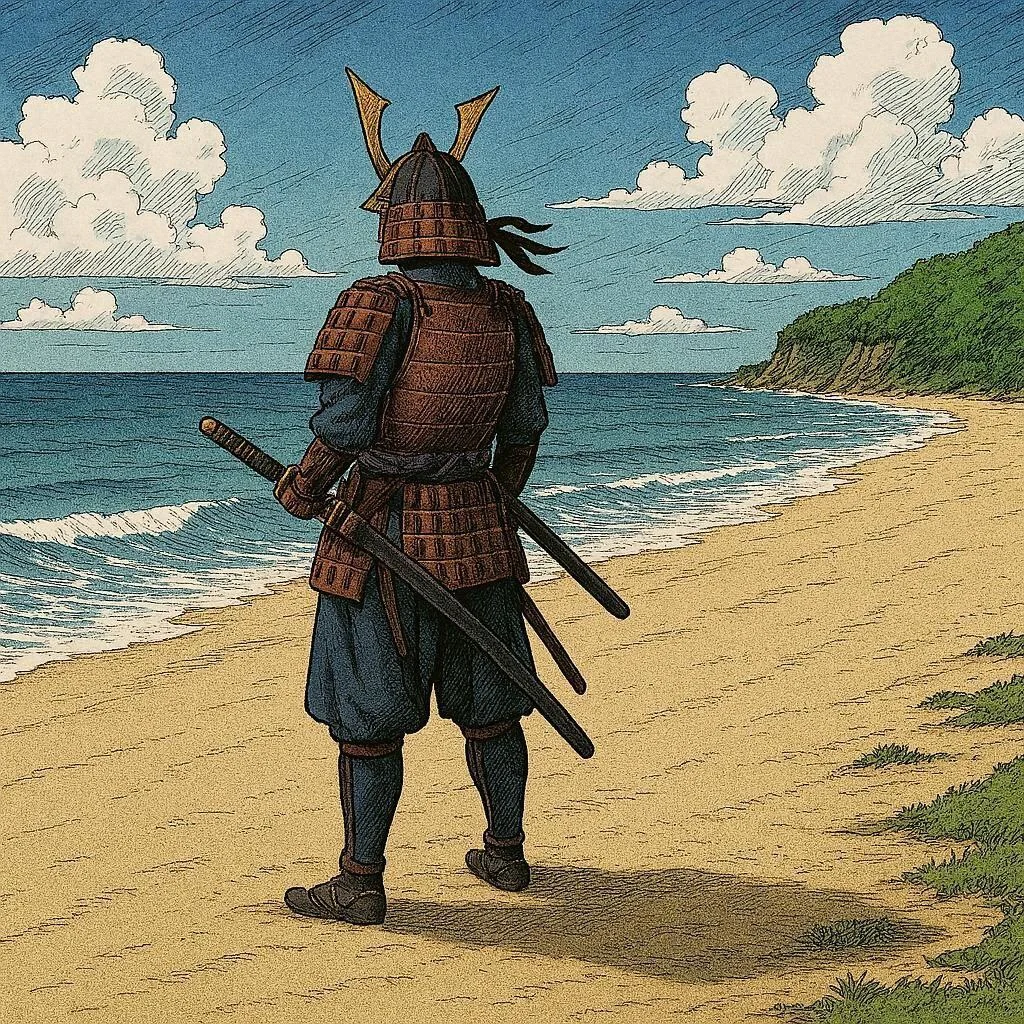
For more than 200 years, Japan maintained extraordinarily strict control over its foreign relations. It was not a country completely disconnected from the world, but it was one where traveling abroad, entering Japan, or trading with other countries was subject to very harsh rules.
Why did Japan make this decision? To understand it, we must go back to the early 17th century, when a new family of rulers took control of the country: the Tokugawa.
A Country That Had Experienced Wars
For centuries, Japan had suffered wars between feudal lords fighting to control different territories. At the end of the 16th century, three great figures began to put an end to that period of conflict: Oda Nobunaga, Toyotomi Hideyoshi, and, finally, Tokugawa Ieyasu.
In 1600, Ieyasu achieved a decisive victory, and in 1603 he became shōgun. Thus began the Tokugawa shogunate, which would rule Japan for more than 250 years. The new government wanted something very important: stability. And to achieve it, it decided to carefully control anything that could threaten the established order.
The Fear of Foreign Powers
During the 16th century, European merchants and missionaries, especially Portuguese and Spanish, had arrived in Japan.
The Japanese learned about new technologies, weapons, and products, but they also observed something that worried their rulers. The European powers were expanding their territories across Asia and other parts of the world. Furthermore, some Christian missionaries were gaining many followers in Japan.
The Tokugawa rulers feared that Christianity and foreign influence could become a political threat. Gradually, they tightened the restrictions.
Japan Closes Its Doors
During the 17th century, certain forms of contact with the outside world were prohibited, and travel by Japanese people outside the country was greatly restricted. The entry of foreigners was also restricted.
In practice, Japan remained isolated from much of the world for more than two centuries. This period is often called sakoku, although the reality was somewhat more complex than simply saying that Japan was completely closed.
Trade with some countries continued, especially through the port of Nagasaki. The Dutch, for example, maintained very limited and controlled access.
Japan never stopped learning from the outside world. It simply decided to control who could enter, what could enter, and how it could enter.
A World That Evolved in Another Way
While Europe experienced great scientific, political, and industrial changes, Japan developed its own society under the Tokugawa system.
Cities grew. Trade expanded. Culture flourished. Major advances appeared in literature, art, and education. Kabuki theater, ukiyo-e prints, and many other cultural expressions developed during this period. Education also spread, and the urban population increased.
Japan was not stagnant. It was evolving along its own path.
But the outside world kept moving forward
While Japan maintained its restrictions, Western powers developed steamships, new weapons, and vast trade networks.
In the 19th century, external pressure increased. In 1853, an American squadron led by Commodore Matthew Perry arrived in Japan. His steamships were very different from the traditional vessels the Japanese knew. Perry demanded that Japan open its ports to trade.
The Japanese government then had to face a completely new situation.
Japan opens up again
In the following decades, the Tokugawa system began to weaken. In 1868, the Meiji Restoration took place, ending the shogunate and returning political power to the emperor.
Japan then began an extraordinarily rapid transformation. The country adopted new technologies, created factories, built railways, and modernized its military and education. In just a few decades, it went from being a feudal society to becoming an industrial power.
A country that surprised the world
When Japan fully re-entered international affairs, the West discovered that it was not a backward country that had remained motionless.
It had a highly developed culture of its own, an active economy, and a society capable of adapting quickly to new technologies. Japan even began to compete with the great Western powers.
The country that had spent more than two centuries controlling its gates ultimately became one of the world’s leading powers.
How did it change the maps?
For more than two hundred years, Japan was an exception. While the rest of the planet was increasingly connected through trade routes and explorations, this archipelago chose to take a different path. But when the isolation ended, Japan proved that it could look outward, learn quickly, and transform its society.
It was not simply a country that closed its doors. It was a country that decided to control its contact with the world and that, when it finally opened them again, discovered that the world had also changed.
The decision to isolate itself, and later to reopen to the world, changed Japan’s role in world geography. Since then, the country went from being a kingdom almost unknown to many Europeans to becoming one of the most influential nations in Asia.