
Grand Canyon
The Place Where Earth Looks Like Another Planet
There are landscapes that seem too vast to exist.
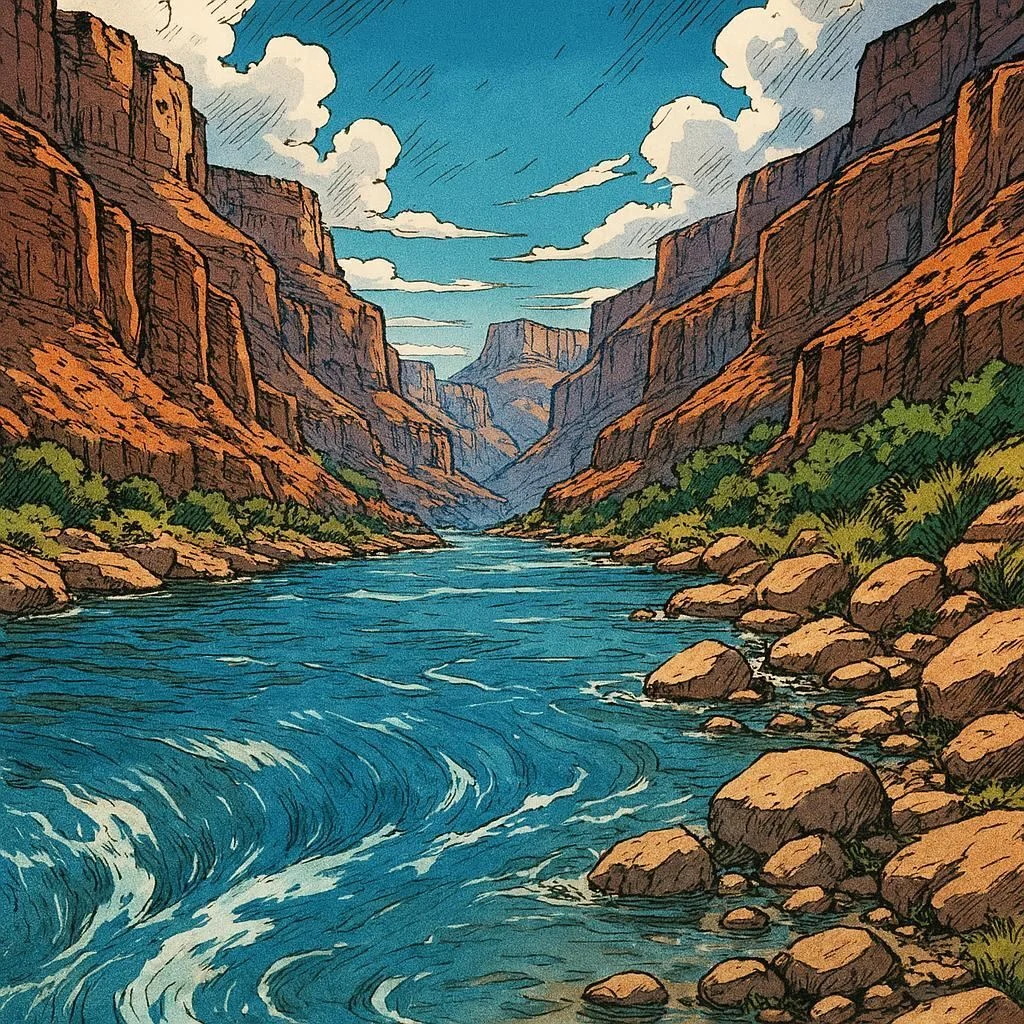
In the Grand Canyon, you can stand on a plain and suddenly find yourself before a gigantic crevice that plunges more than a kilometer beneath your feet. In front of you appear walls of colored rock, enormous towers, and deep gorges. And at the bottom, almost like a thin thread, the Colorado River appears.
It looks like the landscape of a distant planet. But all of this is on Earth.
A Gigantic Hole in the Earth
The Grand Canyon is not simply a mountain split in half. It is an enormous canyon carved out by the Colorado River over millions of years. The river slowly eroded the rocks while the landscape changed around it.
Little by little, the canyon grew deeper, and the walls began to reveal the different layers of rock. Today it is about 446 kilometers long and, in some places, reaches more than 1,800 meters deep. It is so large that its dimensions are hard to grasp from the ground.
A Journey into the Past
One of the most astonishing things about the Grand Canyon lies in its walls. Each layer of rock tells a different part of Earth’s history. Some are hundreds of millions of years old.
When you look from the rim down to the bottom, you are observing a kind of gigantic geological book. The upper layers are relatively young. The lower ones are far older. It is as if Earth had sliced open a mountain to show us its history from the inside.
How Was It Formed?
Over millions of years, the Colorado River carved out the terrain. But the water did not work alone. The uplift of the region, climate changes, erosion, and other geological processes also helped shape the current landscape.
The result was a gigantic canyon with walls of different colors and shapes. And the process is still ongoing. The river keeps flowing. The rain keeps falling. The wind keeps eroding the rocks. The Grand Canyon is not finished.
A Landscape from Another World
From some viewpoints, the canyon walls look like mountains from another planet. There are rock towers, plateaus, gorges, enormous shadows, and layers of colors that change depending on the sunlight. In the morning, they may appear reddish. At sunset, the walls take on completely different tones.
From the air, the scale is even more impressive. The canyon looks like a huge crevice cutting across the landscape.
A World Within the Canyon
Although from above it may seem like a completely barren place, the Grand Canyon is home to numerous ecosystems. The temperature can vary greatly between the rim and the deepest areas.
There are also different types of vegetation and animals adapted to the conditions of the canyon. Eagles, California condors, reptiles, and mammals live in its surroundings.
There are even areas where the landscape looks completely different from the rim. Within a single canyon, several worlds can exist.
The river from above
One of the most surprising things is watching the Colorado River from the rim. From above, it looks small. Almost insignificant. But that river has been one of the great sculptors of the landscape. For millions of years, it has carried water and sediments, eroding the rocks and deepening the canyon.
The river that looks tiny from above helped create one of the most gigantic landscapes on Earth.
An adventure among giants
It is also possible to explore the Grand Canyon up close. There are hiking trails that descend into its interior. But here comes an important detail: going down is much easier than going up.
A hike that begins with pleasant temperatures at the rim can turn into a completely different experience as you descend. That is why exploring the canyon requires preparation and respect for the conditions of the place.
From another planet
The Grand Canyon belongs to the From another planet category because it is hard to believe that such a gigantic landscape was created by natural processes. There is no need to imagine alien volcanoes or distant worlds. For millions of years, a river, the wind, the rain, and Earth’s own geology were building this enormous landscape. And perhaps the most incredible part is that they are not finished yet.
The Grand Canyon looks like a scar from another planet, but it is actually a gigantic window into the history of our own world.