Greenland
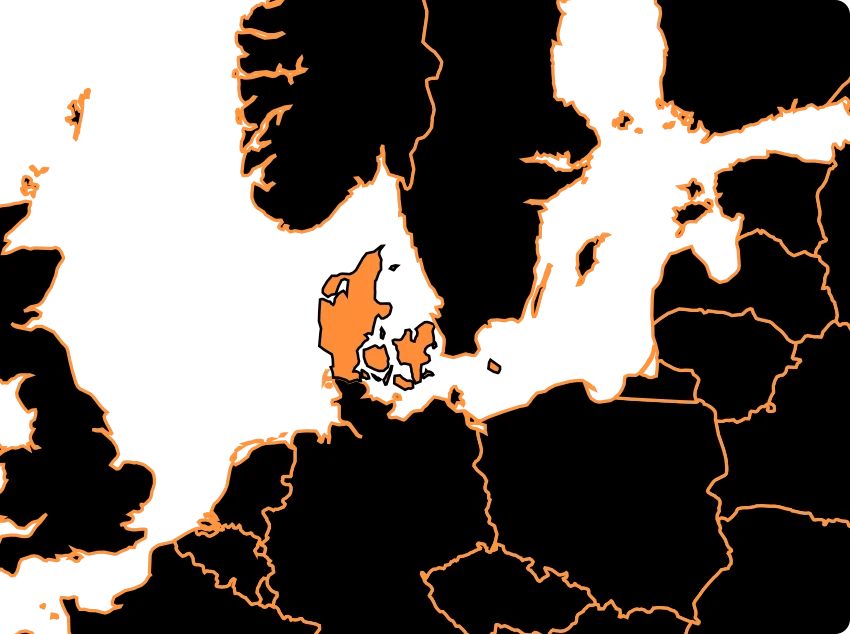
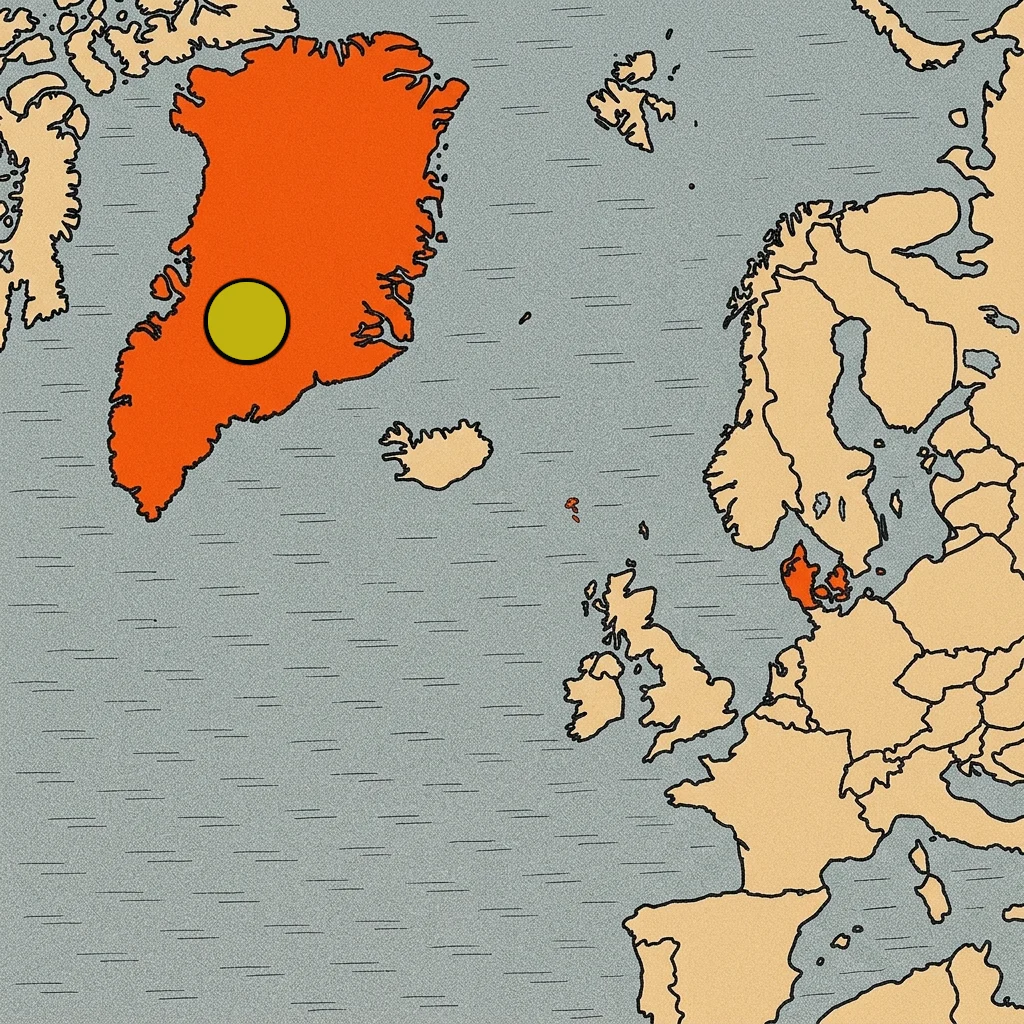
Greenland, the largest island in the world, is an autonomous territory belonging to the Kingdom of Denmark.
Geography and Location of Greenland
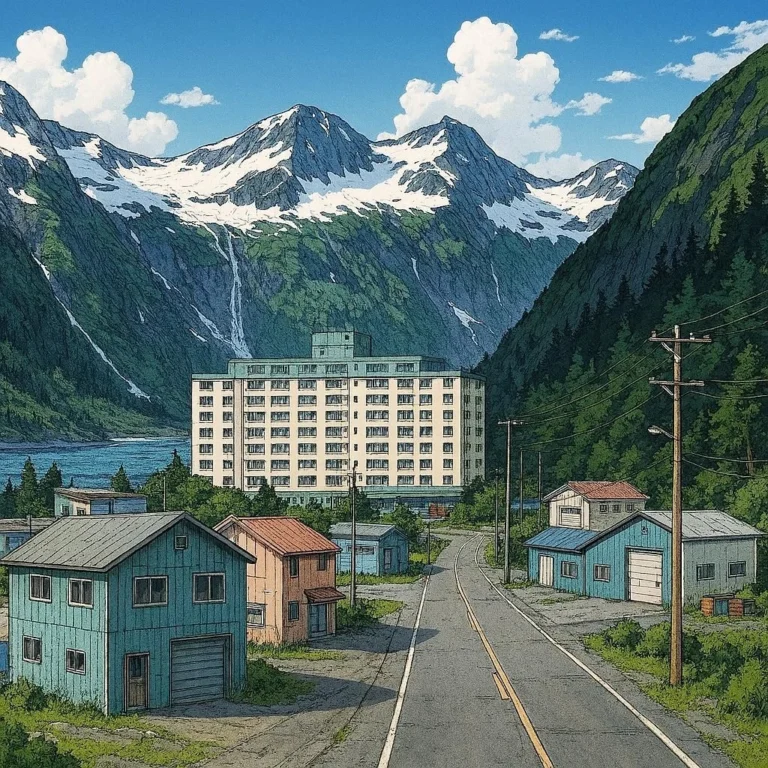
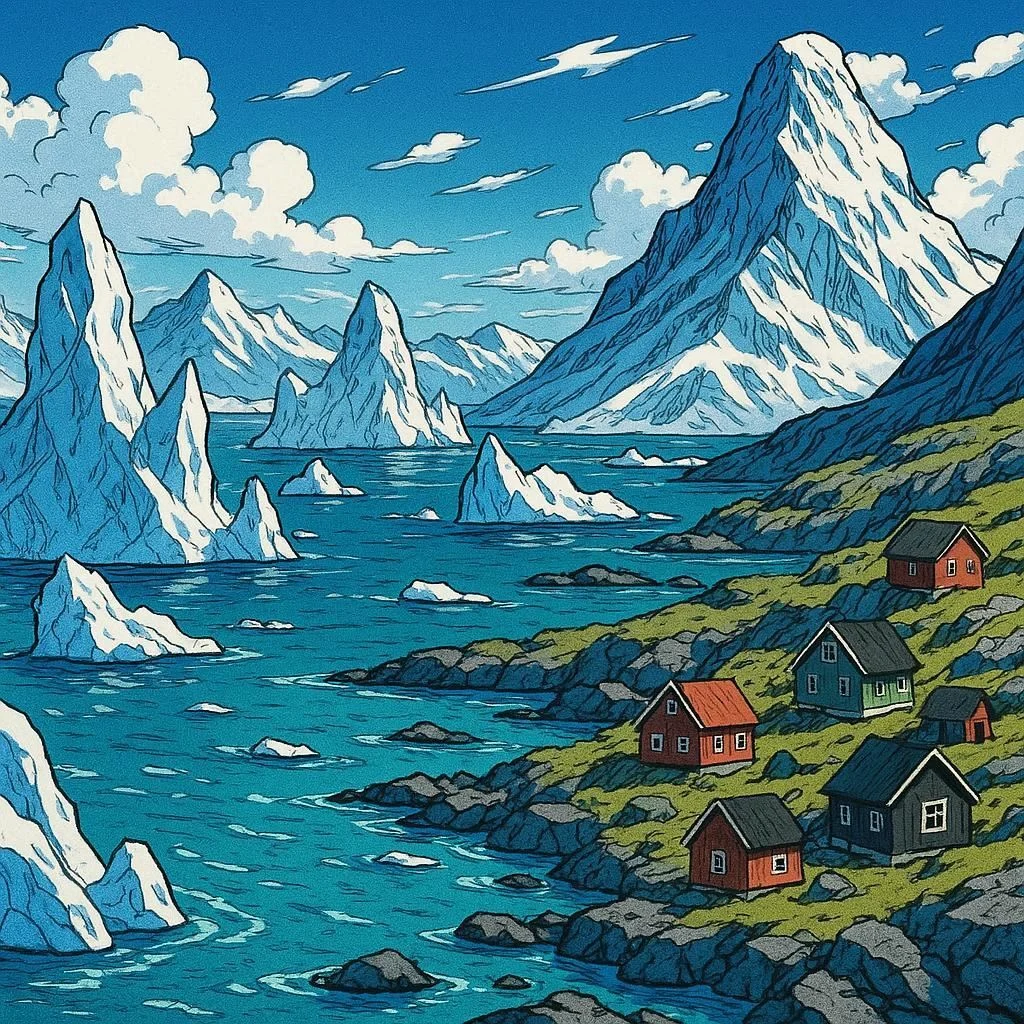
Greenland is strategically located in the Arctic region, covering an area of more than 2.1 million square kilometers. Geographically, it is considered part of the North American continent, although politically it is linked to Europe through Denmark. Its coastline is washed by the icy waters of the Arctic Ocean to the north and the Atlantic Ocean to the west and south. Most of the island is covered by the Greenland Ice Sheet, a layer of ice up to 3 kilometers thick at its deepest point. The ice-free areas are concentrated mainly along the coast, especially in the southwest, where most of the population lives and where the climate is relatively milder. Fjords, carved by glacial action, penetrate deep into the land, creating a rugged and spectacular coastline. The mountains, often steep and covered by glaciers, reach considerable heights, with Gunnbjørn Fjeld being the highest peak at 3,694 meters above sea level.
Greenland’s Extreme Climate
Greenland’s climate is predominantly Arctic, characterized by long, extremely cold and dark winters, and short, cool summers. Average annual temperatures in the interior of the island can fall to -30°C, while coastal areas experience somewhat milder temperatures, although they rarely exceed 10°C in summer. Precipitation is generally low, especially in the interior, where most of it falls as snow. The influence of the massive ice sheet makes the climate considerably colder than in other regions at similar latitudes in the Southern Hemisphere. Winds also play a crucial role, with katabatic winds descending from the ice plateau, creating harsh and often unpredictable weather conditions.
Cold-Adapted Flora and Fauna
Despite the extreme conditions, Greenland is home to a surprising variety of flora and fauna adapted to its freezing environment. In the few ice-free areas, tundra can be found with mosses, lichens, dwarf shrubs, and some Arctic flowers that bloom briefly during the short summer. Terrestrial fauna is more limited, but includes iconic species such as the polar bear, Arctic fox, musk ox, and several species of hares and reindeer. However, where life truly flourishes is in the oceans and along the coasts. The surrounding waters are teeming with marine life, including seals, walruses, and an abundance of fish such as cod and salmon. Whales, such as the humpback whale, blue whale, and bowhead whale, are frequent visitors to Arctic waters. Seabirds are also very common, with massive colonies nesting on coastal cliffs.
Human Life and Greenlandic Culture
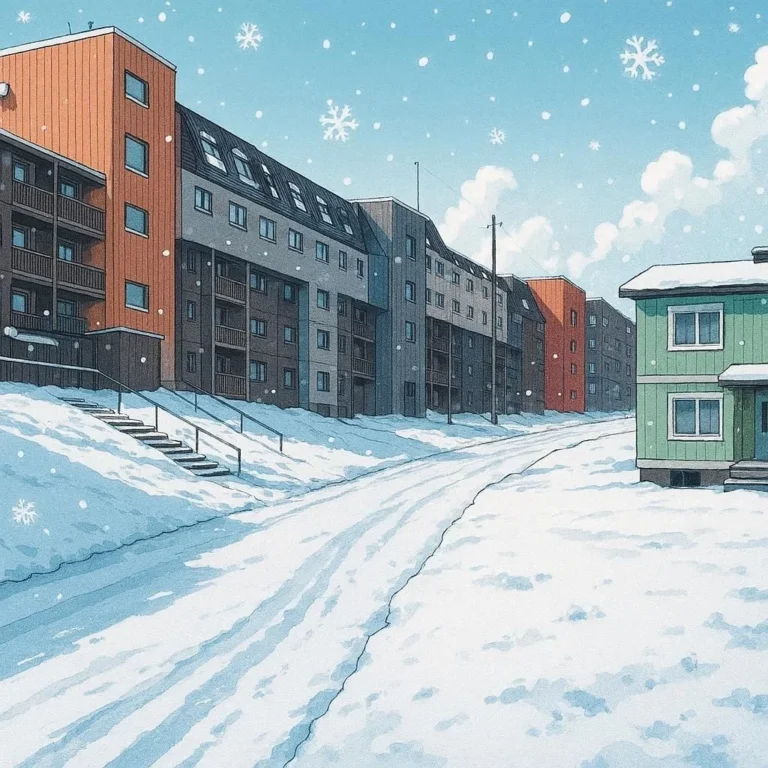
Greenland’s population is relatively small, predominantly of Inuit origin, with a Danish minority. Human life in Greenland has historically been tied to the resources of the sea and the land, with hunting and fishing as the pillars of subsistence. Communities are usually located along the coast in scattered settlements. Greenlandic culture is rich and resilient, with ancestral traditions that have adapted and evolved over time. The Greenlandic language, Kalaallisut, is the official language and a central element of its cultural identity. Despite the challenges posed by the environment, Greenlanders have developed a deep knowledge of their surroundings and a strong sense of community.
Greenland: The World Champion of Records
Greenland holds world records that make it a true natural powerhouse. Its main “champion” title is being the largest island in the world. This geographic record is fundamental, as the vastness of its territory, mostly covered by ice, sets it far apart from any other island on the planet. Greenland is so large that its geography and its impact on the global climate are of the utmost importance.
But its reign of records does not end there. Greenland has the second-largest ice sheet in the world, surpassed only by Antarctica. This gigantic mass of ice, the Greenland Ice Sheet, contains enough frozen freshwater reserves to raise global sea levels by several meters if it were to melt completely. The scale of this glacier is hard to grasp, and studying it is crucial to understanding climate change and its consequences. Scientists constantly monitor its thickness, movement, and rate of melting, providing us with vital data about the health of our planet.
Another fascinating, though often overlooked, record is that Greenland has the highest concentration of fjords in the world relative to its size. Although Norway is famous for its extensive fjords, Greenland’s fractured coastline, the result of glacial erosion over millennia, features a density of these spectacular inland sea inlets that is hard to match. These fjords are not only landscapes of breathtaking beauty, but also vital ecosystems and historic navigation routes for Greenlanders.
In addition, Greenland can claim the record for the lowest population density of any country or territory in the world. With a population of just over 56,000 spread across such a vast area, the sense of space and isolation is palpable. This low density is a direct consequence of the challenges of the climate and terrain, but it also defines the uniqueness of life in this land.
Finally, Greenland is a champion of resilience and adaptation. Its Indigenous population, the Inuit, have lived in this harsh environment for thousands of years, developing deep knowledge and sustainable practices that have allowed them to thrive. Their ability to adapt to environmental changes, both natural and human-induced, is a testament to their strength and wisdom. In short, Greenland is not just a frozen landmass; it is a geographic giant, a treasure of ice, a labyrinth of fjords, a vast empty space, and a home of immense resilience, making it, in its own right, an undisputed world champion of natural records.