

Tasmanian devil
A small animal that lives in only one place in the world.
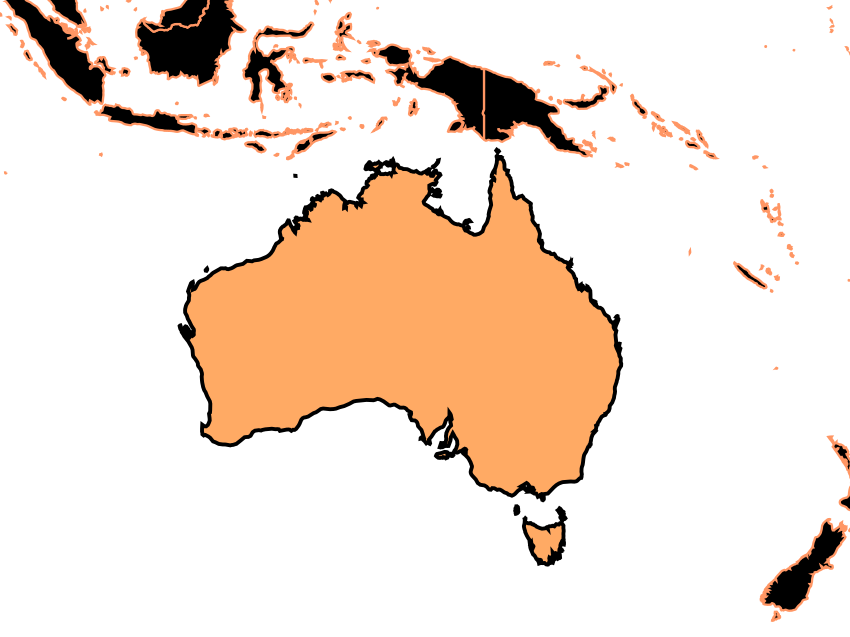
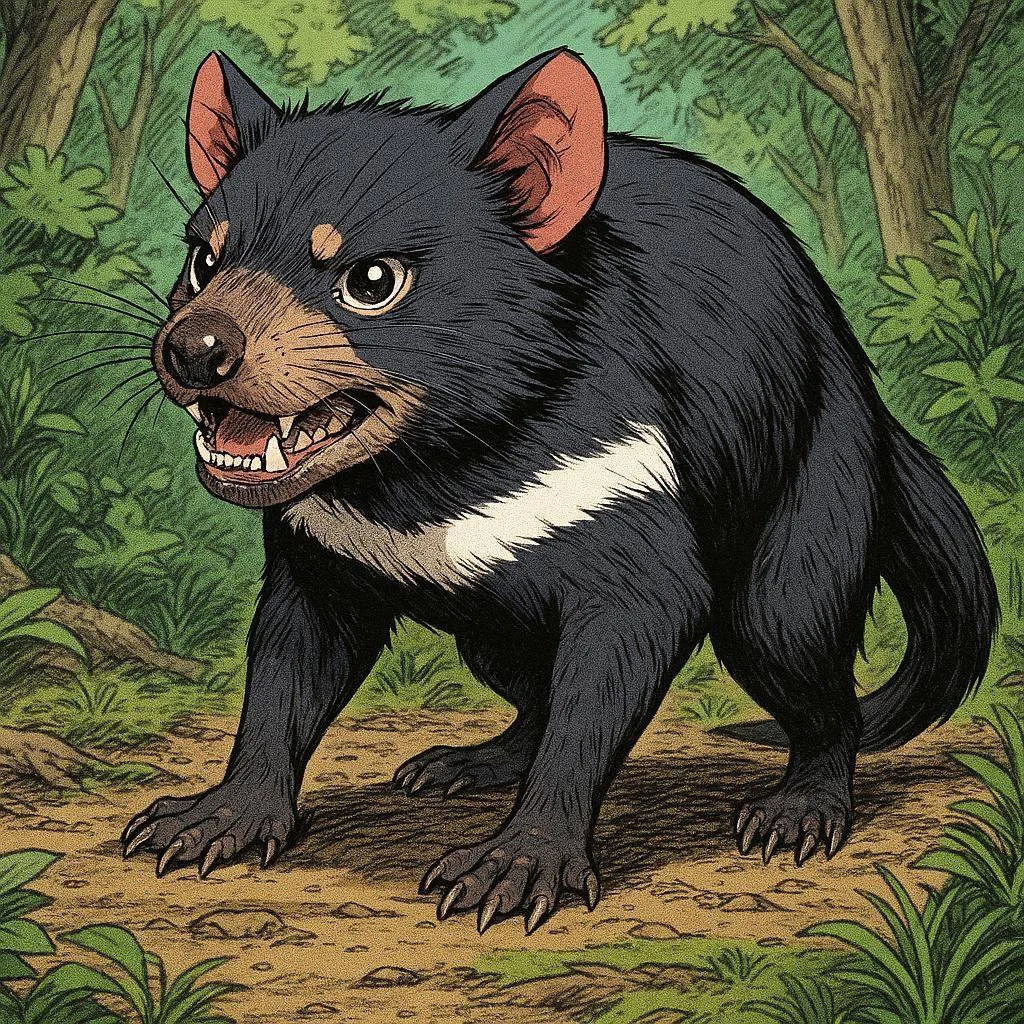
The Tasmanian devil is one of the most curious and surprising animals in Australia. Despite its name, it is not a devil, but a small black marsupial that lives almost exclusively on the island of Tasmania, south of the Australian mainland. It is famous for its loud growls, powerful jaw, and appearance, which can seem a bit fierce. Precisely because it is a unique and very special species, it is part of the planet’s Natural Treasures.
Where does it live?
Tasmania is a large island separated from Australia by a sea strait. It is covered by forests, mountains, rivers, and natural parks where many species that are not found anywhere else live.
The Tasmanian devil prefers forests and areas with dense vegetation. During the day it usually rests hidden among bushes, caves, or fallen logs. When night falls, it goes out to search for food, as it is mainly a nocturnal animal.
Its home consists of very different landscapes, from humid forests to grasslands and mountains. Thanks to these ecosystems, it can find shelter and food throughout the year.
A very special animal
Although it only measures about 60 centimeters and weighs between 6 and 12 kilos, the Tasmanian devil has one of the strongest bites in the world relative to its size. Its powerful jaws can easily break bones, something very useful for making the most of all the food it finds.
Many people believe it is a very dangerous hunter, but in reality it spends most of its time feeding on animals that have already died. In this way, it helps clean nature, preventing remains from staying on the ground for a long time.
It also has an excellent sense of smell, which allows it to find food even several kilometers away. When several devils arrive at the same place, their famous growls and screeches can be heard, sounds that gave rise to their curious name.
Why is it a natural treasure?
The Tasmanian devil is a natural treasure because it only lives in the wild on this island. If it disappeared there, it would practically disappear from the rest of the world. Additionally, it is the largest carnivorous marsupial in existence today.
Its presence is very important for maintaining the balance of nature. By feeding on dead animals, it helps keep forests clean and reduces the spread of some diseases. It is a species that plays a very valuable role within its ecosystem.
For thousands of years it has evolved isolated in Tasmania, which explains why it is so different from other mammals. It is an example of how nature can create unique animals when they remain separated from the rest of the world.
A big problem
Since the late 20th century, the Tasmanian devil has faced a very strange disease called contagious facial tumor. This disease causes large lumps around the mouth and makes it difficult for the animals to feed.
Since devils often bite each other when competing for food or during mating, the disease can be transmitted from one animal to another. In some areas of Tasmania, the population declined very rapidly.
To prevent its extinction, scientists, veterinarians, and park rangers have been working for years on conservation programs. Some animals live in protected reserves and others are part of breeding projects to keep the species healthy.
A symbol of Tasmania
Today the Tasmanian devil has become one of the greatest symbols of the island. Many people travel there hoping to see it in the wild or to meet it in specialized centers where they explain how it lives and why it is so important to protect it.
Although it may seem like an aggressive animal when it bares its teeth or emits its loud growls, it normally avoids people and prefers to stay away. Its appearance can be impressive, but it plays a very important role in nature.
The Tasmanian devil shows that some of the greatest natural treasures are not the largest or most famous animals. Sometimes, a small inhabitant of a distant island can be a fundamental piece to keep an entire ecosystem alive and remind us how extraordinary the biodiversity of our planet can be.