Uvac
The meandering rivers
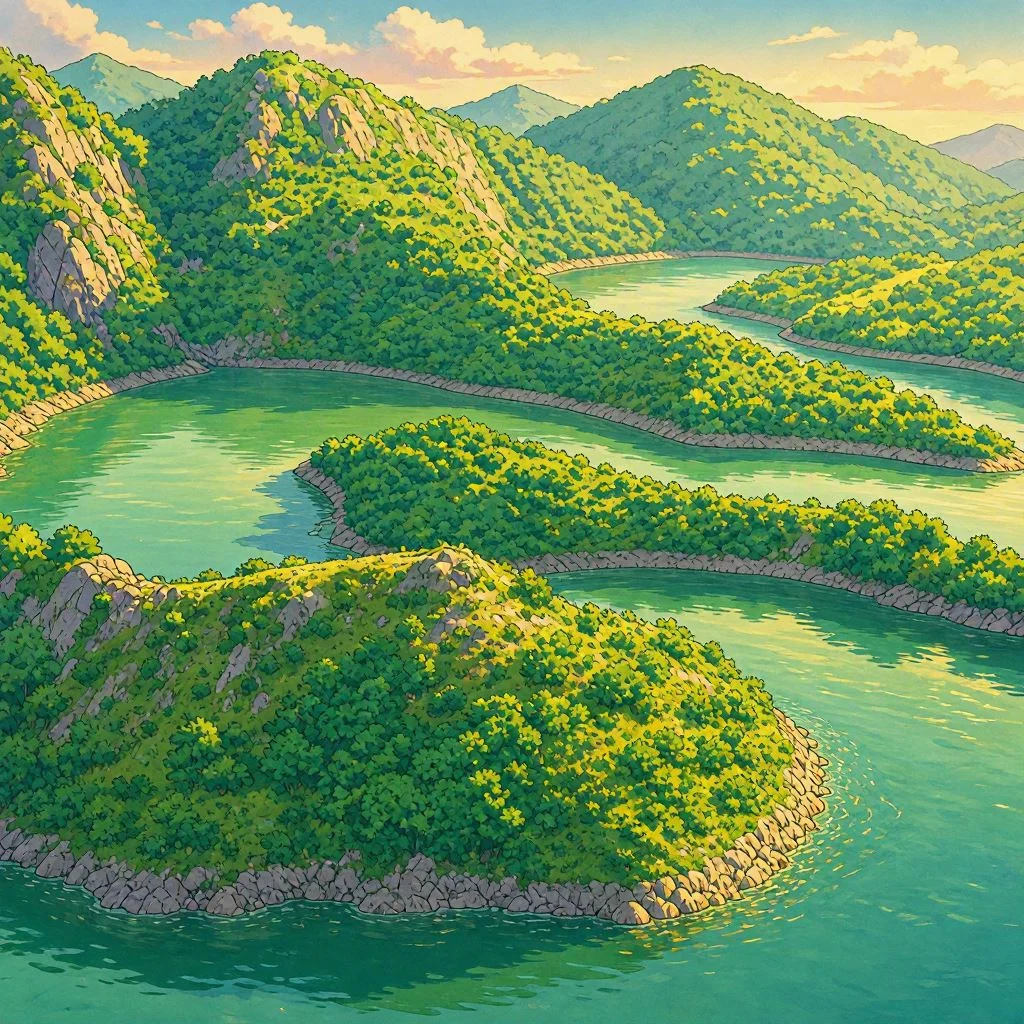
Imagine a river that, instead of moving forward in a straight line, draws huge curves, twists around itself and seems to get lost among the mountains. From above, its waters form a blue-green labyrinth, surrounded by rocky walls and forests.
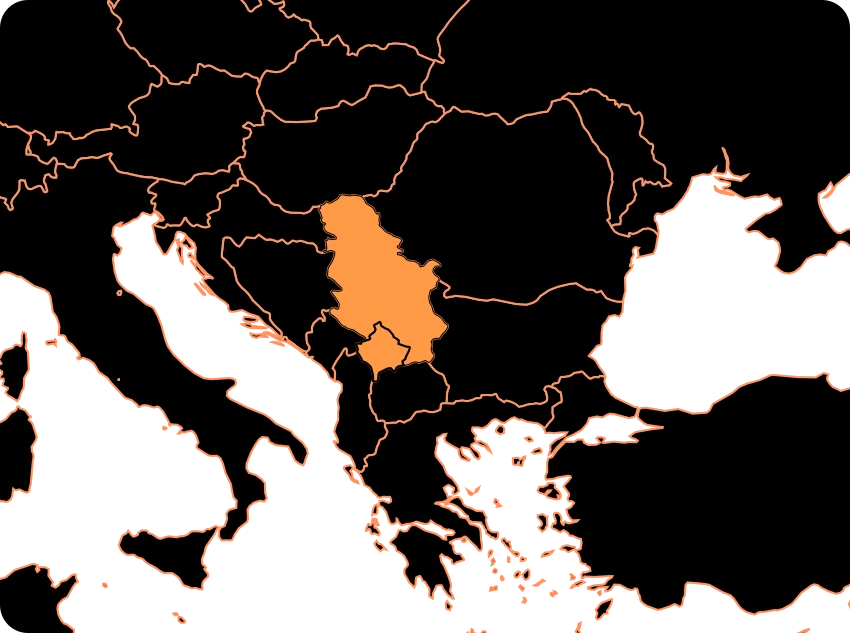
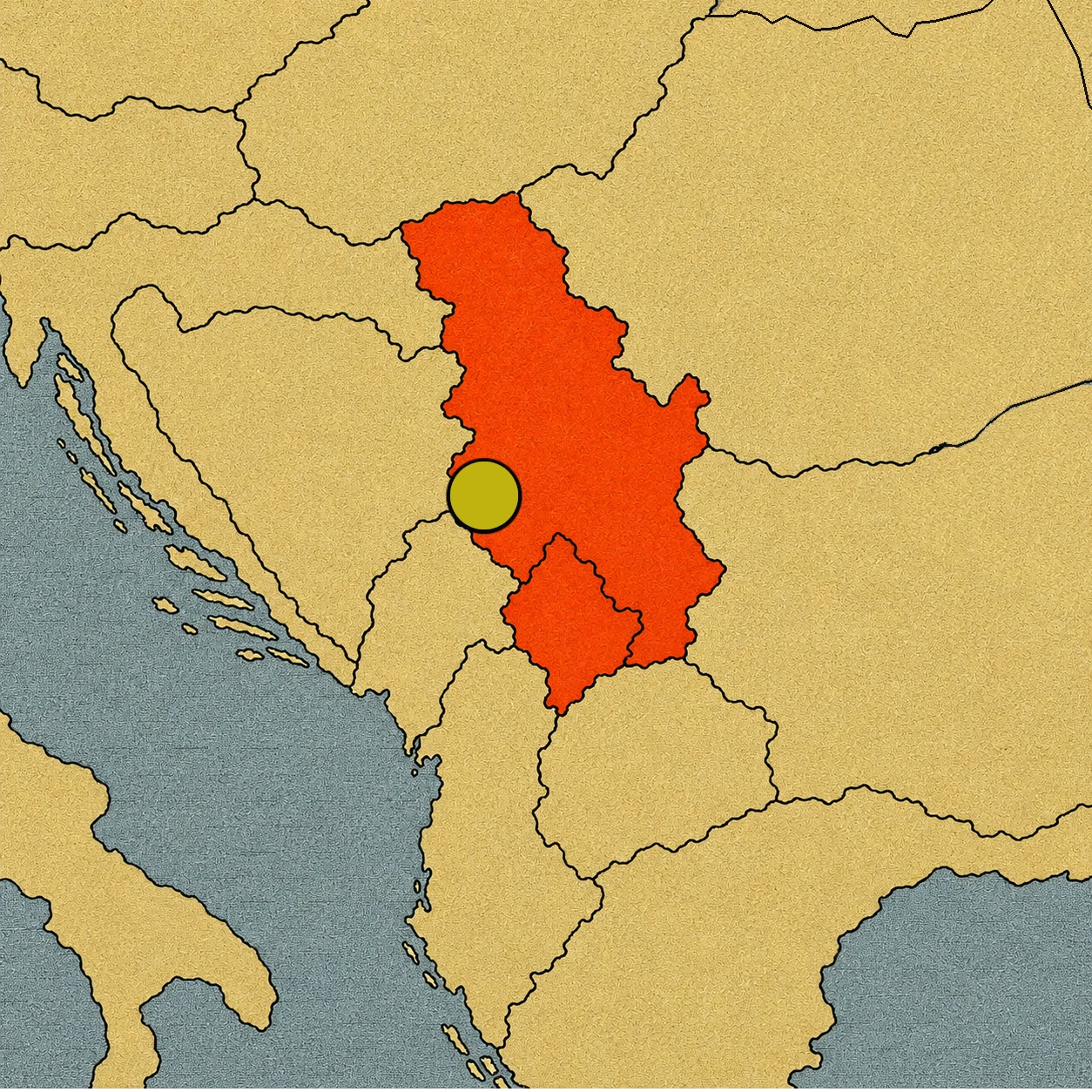
That place exists. It is located in southwestern Serbia, where the Uvac River winds between mountains and crosses a landscape of limestone gorges. Its curves are so sharp that, seen from a viewpoint, they look like the strokes of a giant snake.[]
The Uvac meanders are part of a protected nature reserve, known for its landscapes, its caves and the large birds that fly over the canyon. Here, water has shaped the rock for a very long time, while wildlife has found refuge in its cliffs. It is a place where nature seems to have drawn a map in its own way.
A river that refuses to go straight
The Uvac flows through a mountainous region between the towns of Nova Varoš and Sjenica. Around it rise mountains like Zlatar and Javor, covered with forests and meadows. [] Instead of crossing the landscape by the shortest path, the river traces huge curves. Some turn almost completely on themselves, forming loops that resemble horseshoes. These curves are called meanders. They appear when a river modifies its course: water erodes some banks, deposits sediments in others, and over time, the curve can become sharper and sharper.
In the Uvac, something especially striking happens. The river not only meanders through an open valley: its curves are embedded in a limestone rock canyon. Therefore, from the viewpoints, the banks seem to form a succession of huge green peninsulas surrounded by water.[] Some of the bends reach angles of about 270 degrees. That is, the river can turn so much that it ends up moving almost in the opposite direction from which it came.[] The result is a natural labyrinth that seems impossible to design with a ruler.
The mountain also tells the story
To understand the landscape, you have to look beyond the water.
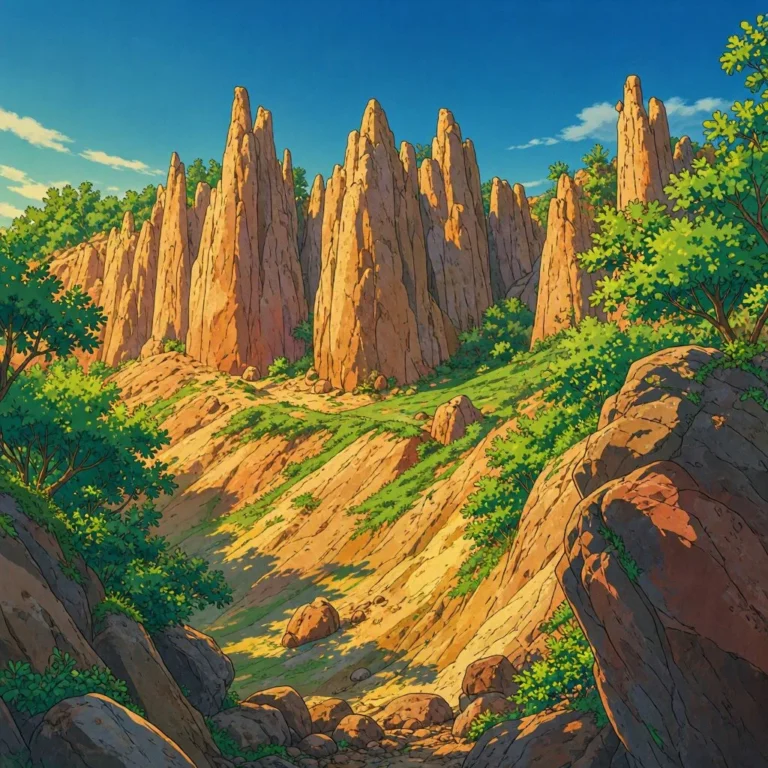
Much of the region is made of limestone, a rock that can slowly dissolve when rainwater contains slightly acidic substances. Over thousands and millions of years, that process creates cracks, cavities, caves and other characteristic forms of karst relief.[]
The Uvac has carved its valley in this terrain. In some sections, the canyon walls rise between 200 and 300 meters above the bottom, and can reach about 350 meters in depth.[] The river and the rock have worked together: the water has deepened the valley, while geological processes have contributed to shaping the slopes and walls that surround the meanders today.
And the landscape still has secrets beneath the surface.
A hidden world underground
Numerous caves open up in the canyon walls. Among them, the Ušac cave system stands out, an underground network formed by several connected cavities, including the Ušačka cave and the so-called Ice Cave.[]
Inside, water filtering through the rock slowly deposits minerals. This is how stalactites, which hang from the ceiling, and stalagmites, which grow from the floor, are formed. Some look like columns, stone curtains or delicate needles. These shapes can take thousands of years to develop. A drop falls, leaves a tiny amount of mineral and continues its journey. Another takes its place. And another one.
While the river draws its curves in broad daylight, the water also works in the dark, creating a second landscape inside the mountain.
The kingdom of the Eurasian griffon vulture
The meanders attract all eyes, but the Uvac holds another treasure that moves through the sky. It is the Eurasian griffon vulture, a large scavenging bird that can exceed two and a half meters in wingspan. When it spreads its wings, it takes advantage of the air currents rising along the cliffs to rise without barely flapping them.[]
The griffon vulture fulfills an important function in nature: it feeds on dead animals and helps eliminate their remains. Thus it participates in nutrient recycling and ecosystem functioning.
During the 20th century, these birds were close to disappearing from the region. Habitat protection and conservation measures allowed the population to recover. Today, the Uvac reserve hosts one of the most important griffon vulture colonies in the Balkans.[] The cliffs offer places to nest, while the air currents help these huge birds move over the valley.
Therefore, looking at the Uvac from above can offer two spectacles at the same time: the curves of the river and the silhouettes of the vultures gliding over them.
A landscape that also changed with people
Although the Uvac looks like a corner apart from the world, the current landscape also reflects human intervention. Along the river, hydroelectric dams were built that created several reservoirs, including the lakes of Uvac, Zlatar and Radoinja.[] These dammed waters are part of the image that many visitors recognize: calm blue-green surfaces curving between rock walls.
Seeing the labyrinth from above
One of the best-known places to contemplate the meanders is the Molitva viewpoint, whose name means “prayer”. From there, the river appears far below, wedged between green slopes and rock walls.
The view allows you to understand why these curves are so famous. From the water, the river seems to advance between narrow walls; from high up, the complete pattern of its turns is revealed.
It is also possible to tour parts of the canyon by boat, a way to observe the rocky walls from the bottom of the valley. On some tours, caves are visited or navigation is combined with hikes to the viewpoints.
But the Uvac is a protected area. Respecting the trails, avoiding disturbing the birds and following the guides’ instructions helps conserve an environment where every cliff and every corner can serve as a refuge for wildlife.
Natural treasure
The Uvac meanders are a natural treasure because they bring together several wonders in the same place: a river that draws extraordinary curves, limestone mountains, caves full of mineral formations and cliffs where large vultures fly.
Each element tells a different story. The river speaks of erosion and time. The caves show how water can transform rock even when no one sees it. Vultures remind us that a landscape is not complete without the living beings that inhabit it. And the dams reveal that people have also left their mark in the valley. From the sky, the Uvac looks like a huge green and blue drawing. From the shore, it is a river that continues its path among the mountains. A labyrinth created by water, sculpted in rock and turned into a refuge for life.
Sources
- National Tourism Organization of Serbia — location of the canyon, meanders, reservoirs and ways to visit it — https://www.serbia.travel/es/uvac-river-gorge/
- Discover Serbia — description of the meanders and their curves of up to 270 degrees — https://www.discoverserbia.org/en/south-western-serbia/uvac
- Special Nature Reserve of Uvac — geology, canyon depth and cave system — https://www.uvac.org.rs/specijalni-rezervat-prirode-uvac
- National Tourism Organization of Serbia — griffon vultures and colony recovery — https://www.serbia.travel/es/uvac-river-gorge/