
Devil’s Town
The stone towers of the devil
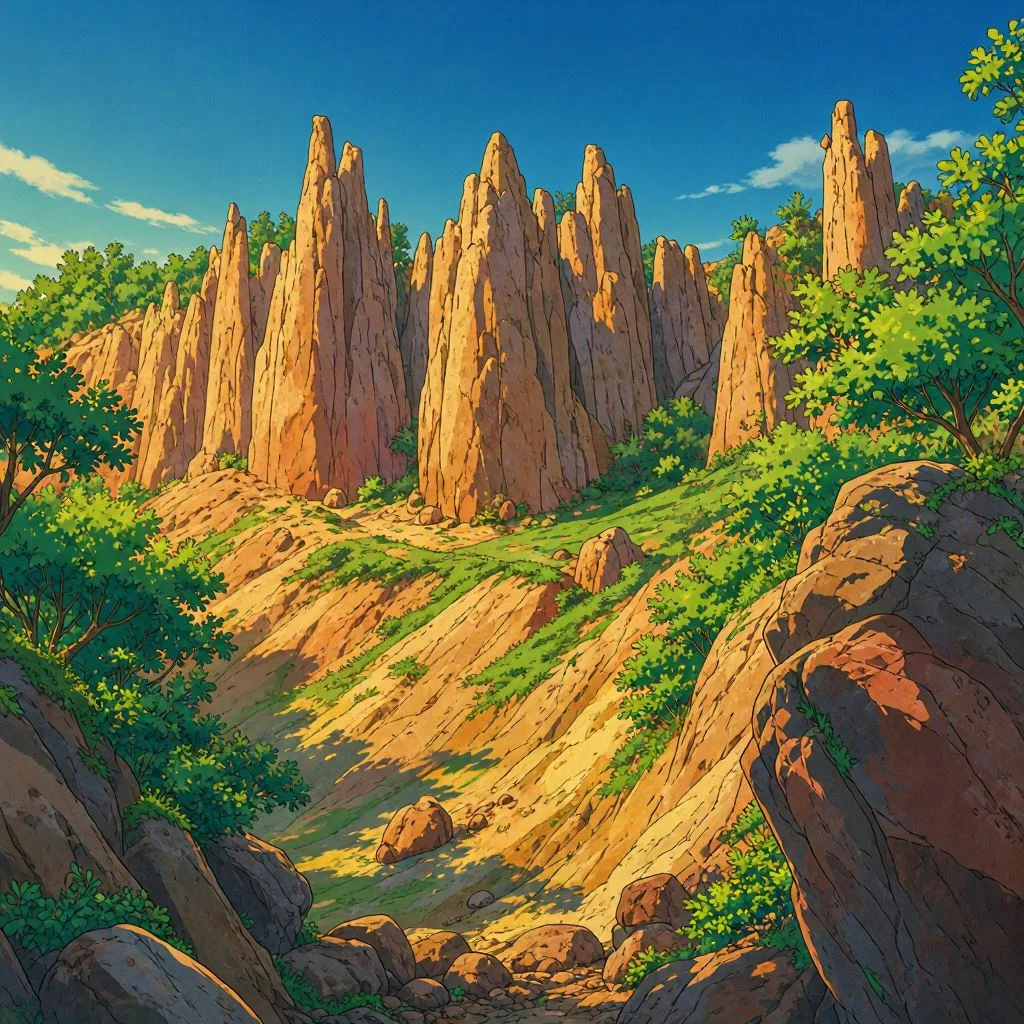
From a distance, it looks like someone turned an entire army into stone. Dozens of narrow figures rise among the mountains of southern Serbia. Some look like people. Others resemble towers, monsters, or hunchbacked giants. And almost all of them wear a huge stone on top, as if someone had carefully placed a hat on their head. But they are not giants. Nor are they statues. They are 202 natural formations slowly created by erosion.[1]
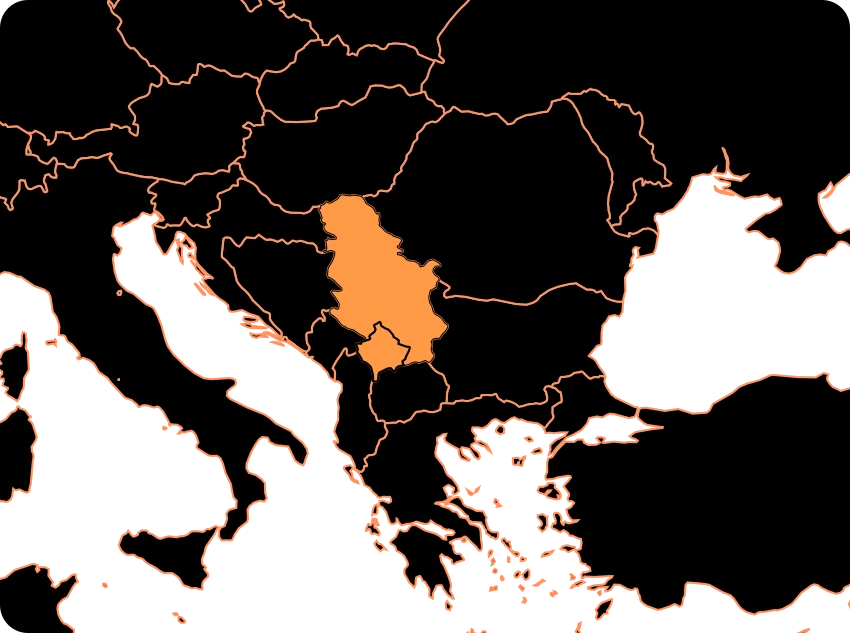
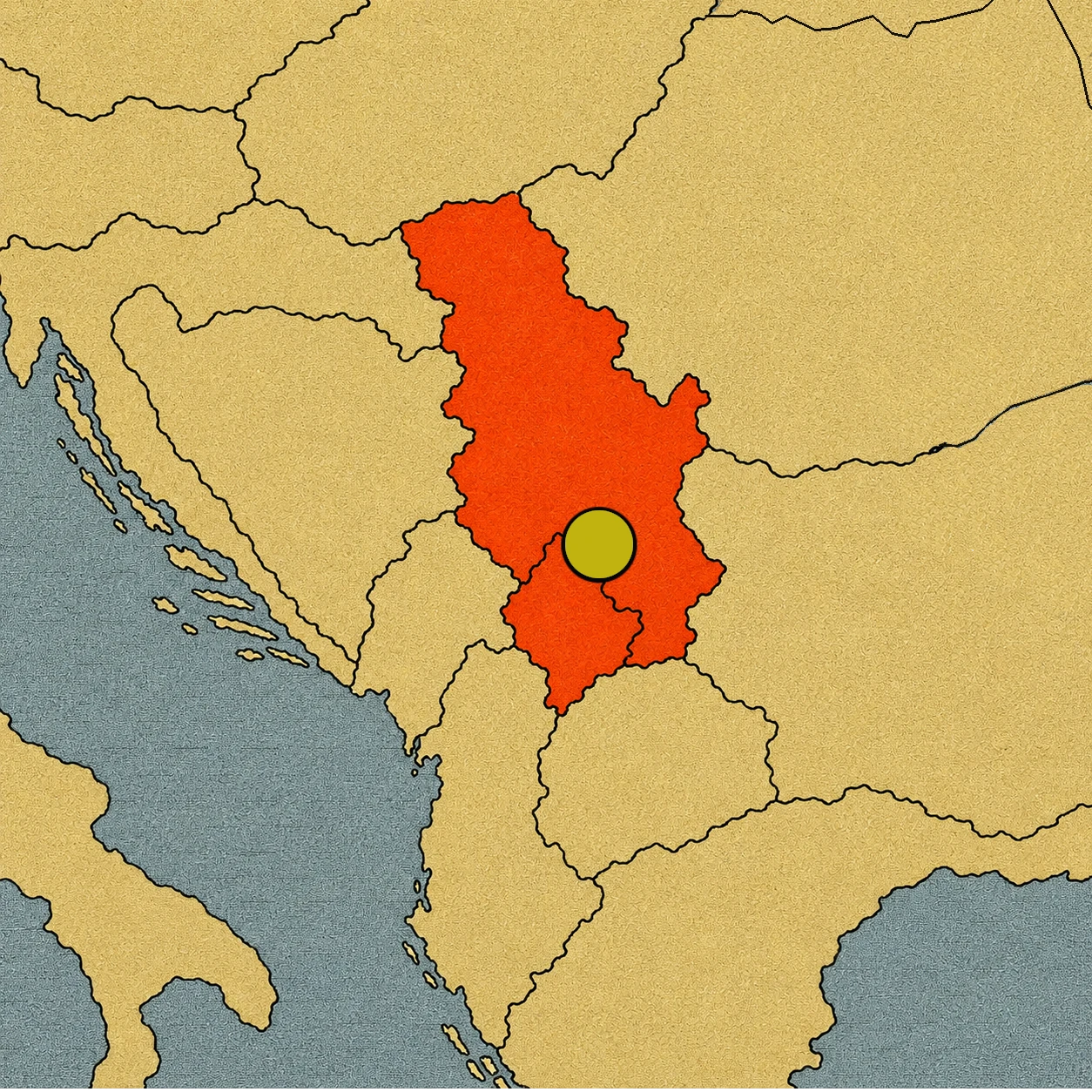
The place is called Devil’s Town—Đavolja Varoš in Serbian—and it is located on the slopes of Mount Radan, near Kuršumlija. Its figures reach up to about 15 meters in height and are spread across two ravines known as the Devil’s Gorge and the Hell’s Gorge.[1][2] The result looks so strange that for centuries people searched for an explanation that lived up to the landscape.
And that is how legends were born.
A city of giants
Imagine walking through a mountain and, as you turn a bend, a group of huge earth figures appears before you. They have no arms. They have no separate legs. They have no faces. But some seem to have a head and body. And all of them are grouped in such an unusual way that it is hard to think they are simply rocks.
The tallest reach about 15 meters, while some are much smaller. They can measure up to about three meters wide and have different shapes from one another.[1] The most surprising thing is at the top. Resting on many columns is a larger stone, a sort of natural roof that protects the earth underneath. Those stones are precisely one of the keys to the mystery. Because without them, the figures would not exist.
The hat that saves the column
To understand Devil’s Town, you have to imagine a mountain made of materials of varying resistance. Some are relatively soft and can be easily washed away by water. Others are more resistant.
For thousands of years, rain fell on the slopes of Mount Radan. Water began to cut small channels and carry away soil particles. Little by little, the weaker parts disappeared.[1] But under a large rock, something different happened. The stone acted as a natural roof.
When it rained, it partially protected the material directly underneath. All around it, erosion continued to wear away the softer ground. Thus, the protected soil remained slightly higher than the rest. Over time, that small difference could turn into a column. And a column could transform into a tower. And a tower, with its stone on top, could end up looking like a giant.
A sculpture made by the rain
Erosion does not work like a human sculptor. It has no tools. It makes no blueprints. It does not decide what shape it wants to achieve. It simply happens. Water takes advantage of small differences in the hardness of the ground. Gravity helps transport material downhill. Wind, sun, and temperature changes also contribute to modifying surfaces.[1][2]
The result is a collection of figures that look designed. But nobody designed them. One person might look at one and think it looks like a warrior. Another might see a monster. Another might see a medieval tower. Nature does not need to represent anything specific to produce shapes that our brains recognize as familiar.
Why is it called Devil’s Town?
Here begins the part of the story that geology cannot tell. For generations, the inhabitants of the area observed those figures and created stories to explain their existence.
One of the most famous legends tells that the devil wanted to trick the people of the region. According to the version preserved by local tradition, he prepared a mysterious “devil’s water” that was supposed to make people forget their family ties. Under its influence, a bride and groom even tried to get married despite being siblings.[2]
A protective figure of the region tried to stop that wedding. And when all seemed lost, he asked for divine help. Then something extraordinary happened: a cold wind and a supernatural event turned the bride, groom, and all the guests into stone. Thus, the figures we see today would be the remains of that impossible wedding.[2]
There is another story. According to this tradition, some of the figures are demons turned into stone. People had suffered from their actions for a long time and managed to free themselves from them by spending a night near the church of Saint Petka.[2]
But the giants keep changing
Here comes one of the most surprising things. The figures are not finished. The erosion that created them continues to act. The rain keeps falling. The water keeps washing away small amounts of material. The wind keeps beating against the surfaces. And the stones capping the columns continue to protect some areas while others are exposed.
That is why some figures can change shape, others become narrower, and some end up disappearing when they lose their protection.[1] At the same time, erosion can start forming new columns in other places.
It is like looking at a sculpture that the artist is still modifying. Only the artist is the weather. And it works at such a slow speed that a person can barely notice the change.
A mountain full of colors
Devil’s Town doesn’t just look strange because of its shapes. The landscape has different colors and textures. The columns can show reddish, yellowish, gray, and brown tones. Among them appear the rocks, soil, and vegetation of Mount Radan.
In addition, there are springs in the area with very particular characteristics. One of them is named Devil’s Water and contains a high concentration of minerals. Nearby is the Red Spring, whose color is related to the presence of iron.[2]
A protected landscape
Devil’s Town is part of Serbia’s protected natural monuments and has been included by the country on its UNESCO Tentative World Heritage List.[1] The UNESCO proposal highlights its importance precisely as an example of erosion: more than 200 earth towers and pyramids formed by water, many of them protected by rock blocks.[1] The official number usually used today is 202 figures.
From another planet
Devil’s Town fits perfectly into the From another planet category because, for a few minutes, it can make us forget where we are. It looks like a city inhabited by giants. It looks like a petrified army. It looks like a work of art abandoned in the middle of a mountain.
But beneath all that fantastic appearance, the columns were not carved, the legends did not create them, and giants were never there. It only took water, rock, earth, and a very long time.
Perhaps that is why this place is so extraordinary. Because when we finally discover how the mystery was born, reality turns out to be even more surprising than legend.
Sources:
- UNESCO — Devil’s Town, geological formation, erosion, dimensions, and World Heritage nomination — https://whc.unesco.org/en/tentativelists/1700
- Tourism Organization of Serbia — Devil’s Town, legends, springs, and characteristics of the formations — https://www.serbia.travel/es/stories-items/ciudad-del-diablo-leyenda-y-maravilla-natural/
- Tourism Organization of Serbia — Natural monuments of Serbia and Devil’s Town — https://www.serbia.travel/es/nature/walking-in-natural-parks/natural-monuments/
- Tourism Organization of Serbia — General information about the 202 figures and their legends — https://www.serbia.travel/en/devils-town/