
Masada
The Desert Fortress
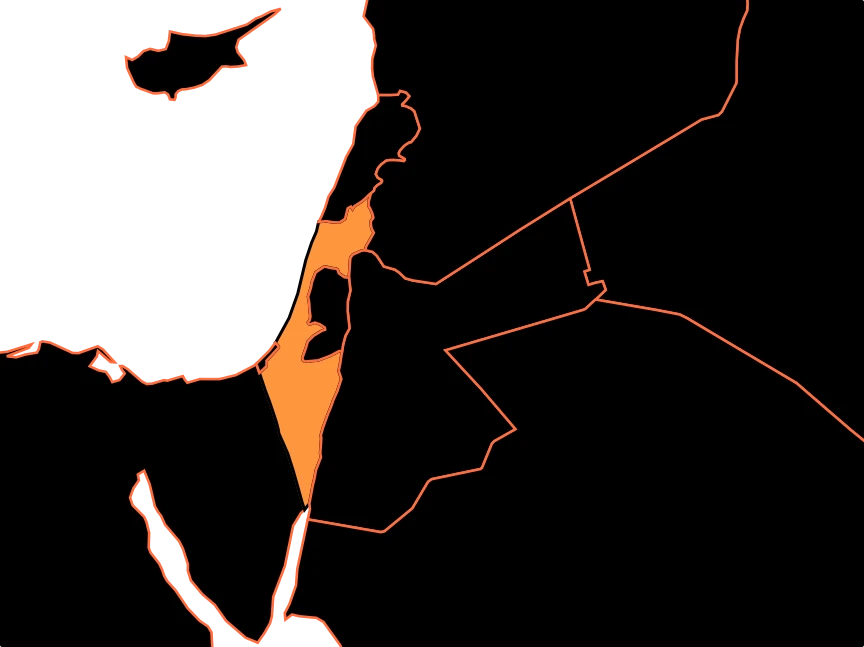
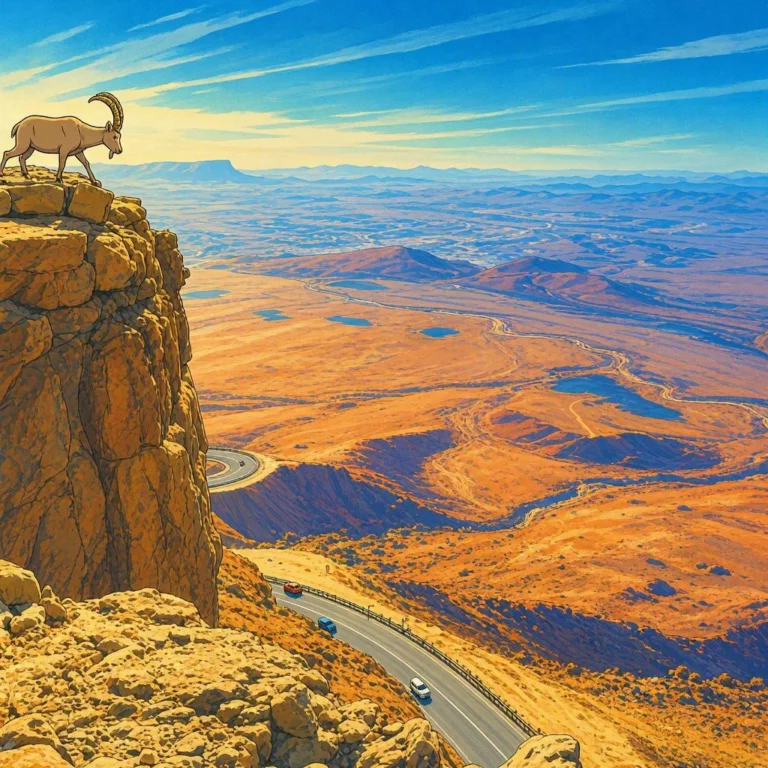
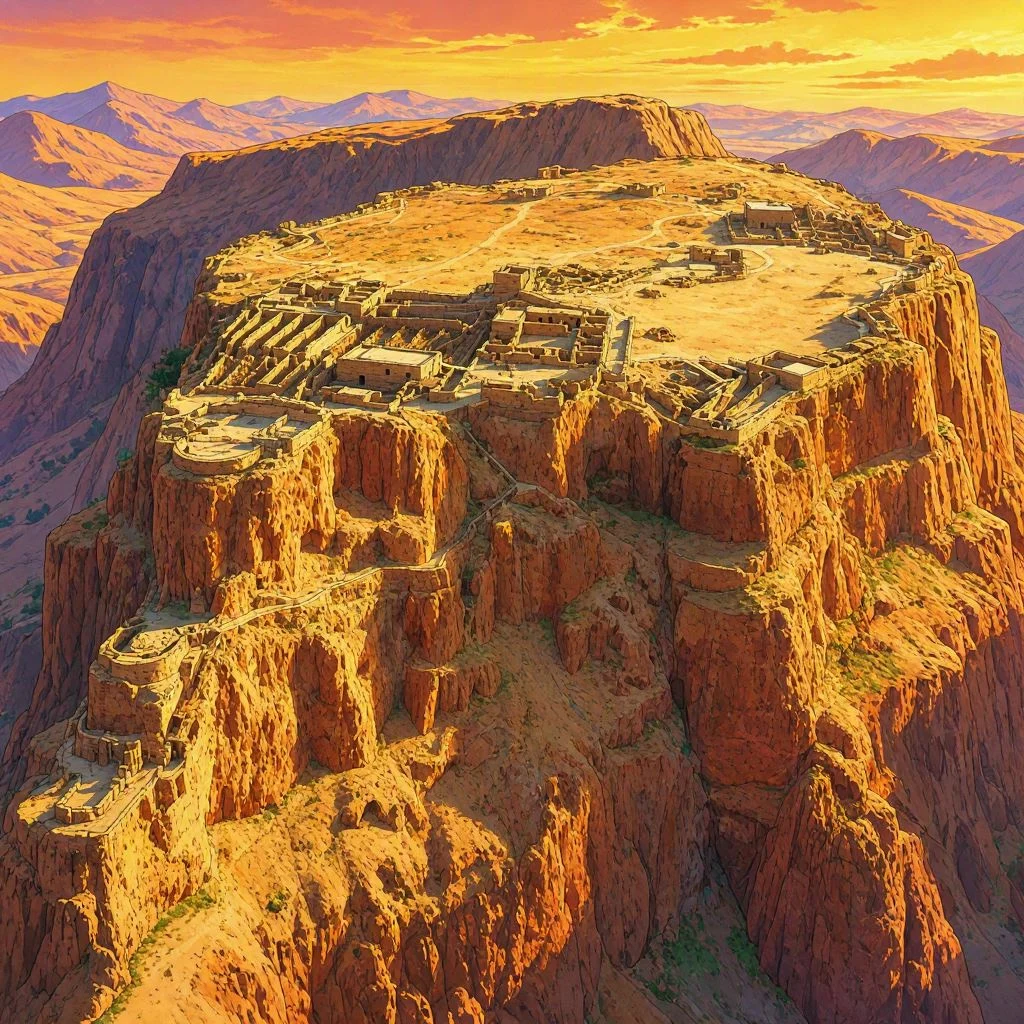
In the middle of the Judean Desert appears a mountain that looks like it was placed there by someone who wanted to build the ultimate fortress. Its walls drop almost vertically into the landscape, and its summit is a rocky, dry, and isolated plateau overlooking the Dead Sea. There you will find Masada, one of the most extraordinary fortresses of antiquity.
But Masada is not just a fortress. It is also an ancient palace, an engineering marvel, an archaeological site, and the setting for one of the most famous episodes of the war between Judea and Rome. Its history brings together kings, soldiers, rebels, architects, engineers, and archaeologists.
A Mountain Turned Into a Fortress
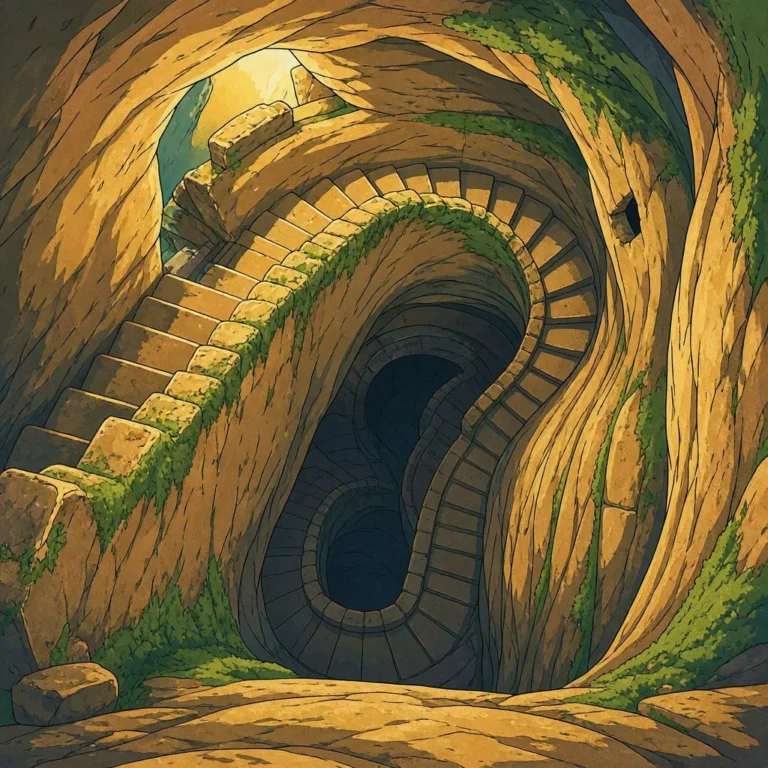
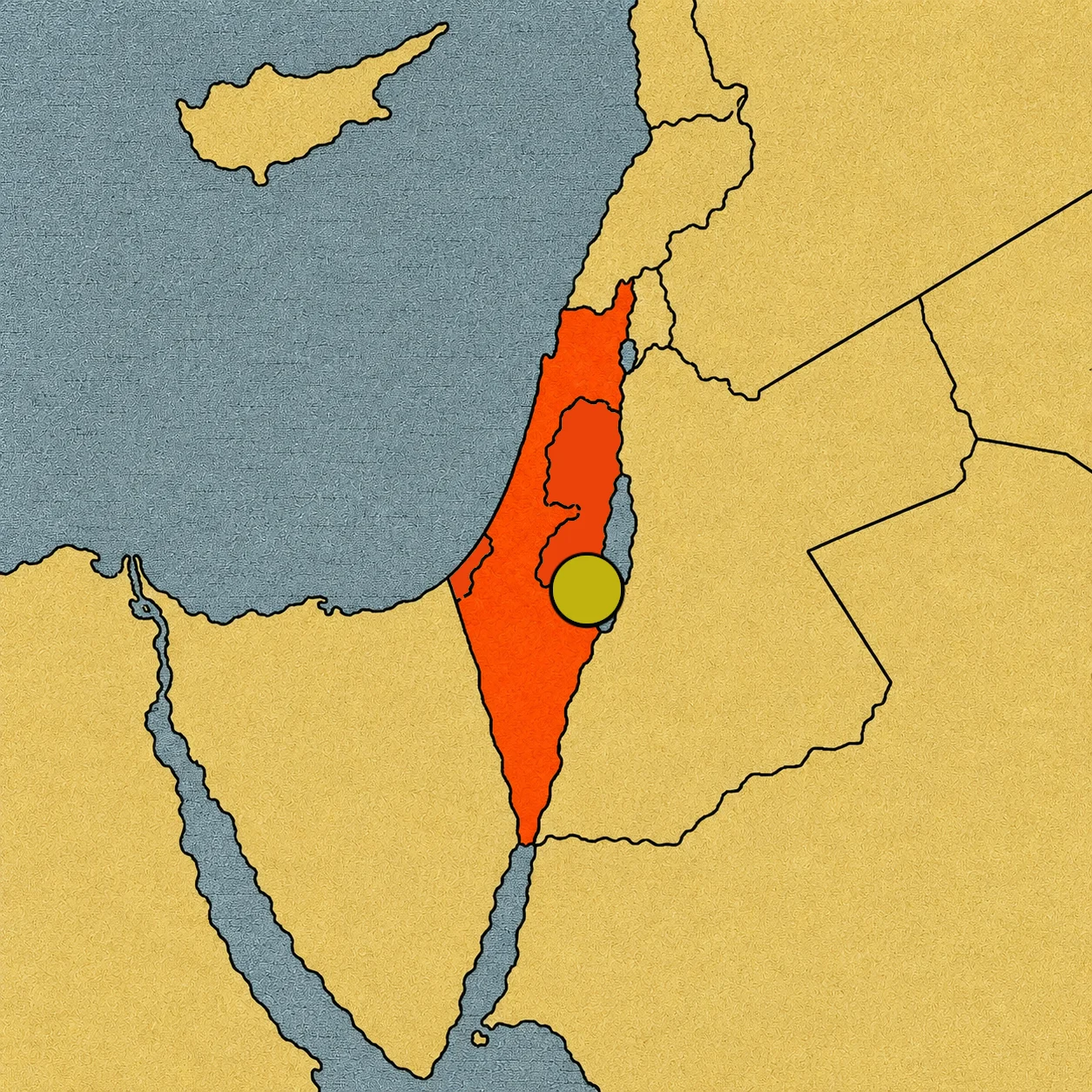
Masada is located at the eastern edge of the Judean Desert, atop a rocky plateau that rises next to the Dead Sea. Nature itself had done much of the defensive work. Its slopes are very steep, and the ravines make access extremely difficult. In antiquity, one of the main paths to the top was a narrow, winding route known today as the Snake Path.[1]
For an enemy army, getting to the top was complicated. For a ruler wanting to hide their treasure, family, or troops there, however, that place could be perfect. And that is precisely what Herod the Great, king of Judea, thought.
Herod and His Desert Palace
Herod ruled Judea between 37 and 4 BCE and was a great builder. During his reign, he promoted huge architectural projects, many of them inspired by the architecture of the Hellenistic and Roman worlds.
At Masada, he transformed a natural fortress into an extraordinary palace complex. He built walls, towers, storehouses, baths, palaces, and huge water cisterns.[2] He didn’t just want to put up a stone castle. He wanted to create a place capable of functioning even in one of the driest landscapes in the region. The summit was surrounded by a defensive wall approximately 1.3 kilometers long. Inside, there were spaces to store food, house soldiers, and organize daily life.[3]
But the most spectacular construction was at the northern end.
The Palace That Hangs From the Cliff
Herod’s Northern Palace seems to defy the rules of the landscape. It was built on three terraces carved and reinforced into the mountainside. There is a drop of about 30 meters between the upper and lower terraces.[4]
At the top were the king’s private rooms. Further down were spaces meant for receiving guests and hosting banquets. A semicircular terrace looked out toward the desert and the Dead Sea.
Archaeologists have found remains of geometric mosaics and wall paintings. Some decorations imitated marbles of different colors, a way to bring the luxury of Roman palaces to a place where almost everything around was rock and sand.[4] Seen from below, the palace looks like it is gripping the mountain.
Water Was More Important Than Gold
Building palaces in the desert required solving a fundamental problem: where to get water? Herod had an extraordinary answer. Engineers built a system of channels that collected rainwater and led it to large cisterns carved into the rock. Some were located on the slopes and others on the plateau itself.[2]
According to UNESCO documentation, the system could collect enough water from a single day of rain to sustain about a thousand people for two to three years.[2]
That sounds unbelievable until we understand the strategy. Masada did not need a river flowing through the mountain. It took advantage of every rainfall. The water was stored in huge reservoirs to be used much later.
There were also Roman-style baths, another sign of how much Herod wanted to turn that isolated fortress into a luxury residence.
A Palace, But Also a Miniature City
Masada might have seemed like a place meant only for the king, but its interior was much more complex. There were storehouses where large quantities of food were kept, military installations, homes, and workspaces. There was also a synagogue, which was later used by the inhabitants who occupied the fortress during the revolt against Rome.[5]
Decades after Herod’s death, Masada would play a completely different role. The royal palace would become a refuge for people fleeing a war.
Judea Against Rome
In 66 CE, a great rebellion began by part of the population of Judea against Roman rule. The conflict lasted for several years and ended with a Roman campaign that destroyed Jerusalem and its Second Temple in the year 70.[6] Masada was occupied by Jewish rebels. There they found buildings that had been built for a king decades earlier.
Now the fortress no longer represented Herod’s power. It had become one of the last places of resistance against Rome. According to the Jewish historian Flavius Josephus, a group led by Eleazar ben Ya’ir stayed in Masada until the Roman army arrived.[7] And then began one of the most impressive sieges of antiquity.
The Romans Surround the Mountain
The Romans couldn’t simply climb up the Snake Path. So they did something much more impressive: they surrounded Masada. They built military camps around the mountain and raised a wall of circumvallation to prevent the defenders from escaping or receiving help.[2]
Then they concentrated their efforts on the western side. There they built a huge assault ramp using earth and stones. Little by little, the structure climbed up the slope until it got close to the walls.
From the top, the defenders could watch as the enemy army slowly built the path that would allow them to attack. The ramp still exists. And that makes the landscape around Masada a sort of frozen photograph of a battle that took place almost two thousand years ago.
Archaeology Can See the Siege
One of the things that makes Masada special is that the remains of the Roman army are still around the mountain. There are camps, fortifications, and remnants of the attack ramp. UNESCO considers that the Roman siege works preserved at Masada are the most complete of their kind to survive in the Roman world.[2]
Modern archaeological investigations have even studied the siege system using three-dimensional models. Research published in the Journal of Roman Archaeology estimated that the Roman wall surrounding Masada was roughly between 2 and 2.5 meters high and could serve both to block the defenders and to control movement around the mountain.[8]
Thus, archaeology allows us to reconstruct not only the buildings of the fortress, but also how the army surrounding it operated.
The End of Masada
When the Romans managed to reach the defenses, they found that the resistance had ended. The best-known story comes from Flavius Josephus. According to his account, the defenders decided to die rather than be captured and enslaved. Josephus stated that about 960 people died.[7]
But this episode must be told with care since Josephus was not present at Masada during the final siege.[9]
The Mountain Speaks Again
For centuries, the site was abandoned. The extremely dry climate and isolation helped preserve many remains.
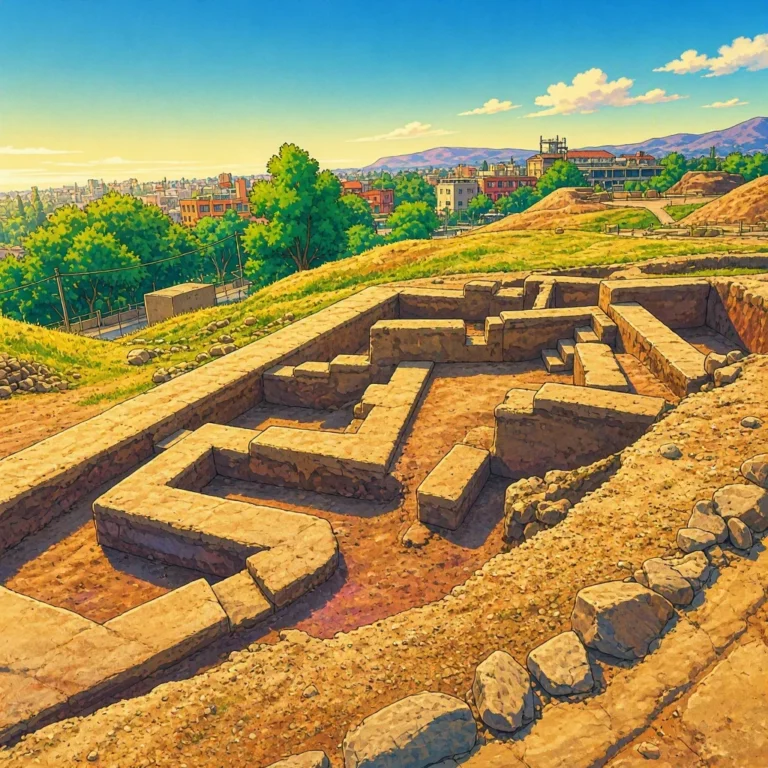
In the 19th century, modern explorations began. But the massive excavation led by archaeologist Yigael Yadin between 1963 and 1965 was especially important. The work brought to light a large part of Herod’s complex, the rebels’ facilities, and the Roman siege works.[5]
Archaeologists found mosaics, paintings, coins, food remains, defensive structures, and objects related to daily life. Each discovery helped reconstruct a place that had been simultaneously a palace, a fortress, a refuge, and a theater of war.
A Wonder Between Rock and Desert
In 2001, UNESCO added Masada to the World Heritage List.[2] The reason is not just that a famous story happened there. Masada preserves an extraordinary combination of landscape, architecture, engineering, and archaeology.
Herod managed to build a Roman-style palace on top of a desert mountain. His engineers created a water system capable of sustaining a community in extreme conditions. The rebels reused that complex during the war against Rome. And the Romans left behind the traces of a massive siege around the mountain.
Today, when a visitor reaches the summit, they can gaze at the Dead Sea from the very heights where Herod, his soldiers, and those who took refuge there during the war once looked out.
Masada shows us that a wonder doesn’t have to be perfect or shiny. Sometimes it can be a dry, silent mountain full of ruins. Because when landscape and history come together, a stone fortress can become a time machine.
Sources:
1. Description of the natural site, access, and archaeological remains of Masada — https://en.parks.org.il/article/the-plateau-2/
2. Universal value of Masada, Herod's complex, water system, and Roman siege works — https://whc.unesco.org/es/list/1040
3. Walls, towers, and defensive organization of the complex — https://whc.unesco.org/archive/2001/whc-01-conf208-inf11reve.pdf
4. Northern Palace, its three terraces, mosaics, and wall paintings — https://en.parks.org.il/article/the-plateau-2/
5. Archaeological excavations and historical evolution of Masada — https://en.parks.org.il/article/the-plateau-2/
6. Historical context of the Jewish rebellion against Rome and destruction of Jerusalem — https://www.worldhistory.org/Masada/
7. Flavius Josephus' account of the siege and the end of Masada, along with the limitations of this source — https://www.worldhistory.org/Masada/
8. Modern archaeological analysis of the Roman siege system and its circumvallation wall — https://doi.org/10.1017/s1047759424000084
9. Historical and archaeological debate regarding the final story of Masada — https://www.biblicalarchaeology.org/daily/biblical-sites-places/biblical-archaeology-sites/the-masada-siege/