
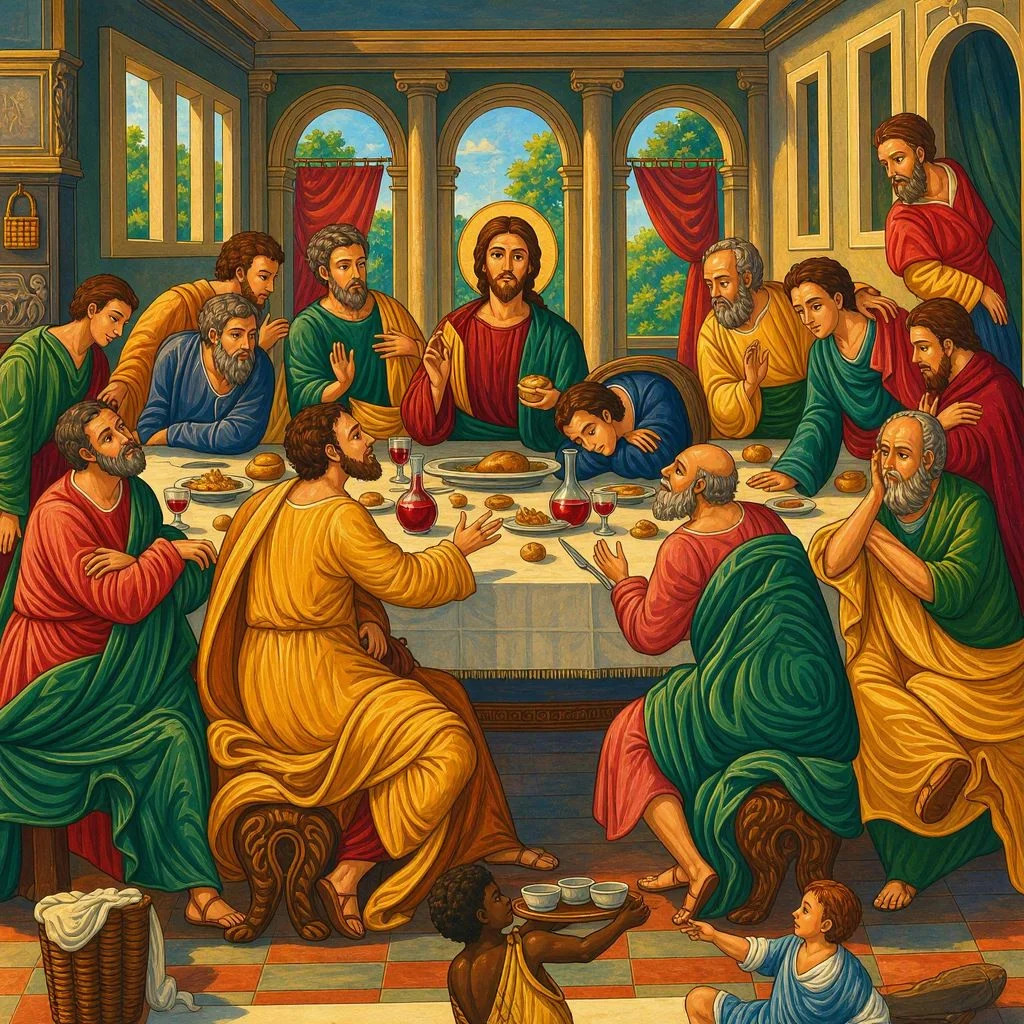
Jesus of Nazareth
The birth of Christianity: the story that changed the maps
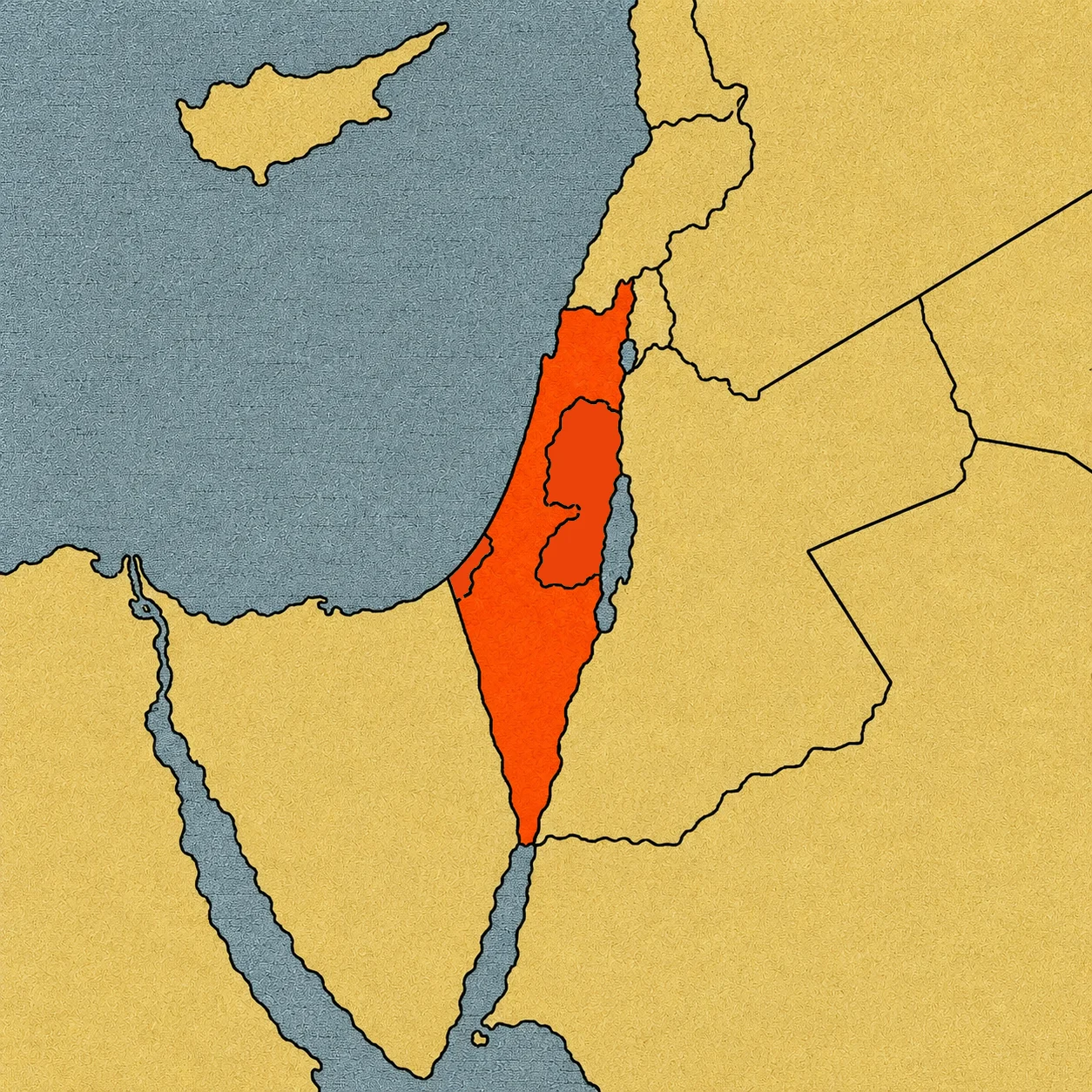
Imagine a map of the Mediterranean about 2,000 years ago. Rome rules over huge territories, while Judea, on the eastern coast, looks like a tiny piece inside a gigantic empire. And yet, a story began there that would end up crossing seas, mountains, and borders.
Jesus of Nazareth preached love, service, and humility, and his story changed the maps. For Christians, he is the Son of God, perfect man and true God; for historians, a Galilean Jew who gave rise to a movement that spread across the Empire.
Jesus of Nazareth: what the sources tell us
The gospels place Jesus’ birth in the late 1st century BC or the early 1st century AD (his exact date is unknown). He grew up in Nazareth, a small village in Galilee. He was a craftsman. Around the age of thirty, he was baptized in the Jordan River by John the Baptist and began traveling through Galilee. His public ministry is believed to have lasted three years. Its center was the shore of the Sea of Galilee, especially Capernaum; but he traveled frequently through Galilee, Judea, and Samaria.[3]
He taught in synagogues, in villages, and in the open air, using parables—simple stories with a deep meaning. He spoke of the Kingdom of God, love for God and neighbor (even enemies), forgiveness, and care for the poor, the sick, and the outcast. According to the Gospel of John, at the Last Supper he washed his disciples’ feet, a task fit for servants, to show that to lead is to serve.[3]
He chose twelve disciples, a number that recalled the twelve tribes of Israel. They were ordinary people: fishermen like Peter and Andrew, James and John, and a tax collector, Matthew. Several women, such as Mary Magdalene, accompanied and supported them.[3] On the way to Jerusalem he passed through Jericho, where the gospels place, for example, the encounter with Zacchaeus. You can read more about that place in our article on Jericho.
The extraordinary deeds
The four gospels tell that Jesus did extraordinary things: he gave sight back to the blind, healed the sick, cast out what his contemporaries called evil spirits, calmed a storm on the lake, multiplied loaves and fish for a crowd, and, according to John, brought his friend Lazarus back to life.[3] For Christians, these are “signs”: indications that the Kingdom of God was at work among the people.
What do historians say? They examine the texts using their own method: what sources tell it, when they date from, and what reputation Jesus had. On this, the majority agree: during his lifetime he had a reputation as a healer and exorcist. The gospels do not say this alone. The Jewish historian Flavius Josephus, around the year 93, speaks of Jesus as someone who performed surprising deeds.[2] And the gospels themselves record that some adversaries did not deny these facts, but instead attributed them to an evil power.[3]
What the historical method cannot do is prove or rule out whether they happened supernaturally. That belongs to faith and personal reflection. Islam also recognizes that Jesus, whom it calls Isa, performed miracles with God’s permission, although it considers him a prophet and not the Son of God.[9]
Why did Jesus die?
Jesus was crucified in Jerusalem during the rule of Pontius Pilate, the Roman prefect of Judea, probably around the year 33. This is one of the best-attested facts of his life: the gospels tell it, Josephus records it, and the Roman historian Tacitus writes that Christ was executed by order of Pilate under the emperor Tiberius.[1][2]
Since no trial transcript survives, historians explain the causes by combining several clues:
- The punishment. Crucifixion was a Roman torture, reserved for slaves and those considered rebels or dangerous to order. It was not the usual punishment under Jewish law.[12]
- The accusation. According to the gospels, the sign over the cross read “King of the Jews.” To Rome, anyone who proclaimed himself king without the emperor’s permission could be accused of sedition. This is a detail that many historians consider very likely to be true.[3][10]
- The timing. Jesus arrived in Jerusalem at Passover, when the city was full of pilgrims and Roman soldiers were on high alert. The gospels tell that in the Temple he overturned the tables of the money changers and that some acclaimed him as king or Messiah.[3]
- The Temple leaders. According to the gospels, the high priest Caiaphas and other leaders feared the movement would provoke a violent reaction from Rome, and they handed him over to Pilate.[3] Pilate, known for his harshness according to Josephus and Philo, ordered the execution.[2][6]
Many historians summarize it this way: he was executed by Rome as a potential political threat, with the collaboration of some Jerusalem leaders. The details of the process are debated, because each gospel tells it a bit differently.[10]
For Christians, his death has a deeper meaning: they believe Jesus freely accepted the cross and that in doing so he showed a love capable of laying down his life for others.
History and faith: the resurrection
Here it is helpful to carefully separate what historians study from what Christians believe.
What the sources tell. The gospels recount that Jesus was laid in a tomb; that on the third day, some women found it empty; and that his disciples said they saw him alive in Jerusalem and Galilee.[3] The oldest written testimony is from Paul. Around the year 55, in a letter to the Corinthians, he recalls a formula he himself had received, which scholars place very close to the events. In it, he lists those who saw the risen Jesus: Peter, the Twelve, more than five hundred people at once, James, and finally Paul himself.[4]
What historians can affirm. The majority agree on three things: Jesus was crucified; shortly after, his disciples, who according to the gospels had fled and were hiding, were convinced they had seen him alive; and they began proclaiming him, in the very city where he had died, even at the risk of losing their lives. That conviction is the origin of Christianity.[10]
What Christians believe. They believe that God, through His Son, Jesus Christ, conquered death and, by extension, the devil, through the offering of His voluntary death. Thus He restored to humanity freedom and the possibility of attaining eternal life.[26] The resurrection is the center of Christian faith and what is celebrated at Easter. Paul wrote that without the resurrection, the Christian faith would make no sense.[4] For believers, it means that death does not have the final word and that love and life are stronger than evil.
What history cannot resolve. What caused that conviction is what is debated. Historians do not agree, because their method serves to study what people lived and wrote, but not to confirm or rule out a supernatural event. That is why it is a matter of faith and personal reflection.
Other traditions view it differently: Judaism does not consider Jesus the expected Messiah, and Islam teaches that Jesus did not die on the cross, but that God raised him to Himself and that, according to Islamic tradition, he will return before the end of the world.[9][25]
Ordinary people who changed the world
After Jesus’ death, the movement was carried on by a small group in Jerusalem, made up of his disciples (after Judas’s betrayal, Matthias took his place among the Twelve).[3] It is surprising because of who they were. They were not priests, scribes, or the wealthy: they were fishermen, a tax collector, craftsmen. While traveling with Jesus they lived on very few resources and depended on the hospitality and help of others. The Acts of the Apostles says the authorities were amazed that Peter and John, men without academic training, spoke with such confidence.[3]
Paul of Tarsus, one of the most important people in the history of Christianity, was instead a highly educated Pharisee and Roman citizen, who had first persecuted Christians and then became their great missionary. His letters are the oldest surviving Christian writings.[3][4]
Without an army, without money, and without state support, Christianity grew in three centuries from a small group in Jerusalem to a community of several million people. Some scholars estimate that around the year 300 they might have been between 5% and 10% of the Empire’s population, although the figures are heavily debated.[11]
That such a small, powerless movement went so far surprises believers and non-believers alike, and it is one of history’s most studied stories. For Christians, it is a sign of God’s action. Historians look for social, cultural, and geographical explanations. What no one disputes is the result: a network of communities that in a few generations reached from Jerusalem to Rome, and then much further.
Martyrs: witnesses to the end
The word “martyr” comes from Greek and means “witness.” It applies to those who died rather than renounce their faith. According to the Acts of the Apostles, the first martyr was Stephen, stoned in Jerusalem a few years after Jesus’ death.[3] In the year 64, after the great fire of Rome, Emperor Nero blamed the Christians and ordered many to be executed, as Tacitus recounts.[1] Christian tradition places the martyrdom of Peter and Paul in Rome around those years.
According to Christian tradition, most of the Twelve died as martyrs. The New Testament only tells of the death of one of them, James the brother of John, executed around the year 44 by order of Herod Agrippa;[3] for the others, news comes from later traditions that historians cannot confirm. The death of James, the brother of Jesus, stoned in Jerusalem around 62 according to Josephus, is attested,[2] and the First Epistle of Clement of Rome, around 96, recalls the sufferings of Peter and Paul.[21]
Many other Christians became martyrs throughout history, especially during the persecutions of the Roman Empire in the early centuries.
The persecutions
Expansion was not easy. Christians refused to participate in certain public cults and to worship the emperor, something that could be interpreted as a break with traditional customs.[5][13] It is certain that for nearly two centuries, Christians lived under constant threat. From Trajan’s response to Pliny (around the year 112), being a Christian could be punished with death anywhere in the Empire if someone denounced them and they refused to recant.[5]
Christian tradition counted ten major persecutions.[24] The lists of emperors vary by author: a frequent version cites Nero, Domitian, Trajan, Hadrian, Marcus Aurelius, Septimius Severus, Maximinus Thrax, Decius, Valerian, and Diocletian, while others include Aurelian instead of Hadrian. On the other hand, historians argue that the persecutions were local and of varying intensity until the first empire-wide persecution arrived in 250 under Emperor Decius, who ordered everyone to sacrifice to the gods and obtain a certificate proving it.[14][23] The last and harshest was that of Diocletian, starting in 303: churches were destroyed, sacred books were burned, and sacrificing was demanded.[23] It ended with the tolerance measures of 311 and 313.[15]
How many Christians died in these years is a heavily debated question. What is certain is that many were imprisoned, exiled, and lost their property, and that some, or many, lost their lives defending their beliefs.[13] Around the year 197, the Christian writer Tertullian claimed that the more Christians were executed, the more they multiplied: “the blood of Christians is seed.”[22]
Rome: from persecution to power
Diocletian’s persecution was the last. Then the political map took an extraordinary turn. In 313, Emperors Constantine and Licinius agreed on a policy of tolerance that allowed Christians to meet legally and recover confiscated property. Constantine also favored the construction of churches and supported Christian leaders.[8][15]
The change began to be seen in the cities. Large basilicas and new places of worship appeared. The religion that had lived under suspicion began to occupy public spaces.
When the emperor became an ally
Constantine did not turn the Empire into a Christian state overnight. Other religions continued to exist. But his support radically changed the position of Christians. In 325 he convened the Council of Nicea, where bishops debated an important question about the relationship between God the Father and Jesus Christ. The result was the Nicene Creed, fundamental to the Christian tradition.[8][16]
The geography of power also changed. Constantine founded Constantinople beside the Bosphorus, between Europe and Asia. The city became one of the great political and religious centers of Eastern Christianity.[8] The map was beginning to have new centers of gravity.
From persecuted religion to imperial religion
During the 4th century the transformation continued. In 380, Emperor Theodosius I ordered, in an edict addressed to the people of Constantinople, that his subjects follow the faith of the bishops of Rome and Alexandria, that is, that of Nicea.[17] This did not mean that the entire population converted immediately, but it did mean that the relationship between religion and power had changed.
Rome, Constantinople, Alexandria, Antioch, and Jerusalem became fundamental centers of Christianity.[7] Bishops, emperors, and communities formed a new network of authority. The transformation also reached art. Christian symbols appeared in paintings, mosaics, sarcophagi, and buildings. Many Roman artistic and architectural forms were reused and adapted to express new beliefs.[18]
Christianity crosses the borders of Rome
Christianity was not locked inside the Empire either. Armenia adopted Christianity as its official religion in the early 4th century, and the Kingdom of Aksum, in modern-day Ethiopia, adopted it throughout the 4th century, starting from the reign of Ezana.[19][20]
Over the centuries, the Christian map grew. In Western Europe, kingdoms and peoples adopted Christianity through different and sometimes very long processes. Monasteries and bishoprics helped organize territories, preserve texts, and spread knowledge.
Much later, European maritime routes carried different branches of Christianity to the Americas, Africa, Asia, and Oceania. That process was linked to explorations, empires, trade, and colonization. In some places there were gradual conversions; in others, conflicts, impositions, and mixtures with local traditions.
A map still recognized today
The result can be seen on the current map. Christianity gave rise to an enormous diversity of communities: Catholics, Orthodox, Protestants, and many other churches and movements. Its historical centers helped shape cities, landscapes, calendars, works of art, and educational systems.
It also left a political footprint. For centuries, European rulers sought legitimacy in their relationship with the Christian religion, while popes, patriarchs, bishops, and monarchs argued over authority. Religious differences contributed to creating alliances, conflicts, and new territorial divisions.
Yet there is an even more surprising idea: all of this began with a very small community of Jews with little training, little power, and little money.
It changed the maps
Jesus did not draw borders or lead an army to conquer territories. His movement began in a small region of Judea, within a gigantic empire. Even so, the decisions of his early followers—for historians—or divine help—for believers—made it possible for that tradition to travel far beyond its place of origin.
Over time, Christianity helped transform the cultural and political geography of Europe, the Mediterranean, and later, many other parts of the world. Centers of power, pilgrimage routes, city buildings, and relations between rulers and communities changed.
That is why it fits into the category It changed the maps: not because Jesus conquered territories, but because a story that started in Judea ended up creating one of the most extensive cultural and religious networks in history. The political map changed many times. The cultural map did too. And both were marked by a small story born on the eastern shore of the Mediterranean.
Sources
- Tacitus, Annals 15.44 (c. 116).
- Flavius Josephus, Antiquities of the Jews 18.63-64 and 20.200 (c. 93-94).
- New Testament: gospels of Matthew, Mark, Luke, and John, and Acts of the Apostles.
- Paul of Tarsus, First Epistle to the Corinthians, ch. 15, especially 15:3-8 and 15:14-19 (mid-50s).
- Pliny the Younger, Letters 10.96-97, correspondence with Emperor Trajan (c. 112).
- Philo of Alexandria, Embassy to Gaius 299-305.
- Council of Nicea (325), canons 6 and 7; Council of Chalcedon (451), canon 28.
- Eusebius of Caesarea, Life of Constantine, books 3 and 4.
- The Quran, suras 3:49, 5:110, and 4:157-158.
- E. P. Sanders, The Historical Figure of Jesus. London: Penguin, 1993.
- Rodney Stark, The Rise of Christianity: A Sociologist Reconsiders History. Princeton: Princeton University Press, 1996.
- Martin Hengel, Crucifixion in the Ancient World and the Folly of the Message of the Cross. Philadelphia: Fortress Press, 1977.
- W. H. C. Frend, Martyrdom and Persecution in the Early Church: A Study of a Conflict from the Maccabees to Donatus. Oxford: Blackwell, 1965.
- J. B. Rives, “The Decree of Decius and the Religion of Empire”, The Journal of Roman Studies 89 (1999), pp. 135-154.
- Lactantius, On the Deaths of the Persecutors 34 and 48; Eusebius of Caesarea, Church History 8.17 and 10.5.
- Eusebius of Caesarea, letter to his diocese on the Council of Nicea, and Life of Constantine, book 3.
- Codex Theodosianus 16.1.2, edict Cunctos populos of the year 380.
- Thomas F. Mathews, The Clash of Gods: A Reinterpretation of Early Christian Art. Princeton: Princeton University Press, 1993.
- Agathangelos, History of the Armenians.
- Rufinus of Aquileia, Church History 10.9-10.
- Clement of Rome, First Epistle to the Corinthians 5-6 (c. late 1st century).
- Tertullian, Apologeticus 50.
- Eusebius of Caesarea, Church History 6.39-41 and 7.10-12; Lactantius, On the Deaths of the Persecutors.
- Augustine of Hippo, The City of God 18.52.
- Hadiths on the return of Jesus (Isa): Sahih al-Bukhari 2476 and 3448; Sahih Muslim 155.
- Catechism of the Catholic Church, nn. 638-658.