
Jericho
The First Walled City
About 10,500 years ago, when many human communities still moved around to find food, a place in the Jordan Valley was already drawing people in. There was water, fertile land, and the opportunity to live together in a community. Over time, its inhabitants built houses, constructed a huge stone tower, and protected the settlement with a wall and a moat.[1]
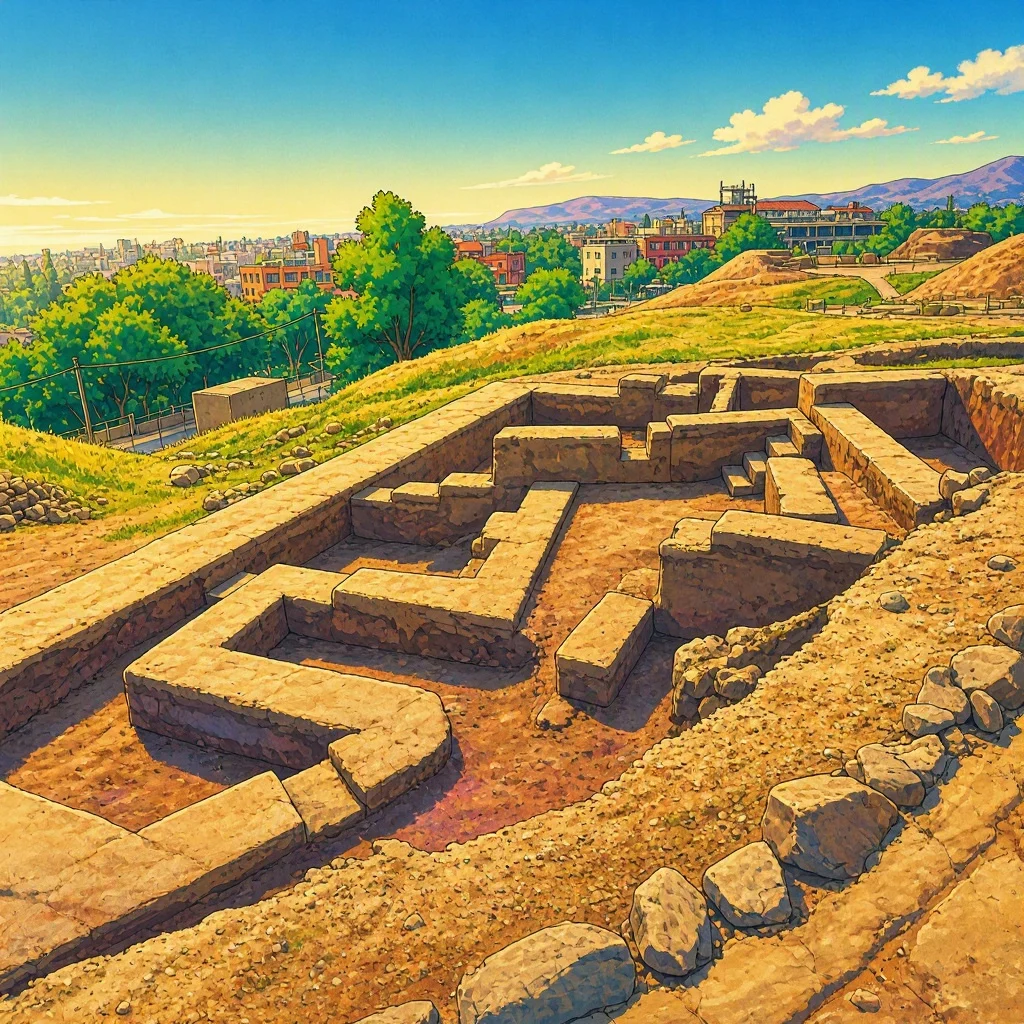
That place is Jericho, one of the oldest towns in human history and the oldest walled city. Its most extraordinary remains are preserved in an archaeological site called Tell es-Sultan, where layers of earth hold the traces of thousands of years of life. The story of Jericho begins long before the kings, armies, and great stone cities.
An Oasis in the Middle of the Valley
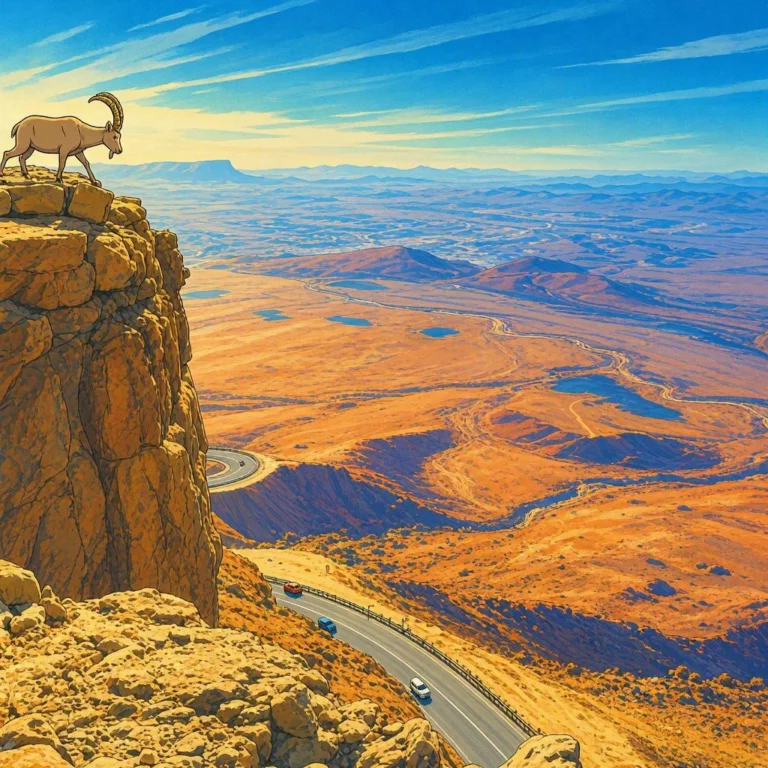
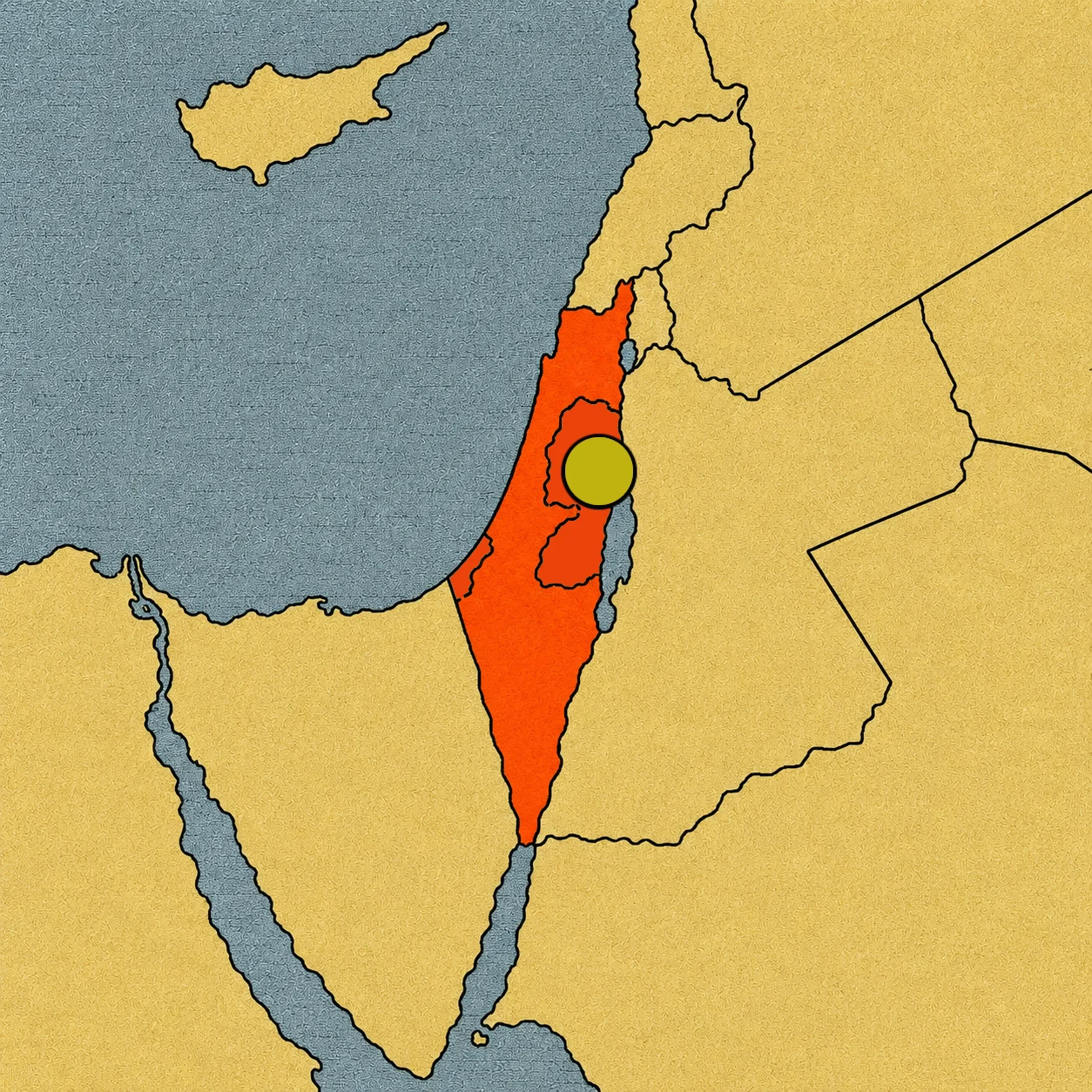
Jericho is located in the Jordan Valley, near the Jordan River and northwest of the Dead Sea. The landscape is warm and dry, but there is a resource capable of completely transforming the environment: fresh water. Right next to the Tell es-Sultan site bubbles the Ain es-Sultan spring, a water source that has supplied the communities in the area for millennia.[1]
Imagine what it meant to find reliable water in a region where rainfall could be scarce. It allowed people to drink, care for animals, grow crops, and stay in the same place for a longer time. Water also made something decisive possible: organizing a community that didn’t have to constantly move around to survive. Around the spring, people found favorable conditions to settle down. Over the years, that spot grew into an increasingly important settlement.
Jericho shows that geography can profoundly influence history: a water source can help a city be born.
A Mound Full of Time
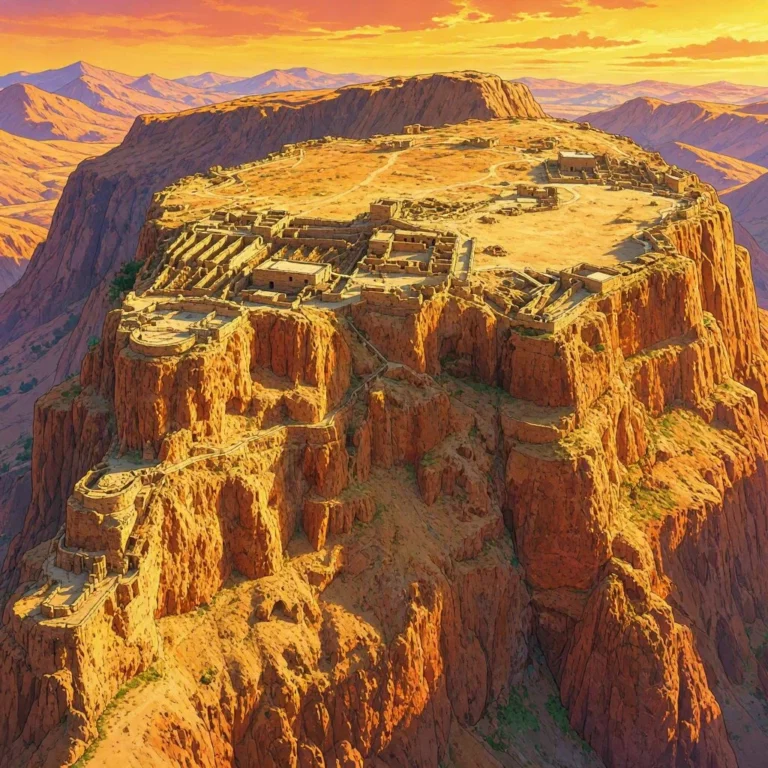
The archaeological name Tell es-Sultan describes a feature of the site itself. A tell is a mound formed when people build, repair, abandon, and rebuild structures in the exact same place over many generations.
Old houses collapse. Their remains get covered in dirt. Then other people arrive and build right on top. Little by little, the settlement piles up layers, as if every generation added a page to a giant book.
At Tell es-Sultan, 29 occupation phases have been identified, making it possible to research different stages of human life, from the Neolithic to the Bronze Age.[1] That is why excavating there is much more than just digging up objects. Each layer can reveal what homes looked like, what people ate, what tools they used, and how their customs changed. The earth becomes an archive. And every discovery helps piece together a part of history.
When People Stopped Moving Around So Much
More than 10,000 years ago, many human communities lived by hunting, fishing, and gathering wild plants. Little by little, in different regions of the world, some started growing food, taking care of animals, and settling down in the same place for long periods. This change is known as the Neolithic period.
In Jericho, during the 9th and 8th millennia BCE, a fairly large permanent settlement already existed.[1] Its inhabitants didn’t have cranes, trucks, or power tools. They worked with stone, wood, and other materials available in their environment. To put up large buildings, they needed planning, collective effort, and knowledge passed down from one generation to the next.
Living together offered advantages, but it also brought new challenges. People had to organize spaces, secure food, take care of supplies, and keep up the buildings. A stable community could store up knowledge and develop new ways of working together.
Jericho is a window into that decisive moment when living in one spot stopped being just a temporary stopover and became a way of organizing life.
The Wall That Changed History
One of the most surprising discoveries at Tell es-Sultan is an ancient stone wall linked to the Neolithic settlement. Next to it were a moat and a monumental tower. These structures date back to the 9th–8th millennium BCE and show that their inhabitants were capable of carrying out projects that required a huge amount of organized labor.[1]
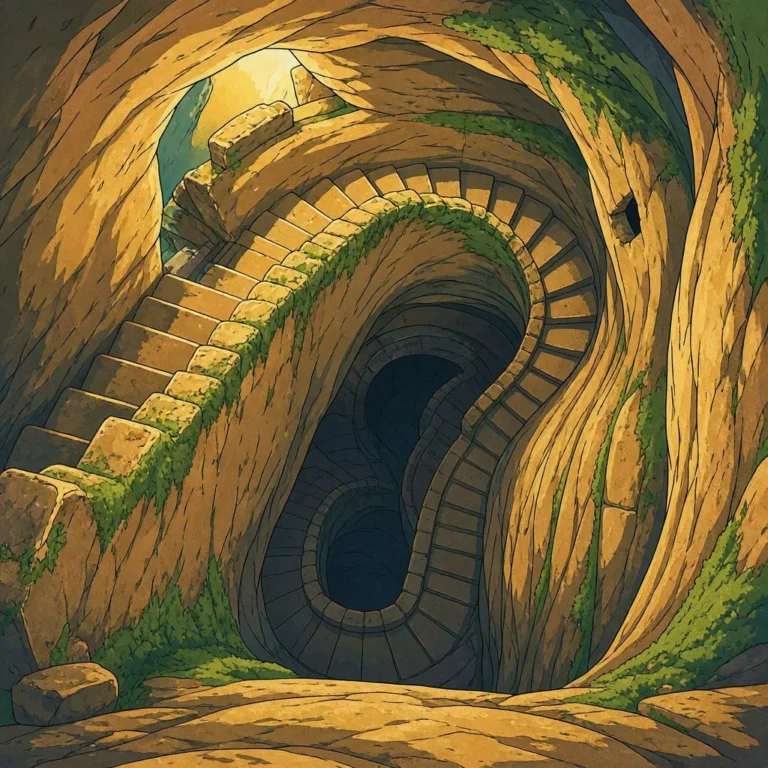
The tower is especially impressive. It stands about 8.5 meters tall with a stone staircase inside climbing up through its structure.[2] Think about what it meant to build it without modern machinery: people had to select and transport stones, place them carefully, and construct a structure that would stand the test of time.
But what were the wall and the tower for? Archaeologists have debated their purpose. The wall might have served to protect the settlement, though it has also been suggested that it helped control floods. The tower could have had a defensive, community, or symbolic function.[1][2]
We don’t know all the answers for sure. And that makes the place even more interesting: the stones have survived, but the intentions of the people who placed them remain a subject of ongoing research.
A Tower Before the Great Empires
When we think of the first cities, we often imagine palaces, temples, kings, and armies. But the tower of Jericho is much older than many of the civilizations that later built huge monuments in Mesopotamia and Egypt. Its inhabitants lived thousands of years before the pyramids of Giza and long before the great empires of the ancient Near East ruled the region.
The tower wasn’t a skyscraper, but it was a monumental building for its time. Its size shows that that community could bring people together to carry out a project that went far beyond the needs of a single family. Even though we can’t know all its purposes, its existence raises a fascinating question: what drove such an ancient community to build something so big?
Much More Than a Wall
The story of Jericho didn’t end with that first construction. During the Bronze Age, the settlement developed once again as an important Canaanite city. Archaeological remains reveal new building techniques, organized urban spaces, and more elaborate fortification systems.[1] The walls from later periods show how communities adapted their structures to new needs and knowledge.
Skulls treated and buried in special ways have also been found, along with statues that help study the ritual practices of Neolithic populations.[1] These discoveries remind us that the people of Jericho weren’t just looking for water and food. They also had beliefs, customs, and their own unique ways of dealing with their dead.
Is Today’s Jericho the Same City?
The name Jericho appears in religious texts and historical accounts, but it is important to tell the difference between today’s town and the archaeological site of Tell es-Sultan.
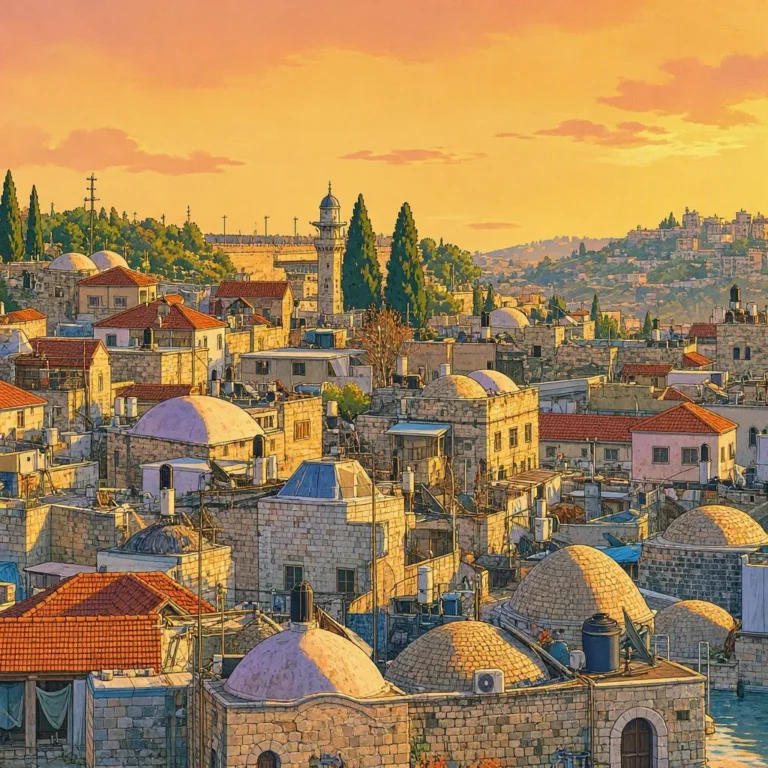
Tell es-Sultan preserves the traces of the ancient communities that lived in this spot. The city of Jericho stretches out nearby, in the same valley where water and terrain conditions favored human life for thousands of years.[1][3]
Jericho is also well-known for the biblical story of its walls, but the site’s Neolithic remains belong to a much, much older era than the events usually described in that story.
One of the Oldest Stories in the World
In 2023, the archaeological site of ancient Jericho, Tell es-Sultan, was inscribed on the UNESCO World Heritage List.[1] The inscription recognizes the site’s importance for understanding two major transformations: the shift toward settled communities during the Neolithic period and the development of the first cities in the Bronze Age.
UNESCO included it on the World Heritage List as a site in the “State of Palestine,” which is why we place it in Palestine.[1] Israel, which does not recognize a Palestinian state, criticized that decision. SuperGeoKid will not have a fact sheet for Palestine, since it uses the UN member list as a basis. But you can learn more about it in our article on Palestine.
The First Walled City
Jericho is a world champion because its remains show something extraordinary: thousands of years ago, a community was already capable of building a wall, digging a moat, and putting up a monumental tower; thousands of years ago, they were able to build the first walled city. Those people didn’t have today’s tools, but they had knowledge, organization, and the ability to work together.
The spring explains why the place was so attractive. The archaeological layers tell the story of how it changed over time. And the tower and the wall show just how far human cooperation could reach in a remote era.
Jericho reminds us that cities weren’t born overnight: they grew little by little, around water, shared labor, and the need to live as a community. And at Tell es-Sultan, part of that history is still written in stone.
Sources
- UNESCO — Ancient Jericho / Tell es-Sultan: history, occupation phases, fortifications, and World Heritage. https://whc.unesco.org/en/list/1687
- UNESCO — Documentation for Jericho’s nomination and description of its Neolithic fortifications. https://whc.unesco.org/document/198046
- UNESCO — Information on the location and archaeological context of Tell es-Sultan. https://www.unesco.org/en/articles/international-symposium-conservation-and-management-tell-es-sultan-jericho
- UNESCO — Project for the protection and conservation of the Tell es-Sultan archaeological site. https://www.unesco.org/en/articles/international-design-competition-protective-shelter-tell-es-sultan-ancient-jericho-state-palestine