
Jerusalem
The city of three religions
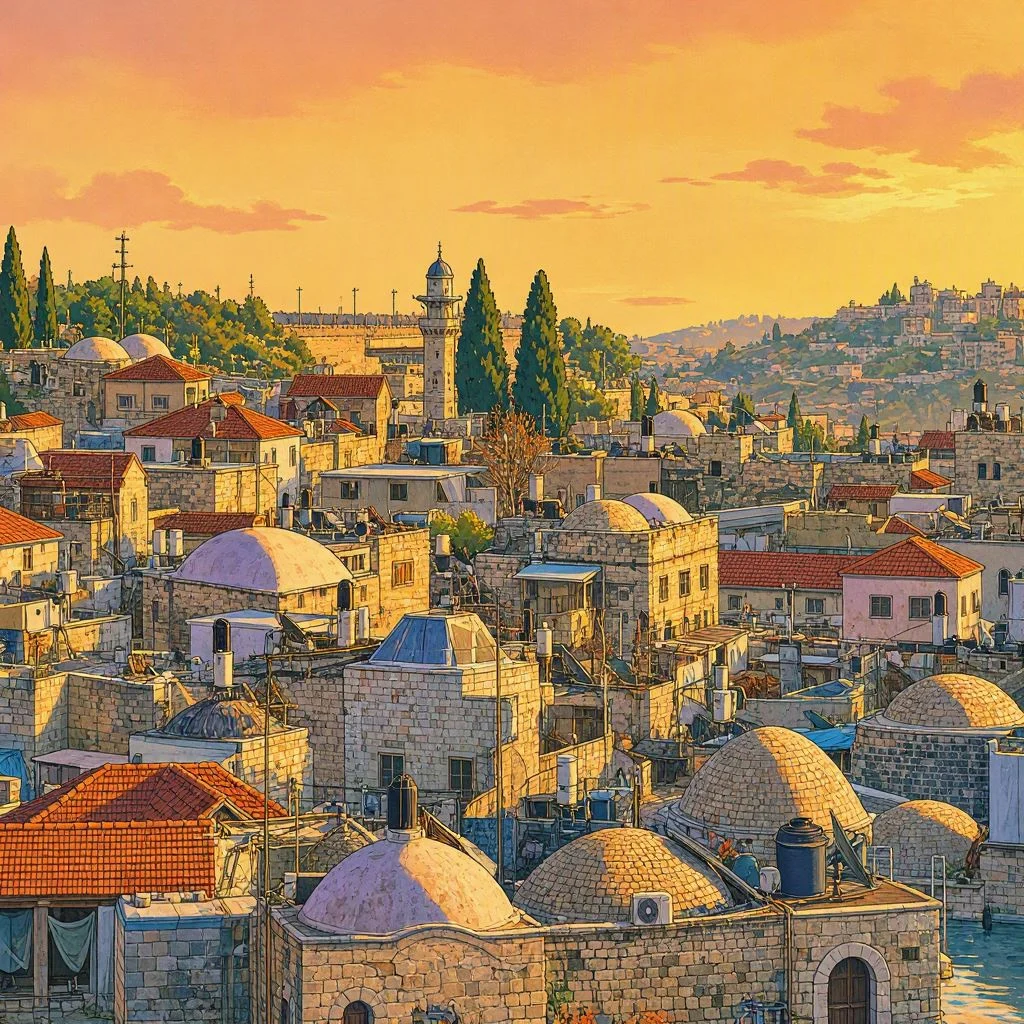
Imagine a city so small that you can walk across it in a short time and yet find within its walls some of the most important places of three major religions. In the Old City of Jerusalem, an area of barely about 1 km², around 220 historic monuments are concentrated.[1] Its narrow streets, stairs, and ancient walls hide a history thousands of years old.
But the most extraordinary thing is not just the amount of accumulated history. It is the proximity. In just a few hundred meters, sacred places for Judaism, Christianity, and Islam appear. The Western Wall, the Church of the Holy Sepulchre, and the compound of the Noble Sanctuary—Haram al-Sharif—form part of an extraordinarily compact urban landscape.[1][2]
A city built between hills
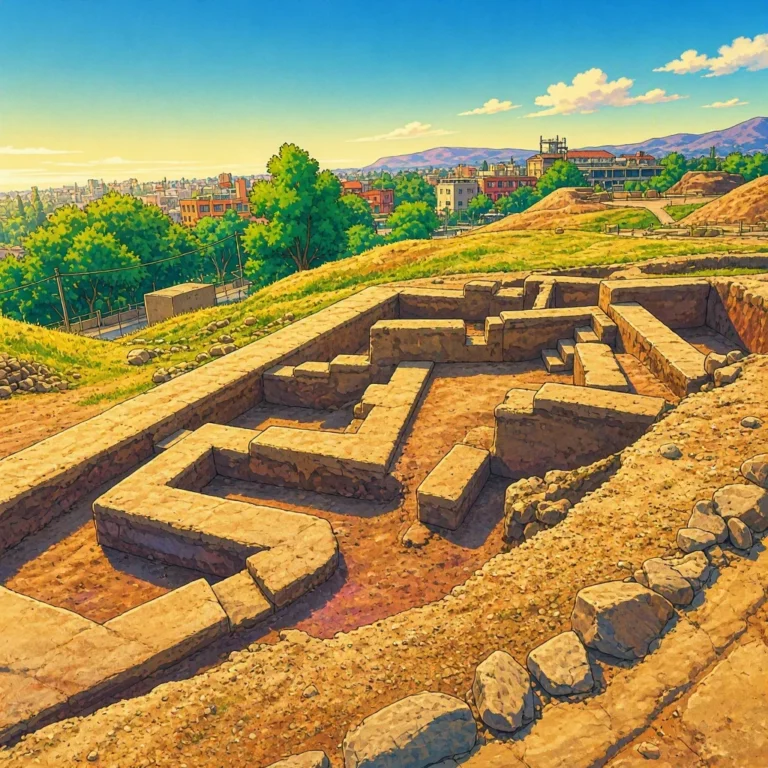
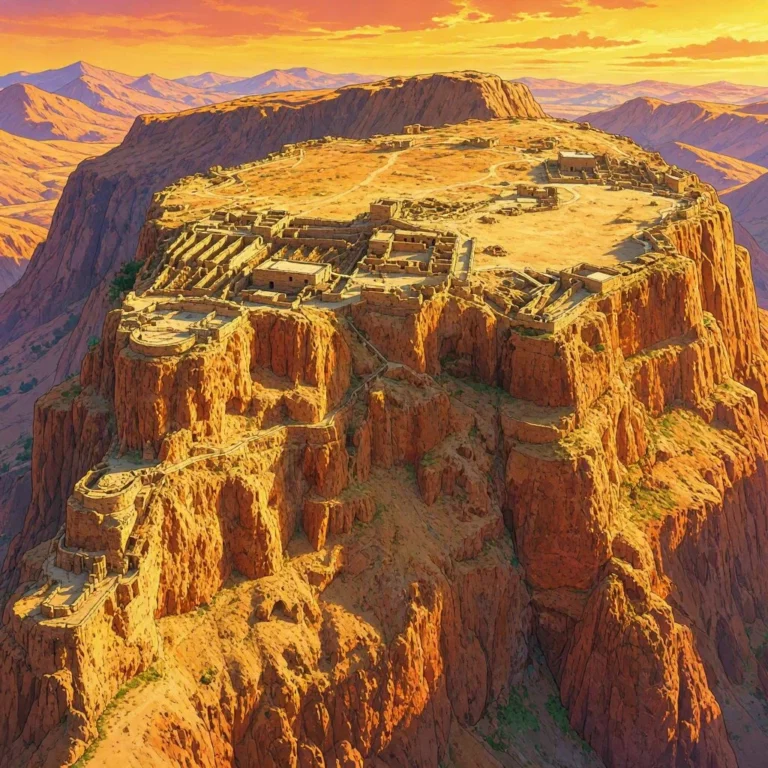
Before looking at its buildings, you have to look at the ground. Jerusalem was not born on a comfortable plain. The historic city developed between hills and valleys, in the mountains of Judea. The terrain determined where houses could be built, where streets could run, and how the city could be defended.[3]
To the east lies the Kidron Valley. To the south and southwest stretches the Hinnom Valley. Different sectors of ancient Jerusalem were built between them.[3] The valleys served a defensive function. A city located on elevations and partially surrounded by natural depressions was harder to attack than a settlement built on completely flat terrain.
But there was a basic problem for life: water.
The spring that made the city possible
In an ancient city, having water nearby could mean the difference between surviving or disappearing. Jerusalem had the Gihon Spring, located in the area of the ancient City of David. For generations, channels, tunnels, reservoirs, and systems were built to harness and channel its water.[3]
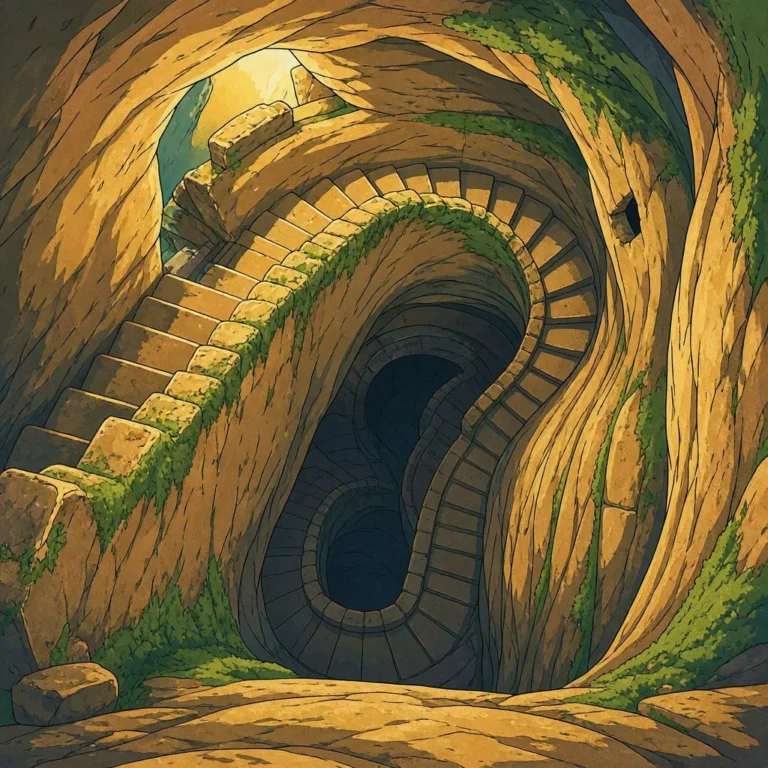
One of the most famous examples is Hezekiah’s Tunnel, carved into the rock to bring water from the spring to a protected area of the city. The solution was ingenious: instead of waiting for the water to reach the houses, the inhabitants modified the mountain to bring it to where they needed it. Geography had created the problem. Engineering found the answer.
Jerusalem and the ancient kingdom of Israel
The history of Jerusalem goes back long before the major religions as we know them today. The city already existed many centuries earlier. During the Iron Age, it became an important center and, according to biblical tradition, was conquered by King David, who made it his capital. His son Solomon is associated with the construction of the First Temple.[4] The Temple turned Jerusalem into the religious center of the ancient kingdom of Judah.
Over time, the city suffered conquests and destructions. The First Temple was destroyed by the Babylonians in the 6th century BCE. Later, a Second Temple was built, which was massively expanded during the reign of Herod the Great.[5] Much of the archaeological importance of the area we now know as the Old City dates back to that period.
A sacred place for Judaism
For Judaism, Jerusalem holds a central place. The Temple Mount, also known as Har HaBayit, is connected to the ancient Jewish temples. Surrounding it is the Western Wall, one of the most important places of prayer in Judaism.[2] The wall is not simply an isolated ancient stone barrier. It is part of the retaining structures associated with the enormous enclosure built and expanded during the Herodian period.
For centuries, different Jewish communities have maintained a special relationship with Jerusalem, its holy sites, and the memory of the ancient Temple. Walking through the streets of the Old City therefore means walking over layers of history that date back to Antiquity.
Then Christianity arrived
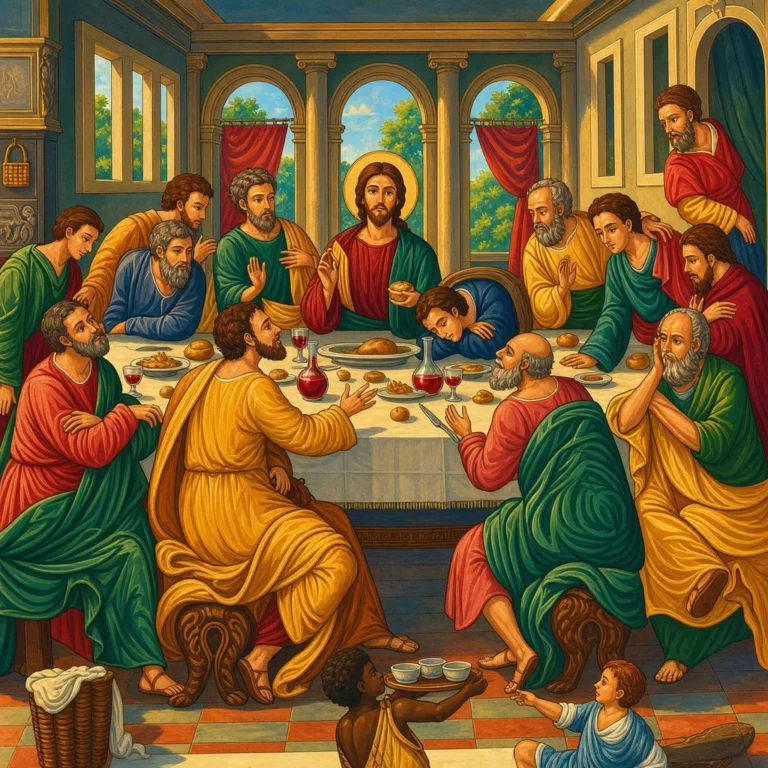
For Christians, Jerusalem is directly linked to the final events in the life of Jesus. The city appears in the Gospels as the setting for his entry, his condemnation, and his crucifixion. It is also associated with traditions regarding his resurrection.
The most important site is the Church of the Holy Sepulchre, built over a location that Christian tradition identifies as the place of Jesus’ crucifixion and burial.[1][2] The current building brings together spaces used by different Christian communities and is one of the great pilgrimage destinations in the world.
Inside its walls are chapels, staircases, columns, mosaics, and corners that have been modified over centuries. It does not look like a monument built at a single moment in time. It looks like an architectural history accumulated stone upon stone.
And it is also sacred to Islam
The same landscape takes on another dimension in Islam. In the compound located above the former Temple Mount stands Haram al-Sharif, home to the Dome of the Rock and the Al-Aqsa Mosque.[2] The Dome of the Rock was built in the 7th century and is one of Jerusalem’s most recognizable buildings. Its large golden dome stands out above the houses and walls of the Old City.[1]
For Islam, Jerusalem is a holy city, and Al-Aqsa is associated with the tradition of the Night Journey and Ascension of Muhammad.[2] Thus, the exact same urban space concentrates fundamental sites of three religious traditions.
And that is where the true rarity of Jerusalem appears.
A surprisingly short distance
Imagine starting a walk near the Western Wall. You move forward through narrow streets, climb a few stairs, pass by shops, houses, and ancient stones, and in a very short time you can find yourself near the Church of the Holy Sepulchre. Then, another short walk takes you toward the surroundings of the Muslim sacred compound. The holy sites of three religions are concentrated within a tiny urban space.
UNESCO highlights precisely this characteristic: Jewish, Christian, and Muslim traditions share space and intertwine in an especially intense way in Jerusalem.[2] There is no other place in the world where religious geography is so compressed.
Four quarters within the walls
The Old City is usually divided into four historic quarters: Jewish, Christian, Muslim, and Armenian.[6]
But it would be a mistake to imagine four completely separate cities. The streets cross each other, the buildings overlap, and the histories mix. There are Muslim markets near Christian sites. There are Jewish buildings next to structures from other eras. There are Armenian churches, synagogues, mosques, and sanctuaries within the very same urban labyrinth.
The walls we see today
The current walls of the Old City are not the same ones that surrounded Jerusalem in the times of David or Jesus. Much of the walls we see today date back to the Ottoman period. They were built in the 16th century during the rule of Sultan Suleiman the Magnificent.[3] Their gates made it possible to control access to the city. Among them are the Jaffa Gate, the Damascus Gate, the Zion Gate, and other historic entrances.
A city that grew outward
Jerusalem did not stay locked inside its walls. Over the past few centuries, the city expanded across the surrounding hills. New neighborhoods, roads, public buildings, and residential areas appeared.
But the Old City preserves a completely different scale. Its streets are narrow. Many follow paths dictated by ancient topography. The houses are built right next to each other. At certain points, buildings seem to rest upon layers of much older constructions.
A place where history is still the present
Jerusalem is not just a museum. It is a living city. People live, work, pray, study, and trade inside and around the Old City. Pilgrims arrive from all over the world. The sounds change from one street to the next: conversations, bells, calls to prayer, footsteps, vendors, and groups of visitors. That mixture is part of its identity.
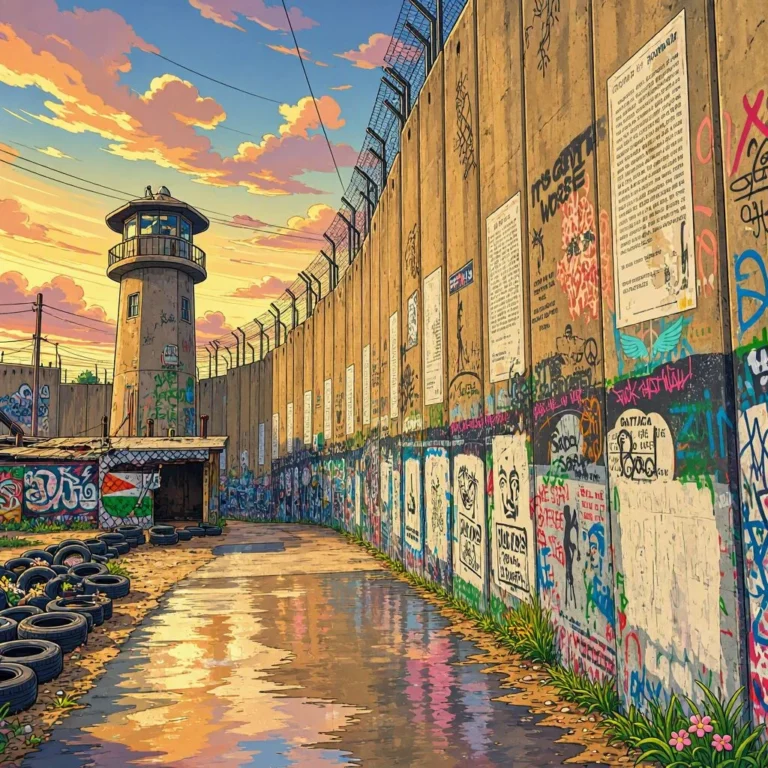
But Jerusalem is also a deeply contested city, and its modern history is tied to the conflict between Israelis and Palestinians. Its political and territorial status remains a subject of international disagreement.[7]
UNESCO inscribed the Old City and its walls on the World Heritage List in 1981 and has also kept it on the List of World Heritage in Danger since 1982.[1][8] That is why conserving its monuments is not just about protecting ancient stones. It also means preserving a heritage that different communities consider fundamental to their own history.
A status that remains disputed
Jerusalem is sacred to Judaism, Christianity and Islam, but it is also at the heart of the conflict between Israelis and Palestinians. Israel took control of East Jerusalem, where the Old City is located, in 1967; today it governs the entire city and regards it as its capital. The Palestinians claim East Jerusalem as the capital of their future state. The UN regards East Jerusalem as occupied territory and most countries do not recognise Israeli sovereignty over that part of the city, although some, such as the United States, do recognise Jerusalem as the capital of Israel.[9] [10]
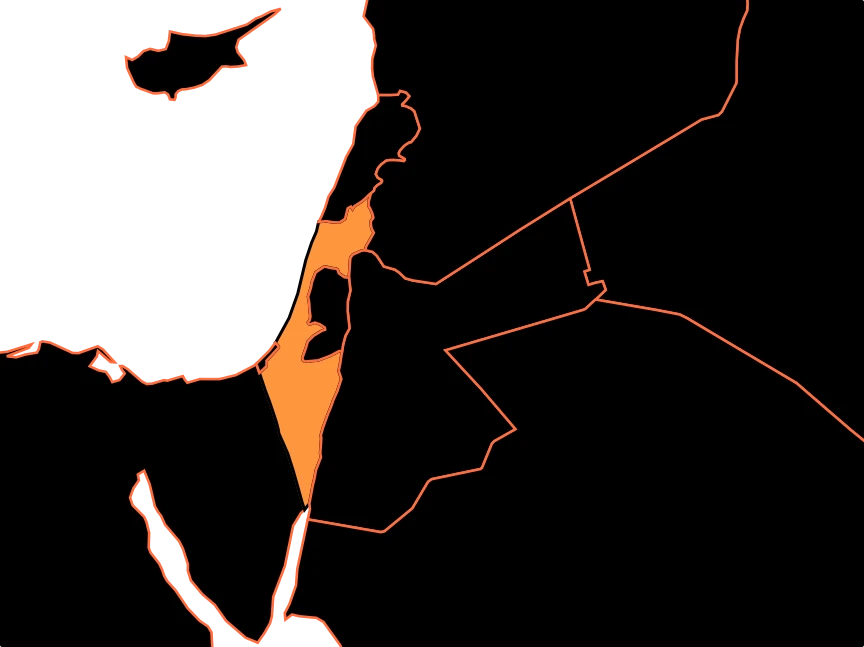
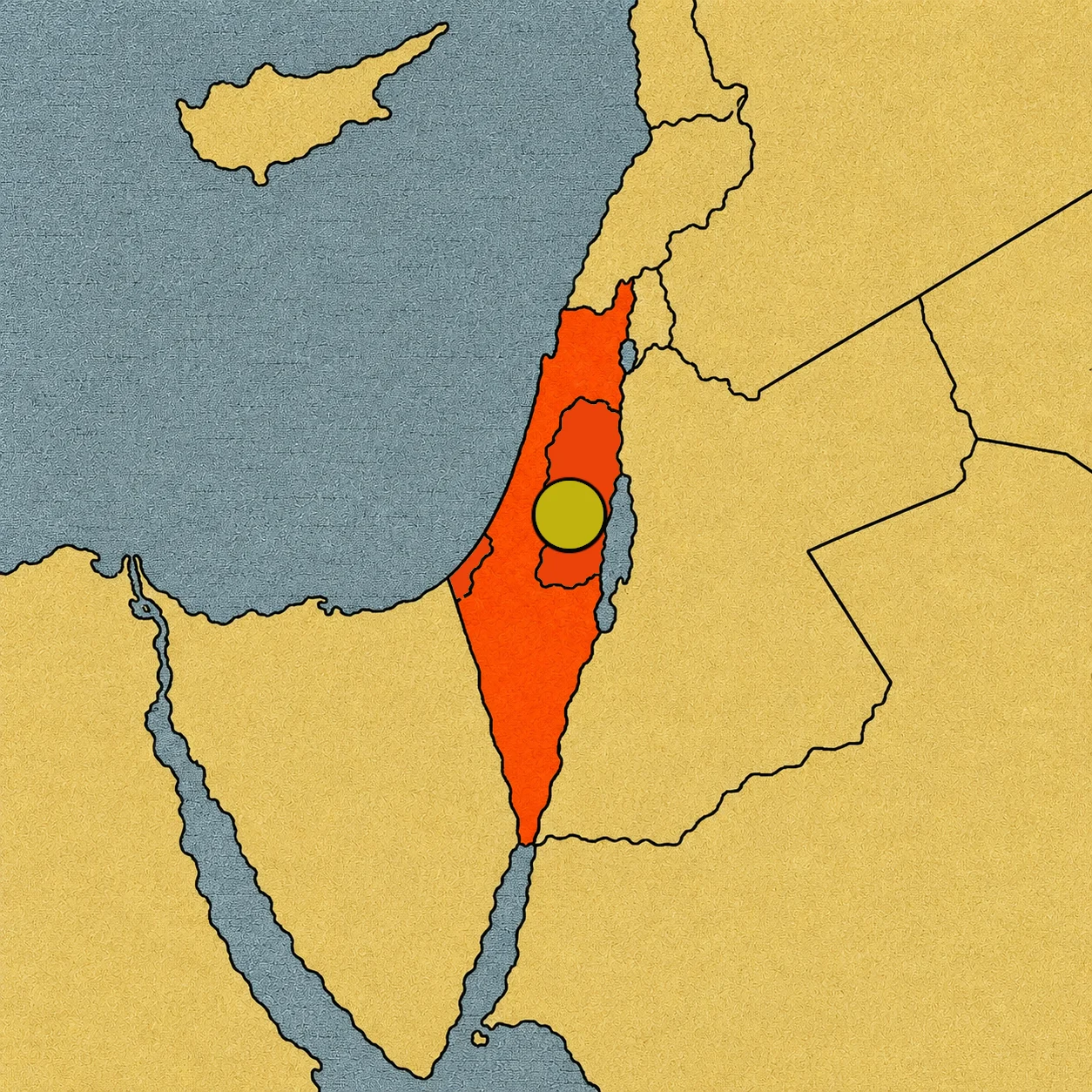
For this reason, a map of Jerusalem may show different things: the city itself, its holy sites, or the political positions regarding its status. Recounting its history and heritage does not mean taking sides in a dispute that remains unresolved.
An impossible city
Jerusalem fits the description of an impossible city due to a combination that seems hard to imagine. It is a city built among hills and valleys, around a water source that helped make its development possible. Beneath its streets lie remnants from different eras. Upon its stones, thousands of years of history overlap. And, in barely one square kilometer, an extraordinary collection of holy sites for three major religions is concentrated.[1]
You can walk down a narrow street and be next to a sacred site for Judaism. A few minutes later, reach one of the great sanctuaries of Christianity. And shortly after that, find yourself before the heart of one of the most important spaces in Islam. A tiny city. Three major religious traditions. Thousands of years of history. All among the same hills, the same walls, and the same streets.
That is Jerusalem: a city where the map seems too small to contain everything it means.
Sources:
1. UNESCO, Old City of Jerusalem and its Walls: 220 historic monuments, approximately 1 km², religious value and state of conservation — https://whc.unesco.org/en/list/148
2. UNESCO, relationship between the holy sites of Judaism, Christianity, and Islam in Jerusalem — https://whc.unesco.org/en/news/1568
3. UNESCO, geography of Jerusalem, Kidron and Hinnom valleys, Gihon Spring, and historic development of the city — https://whc.unesco.org/en/tentativelists/1483
4. UNESCO, historical importance of Jerusalem and its monuments linked to the Temple periods — https://whc.unesco.org/en/tentativelists/1483
5. UNESCO, Temple Mount and historical context of the Old City — https://whc.unesco.org/en/list/148
6. UNESCO, historic organization of the Old City and its communities — https://whc.unesco.org/en/list/148
7. UNESCO, contemporary context and issues related to the heritage of the Old City — https://whc.unesco.org/en/list/148/documents/
8. UNESCO, permanence of the Old City of Jerusalem on the List of World Heritage in Danger — https://whc.unesco.org/en/decisions/8705
9. United Nations — Issues relating to the permanent status of Jerusalem: https://www.un.org/unispal/permanent-status-issues/
10. UNESCO — The Old City of Jerusalem and its walls; decisions on its heritage and status: https://whc.unesco.org/en/decisions/8705