




Dead Sea
The Lowest Place on Earth
Imagine stepping into a lake and discovering that the water hardly wants to let you sink. You lie back, lift your feet, and suddenly float as if you were wearing a huge invisible life jacket.
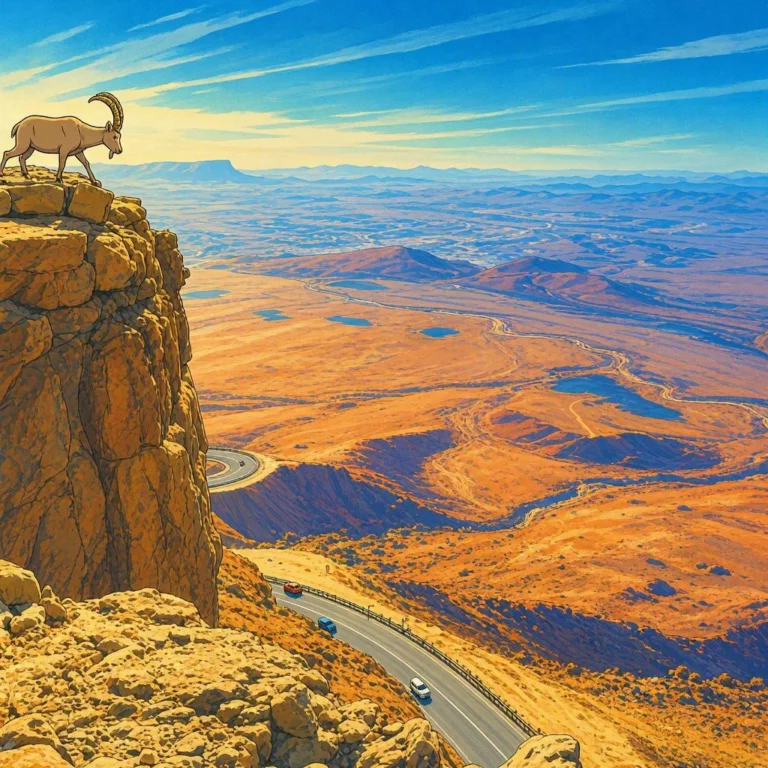
This happens in the Dead Sea, a huge body of water located between Israel and Jordan. Its surface is approximately 430 meters below sea level, an extraordinary geographic depth that makes it one of the most extreme places on the planet.[1] And there is another surprise: its waters contain an enormous amount of dissolved salts. Its landscape is entirely real and, moreover, is changing rapidly.
A Sea That Is Actually a Lake
Although it is called the Dead Sea, technically it is a lake. It is located in a very deep depression in the Jordan Valley and has no outlet to any ocean. The Jordan River brings water from the north, along with other smaller waterways, but the water that reaches the lake eventually leaves mainly through evaporation.[2]
This creates a special situation. The water disappears into the atmosphere, but the salts and other minerals it carried remain in the basin. Over thousands of years, this process concentrated the minerals. The result is one of the saltiest natural bodies of water on the planet. The concentration can be around 30–34%, several times that of the ocean.[3] It is such a high amount that it completely changes the experience of swimming there.
Why Is It So Easy to Float?
The explanation has to do with density. Density simply tells us how much matter is concentrated in a given volume. Fresh water has a density of about 1 kilogram per liter. When a lot of salt dissolves in water, the water becomes denser.
Our bodies, by contrast, have an average density similar to that of water. In fresh water, we need to displace enough liquid to stay afloat. In the Dead Sea, the water is much denser and exerts greater upward force on our bodies.
That is why it is so easy to remain on the surface. It is not that some mysterious force lifts us up: it is physics acting in a very visible way.[4]
You can imagine it as trying to push an air-filled ball under the surface of a swimming pool. The water pushes the ball upward. In the Dead Sea, the water is even denser, so the force exerted on a person is especially great.
The Problem Is the Water That No Longer Arrives
The Dead Sea has been losing water for decades. The Jordan River was historically its main source of fresh water, but a large portion of its flow is currently diverted for water supply, agriculture, and other uses. As a result, much less water reaches the lake than in the past.[6]
The U.S. Geological Survey reports that over the past 50 years, the level of the Dead Sea has fallen by approximately 45 meters. It also explains that the reduction in water flowing from the Jordan is related to irrigation projects and other water needs in the region.[5]
Meanwhile, the arid climate promotes intense evaporation. In a closed basin like this one, the combination is complicated: less water flows in, while the water that remains continues to evaporate.
When the Shoreline Recedes
The falling water level does not simply mean that you have to walk farther to reach the water. Hotels, roads, tourist facilities, and former access points that were once near the shoreline may become increasingly distant. In some areas, holes called sinkholes or dolines appear in the ground. They form when falling groundwater levels expose layers of salt and other materials that can dissolve; afterward, the ground may collapse.[7]
A Record That Is Changing
Here we come to the most surprising part of its title. The Dead Sea can be considered a true World Champion of extreme geography. Its surface is around 430 meters below sea level, making it the lowest natural body of water on Earth.[1] But its record has one particularity: it is not completely fixed.
As the water level falls, the reference point from which we measure that depth also changes. That is why the exact figure may vary over the years. The lowest place remains the same, but it is still sinking farther. It is a moving record.
A Lake Shared by Two Countries
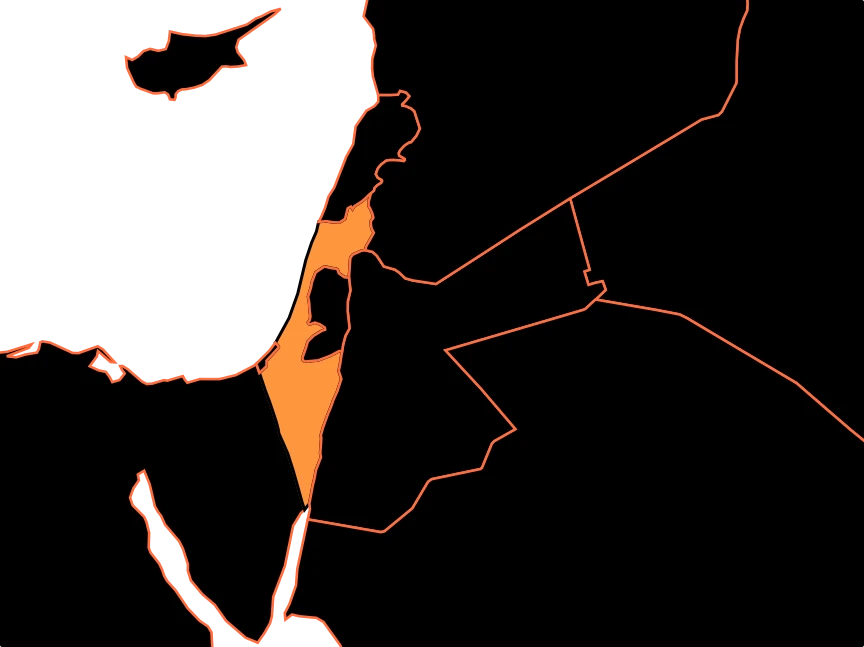
The Dead Sea is also interesting because its geography is connected to borders. Its shores lie between Israel and Jordan, and the basin is part of a region where water is an especially important resource.
The lake cannot be understood separately from the rivers, aquifers, cities, crops, and communities that depend on the region’s water. What happens upstream ultimately affects a place located hundreds of meters below.
A Champion That Teaches Us to Look at Maps
The Dead Sea seems to have everything needed to be an impossible place: it lies hundreds of meters below sea level, contains so much salt that a person floats easily, and its shores are covered with mineral landscapes.
But perhaps the most interesting thing is not any of these features individually. What is truly extraordinary is that we are watching a geographical record change before our eyes. The water recedes, the shoreline shifts, new areas of land appear, and some parts of the landscape become unstable.
That is why the Dead Sea fits the description of a World Champion perfectly: it is the lowest place on Earth among natural bodies of water, one of the saltiest lakes on the planet, and, at the same time, a landscape that continues to transform. Its map is not finished.
Sources:
1. The extreme altitude of the Dead Sea and its status as the lowest natural body of water on Earth — https://eros.usgs.gov/earthshots/dead-sea-israel-jordan-west-bank
2. How a closed basin works and water evaporation — https://eros.usgs.gov/earthshots/industry
3. Salt concentration in the Dead Sea — https://www.nationalgeographic.com/magazine/article/how-to-get-a-picture-of-a-salt-island-in-the-dead-sea
4. High salinity and natural buoyancy of people — https://www.nationalgeographic.com/travel/article/discover-the-jordan-trail-an-epic-path-that-passes-through-petra
5. Fall in the level of the Dead Sea and changes observed via satellite — https://eros.usgs.gov/earthshots/rates-of-decline
6. Reduction in the volume of water flowing in from the River Jordan — https://eros.usgs.gov/earthshots/rates-of-decline
7. The emergence of sinkholes and changes to the terrain as the water recedes — https://eros.usgs.gov/earthshots/rates-of-decline