

Brasilia
The City Born from a Drawing
There are cities that grow little by little. First a small town appears. Then come the houses, the streets, the shops and, over time, the buildings.
Brasilia did exactly the opposite. In just a few years, Brazil built a brand-new capital from scratch in the interior of the country. There wasn’t already a big city there waiting to grow.
First there was an idea. Then, a huge blueprint. And finally a completely new city appeared in the middle of Brazil.
A Capital in the Center of the Country
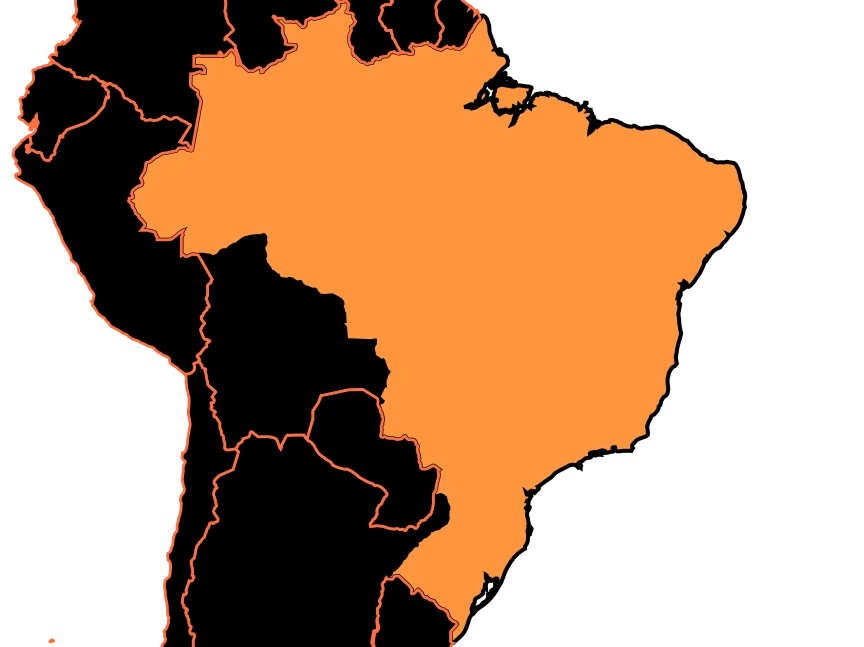
For a long time, Brazil’s main cities were concentrated on the coast. Rio de Janeiro had been the capital for many years, but Brazil wanted to boost development in the interior and better connect a gigantic territory.
The solution was extraordinary: building a new capital practically from scratch. In 1960, Brasilia officially became the capital of Brazil. Instead of growing around a historic center, the city was designed according to a plan.
A City Shaped Like an Airplane
When you look at Brasilia from above, its layout is striking. The major avenues and main axes form a figure that is often compared to an airplane.
The project was designed by urban planner Lúcio Costa. The most important buildings were designed by Oscar Niemeyer, one of Brazil’s most famous architects. Together they imagined a capital completely different from traditional cities. Here, it wasn’t about preserving the past. It was about building the future.
Buildings That Look Like Sculptures
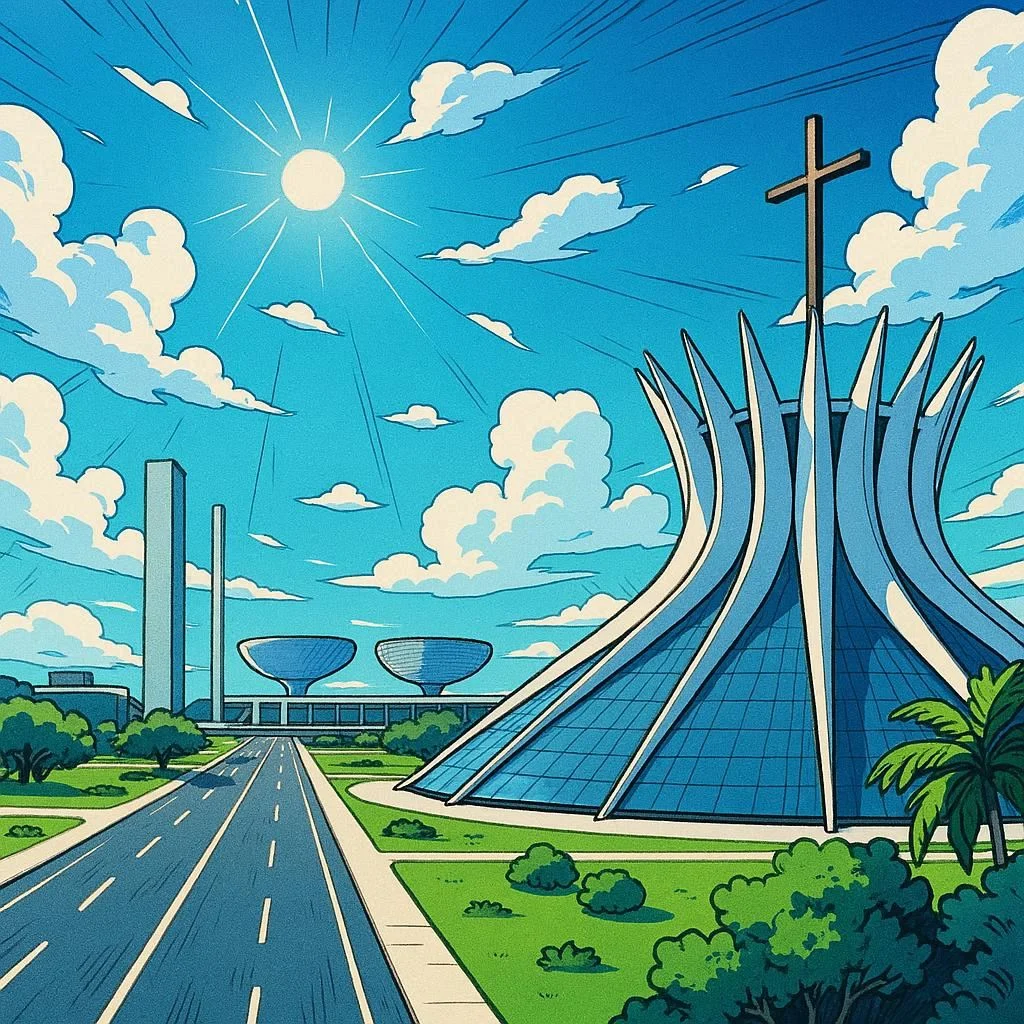
And then there are some of Brasilia’s most famous buildings. The National Congress has two towers surrounded by huge curved shapes. The Metropolitan Cathedral looks like a crown of concrete and glass. The Planalto Palace rises with large white columns. Many buildings look more like giant sculptures than offices.
Niemeyer used curves, open spaces, and enormous concrete structures to create architecture that didn’t resemble that of traditional Brazilian cities. Brasilia seems to have been drawn before it was built.
Building a City in Just a Few Years
The speed of construction was extraordinary. Thousands of workers came from different parts of Brazil to raise the new capital. In just a few years, roads, public buildings, housing, and services appeared.
Construction began in the mid-1950s. And on April 21, 1960, Brasilia was inaugurated as the new capital.
By then, where just a few years earlier there had mainly been Brazilian interior landscape, there was already a city destined to become the country’s political center.
A City Designed from Above
Brasilia was also designed to organize the lives of its inhabitants. Residential, commercial, and administrative areas were planned. The wide avenues would allow people to move quickly between different parts of the city. Government buildings were concentrated around the so-called Monumental Axis. Everything had its place. Everything was part of a plan.
But living in a city designed this way also created challenges. The enormous distances and the reliance on automobiles made Brasilia function very differently from the historic cities that had grown over centuries.
A City of the Future?
When Brasilia was built, many considered it a vision of the city of the future. There was no historic center filled with narrow streets. There was no network of buildings constructed over hundreds of years. There were large open spaces, highways, and modern buildings.
It was a bet on a new way of organizing a capital city. And its design was so important that, in 1987, Brasilia was declared a UNESCO World Heritage Site.
An Impossible City
Brasilia belongs to the Impossible City category because it seems incredible that a capital of millions of inhabitants could appear practically out of nowhere following a massive urban planning project.
It was not a city that waited centuries to become a capital. First, it was drawn. Then, it was built. And perhaps that is the image that best sums up Brasilia: a city where the avenues look like lines drawn with a ruler, the buildings look like sculptures, and the entire urban landscape seems to be part of one single, grand design.
A capital that proves that, sometimes, a city does not have to grow over time: it can also be imagined and built all at once.