

Gibraltar
Gibraltar: A Small Territory with a Great History
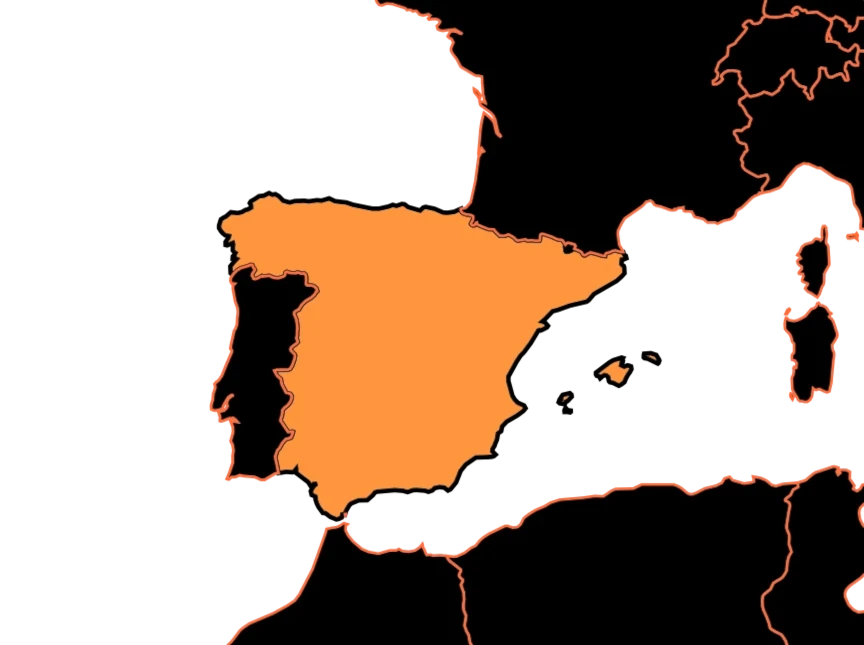
Gibraltar, a small piece of land at the southern tip of the Iberian Peninsula, is a territory that has captured the world’s attention for its strategic geographic location, rich history, and the long-standing sovereignty dispute between Spain and the United Kingdom. This enclave, with an area of just 6.8 square kilometers, rises as a rocky promontory overlooking the Strait of Gibraltar, the meeting point between the Atlantic Ocean and the Mediterranean Sea.
Gibraltar’s Strategic Geography
Gibraltar’s geography is unique. The Rock of Gibraltar, an imposing limestone formation, defines the landscape. Its elevation provides panoramic views of the Strait, the Bay of Algeciras, and the coasts of Spain and Morocco. This strategic position has been crucial throughout history, making Gibraltar a vital control point for maritime trade and military defense.
The Strait of Gibraltar, only 14 kilometers wide at its narrowest point, is an essential maritime route connecting Europe and Africa. Around 40% of global maritime trade passes through this strait, underscoring Gibraltar’s geostrategic importance. In addition to its strategic value, Gibraltar has remarkable marine biodiversity, serving as a meeting point for Atlantic and Mediterranean species.
History of Gibraltar: From Antiquity to the English Conquest
The history of Gibraltar dates back to antiquity, when it was known as Mons Calpe, one of the Pillars of Hercules. Phoenicians, Carthaginians, and Romans all left their mark on this territory. However, Gibraltar’s modern history began in 1462, when it was conquered by Christians during the Spanish Reconquista. For centuries, Gibraltar was an integral part of Spain, playing an important role in the defense of the southern coast.
In the 18th century, in the context of the War of the Spanish Succession, Gibraltar was captured by an Anglo-Dutch force in 1704. Nine years later, in 1713, the Treaty of Utrecht formally ceded Gibraltar to the British Crown. This treaty, which ended the war, granted Great Britain possession of Gibraltar “forever, without any exception or hindrance whatsoever.” However, the treaty also stipulated that if Great Britain decided to give up Gibraltar, Spain would have first right to recover it.
Throughout the 18th and 19th centuries, Gibraltar became established as an important British naval base, playing a crucial role in the Napoleonic Wars and the two World Wars. Its strategic location allowed the Royal Navy to control access to the Mediterranean, protecting British and allied interests.
The Sovereignty Dispute: A Persistent Conflict
Since the signing of the Treaty of Utrecht, Spain has claimed sovereignty over Gibraltar, arguing that the cession was forced and that the territory is an integral part of its geography and history. Spain has also pointed out that the people of Gibraltar, although of diverse ancestry, maintain strong cultural and linguistic ties with Spain.
The United Kingdom, for its part, relies on the Treaty of Utrecht and the right of peoples to self-determination to justify its sovereignty over Gibraltar. In several referendums, Gibraltarians have overwhelmingly expressed their desire to remain British. In the 1967 referendum, 99.64% of voters rejected the proposal to transfer sovereignty to Spain. A similar result was obtained in the 2002 referendum, where 98.48% voted against shared sovereignty between Spain and the United Kingdom.
The sovereignty dispute has been a constant source of tension between Spain and the United Kingdom. During the Franco regime, Spain imposed border restrictions and made access to Gibraltar difficult. Relations improved after Spain’s democratic transition, but the issue of sovereignty remains a point of friction.
Current Situation: An Uncertain Future
Today, Gibraltar is a British Overseas Territory with a high degree of autonomy. It has its own government, parliament, and judicial system. Gibraltar’s economy is based mainly on the services sector, including financial services, tourism, and the port. Despite its small size, Gibraltar has a prosperous economy and a high standard of living.
Brexit has added a new dimension to the Gibraltar dispute. After the United Kingdom left the European Union, Gibraltar also left the EU, raising questions about its future access to the European single market. Spain and the United Kingdom have been negotiating an agreement to guarantee the free movement of people and goods between Gibraltar and the European Union, avoiding a hard border with Spain.
Post-Brexit negotiations have been complex, and no definitive agreement has yet been reached. The future of Gibraltar remains uncertain, but one thing is clear: this small territory, with its rich history and strategic location, will continue to be a point of interest and debate on the international stage.