
Hydra
The island where cars disappeared from the streets
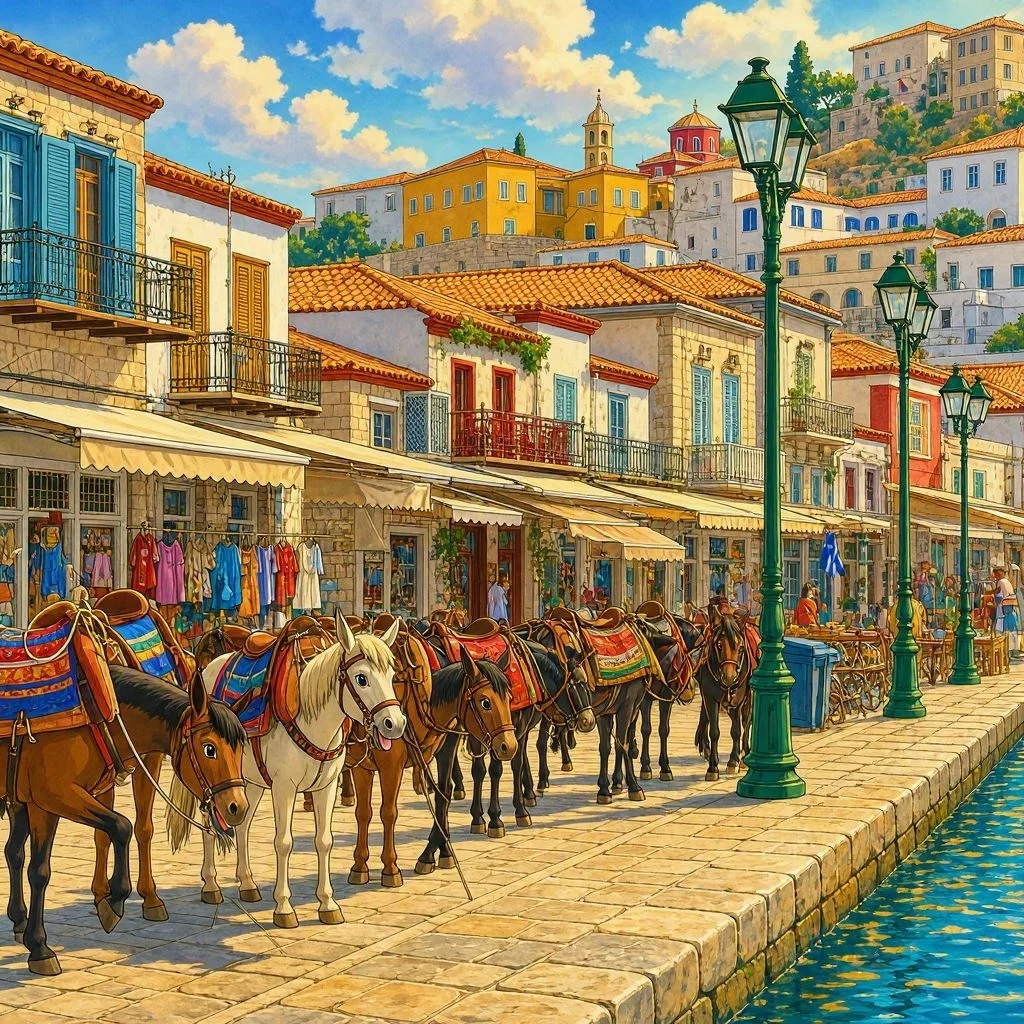
Imagine arriving on a Greek island and discovering something strange: there are no cars or motorcycles driving through its streets. You don’t hear revving engines or see vehicles looking for parking spots. Instead, you find stone staircases, donkeys, boats, and people walking.
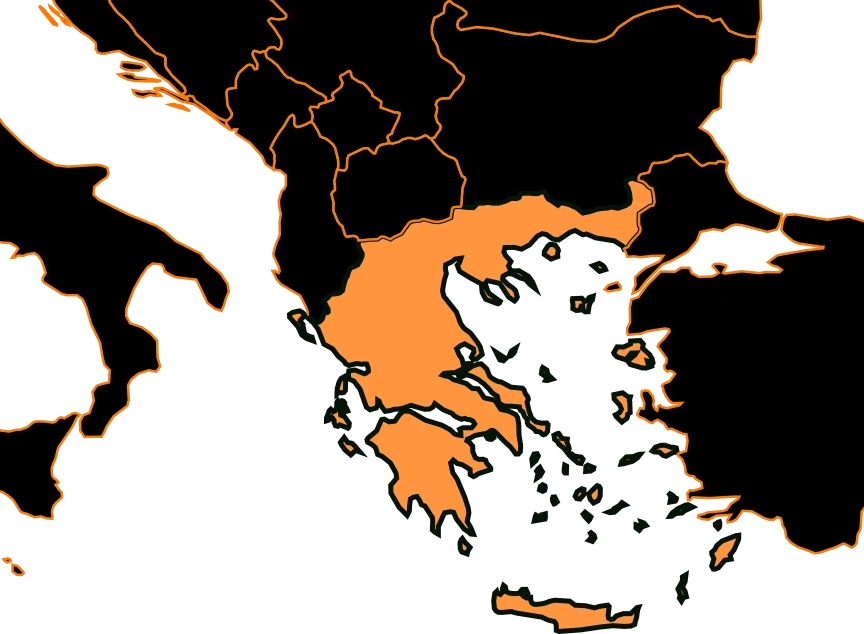
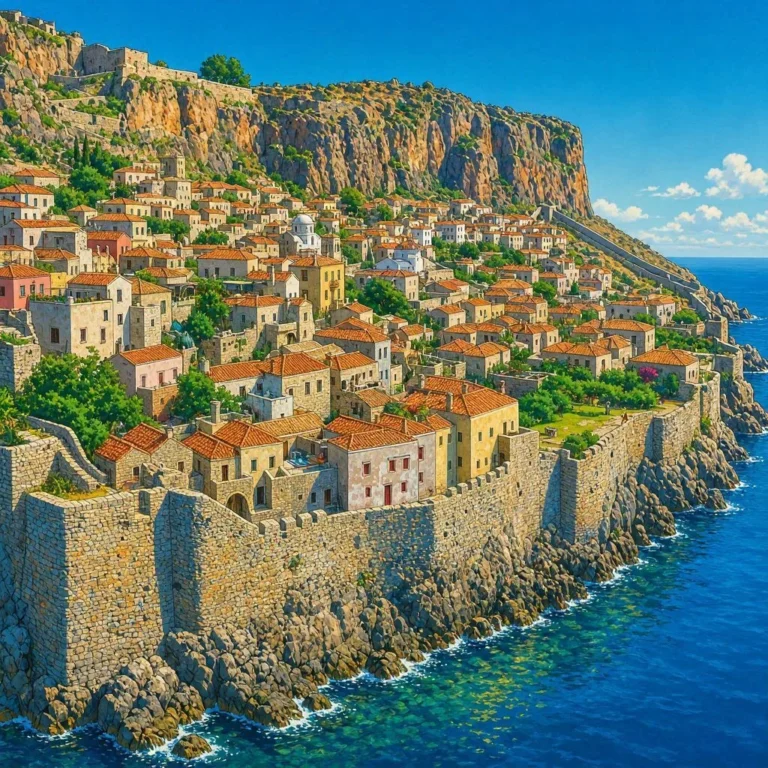
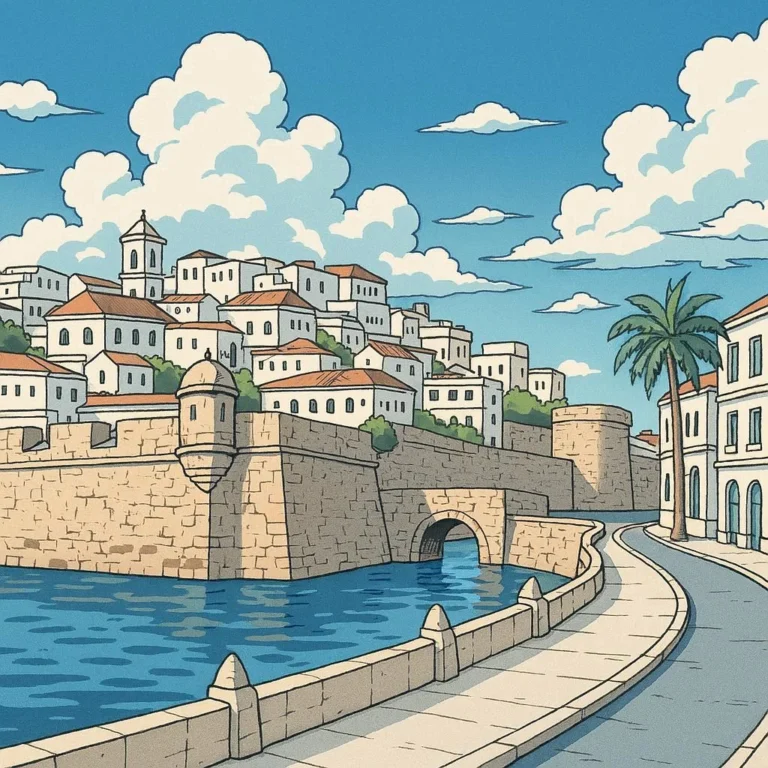
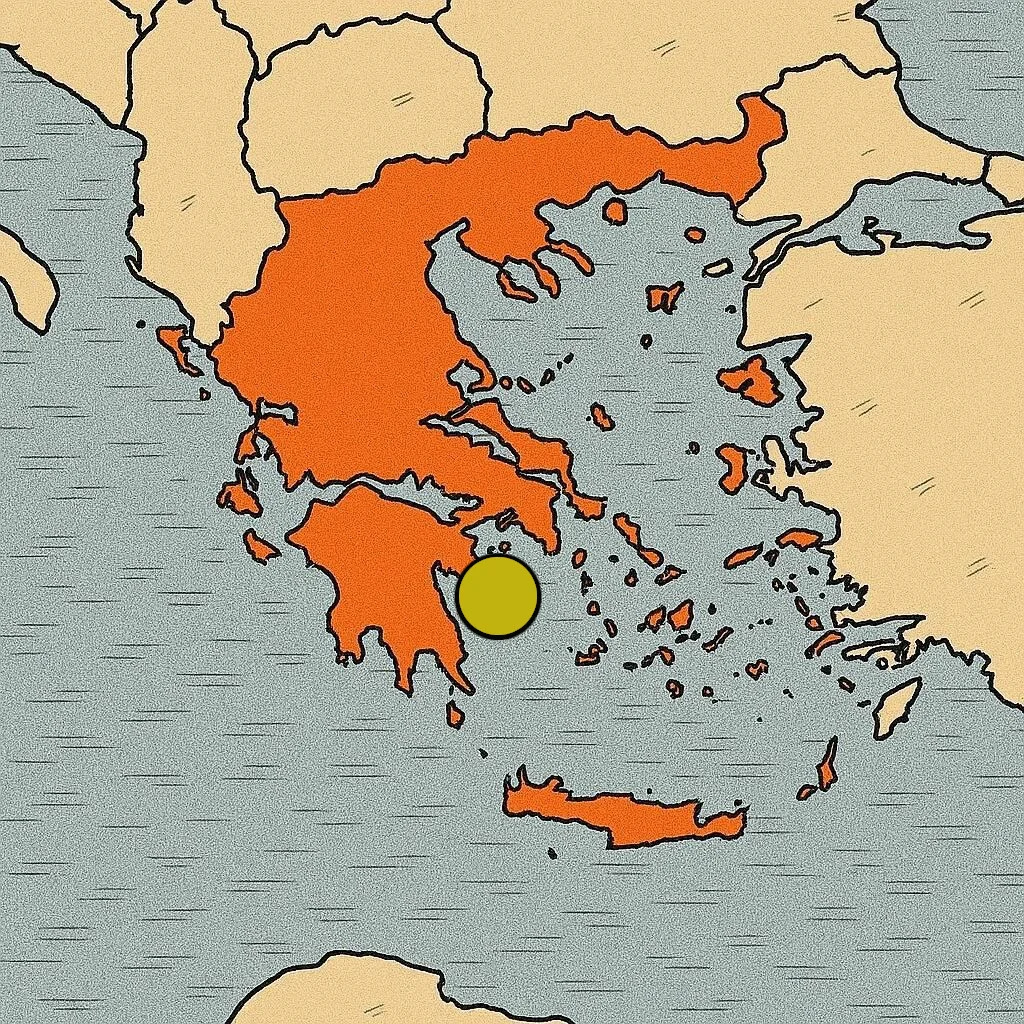
That place exists. It is called Hydra, an island in the Saronic Gulf, very close to the coast of the Peloponnese. Its main town spreads around the port like an amphitheater of stone houses climbing up the slopes.[1]
A city without cars
In Hydra, motor vehicles are banned in daily life. Getting around is done mainly on foot, while donkeys and mules are still used to transport loads.[1][2]
The streets are narrow and many consist of staircases. They were not designed for cars, because for centuries people had to adapt to a rocky and mountainous terrain. Therefore, walking through Hydra is not just a way to move around. It is part of the island’s architecture.
The port is the heart
The town of Hydra is organized around its port. The houses rise on the slopes surrounding it, creating a sort of huge stone amphitheater.[1]
Many of the traditional homes look like small fortresses. Their stone walls, roofs, and balconies form a landscape very different from modern cities.[1]
When you arrive by sea, the sight is particularly striking. First, the port appears. Then, the houses. Further up, the rocky slopes. And among them, a network of paths and stairs where people have been moving around for centuries.
An island of sailors
Hydra was not always known mainly for its artists and visitors. During the 18th century, the island prospered thanks to its merchant fleet. Its families of merchants and shipowners accumulated wealth and built large stone houses around the port.[1]
The sea was their great highway. Ships allowed them to transport goods and connect Hydra with other places in the Mediterranean. That maritime tradition would also be important during the Greek Revolution of 1821, when the island’s families contributed ships and resources to the fight for Greece’s independence.[1]
This helps us better understand the city we see today: Hydra grew facing the sea.
And where are the roads?
Here is one of the most curious things. On many islands, the growth of tourism has led to the construction of roads, parking lots, and new zones for vehicles. In Hydra, the urban landscape has taken another path.
The historic center preserves its traditional structure and the streets continue to be mainly pedestrian.[1] Pack animals are used to transport heavy objects. To reach places along the coast, you can walk or use boats.[2][3] Even some beaches are only accessible on foot, with pack animals, or by sea.[3]
The island seems to have decided that the automobile is not essential to live in a city.
A mountain hidden behind the port
Hydra is not completely flat either. The interior of the island is mountainous and rocky. Its highest peak is Mount Eros, which reaches about 592 meters.[4]
There are numerous hiking trails that cross the landscape. Some go through rocky areas and others pass among pine trees, olive trees, bushes, and Mediterranean plants.[2] Donkeys and mules may also appear along the paths, alongside goats, cats, and numerous bird species.[2]
So Hydra has two very different faces: a town built around the port and a natural interior to be discovered on foot.
The island of artists
During the 20th century, Hydra began to attract artists, writers, and musicians from Greece and other countries. Its architecture, landscape, and lack of traffic helped create an atmosphere that still attracts creators.[1] The island has been linked to figures like Pablo Picasso and Maria Callas.[1] Today there are museums, exhibitions, and spaces dedicated to art. Some old houses have been turned into cultural venues, while Hydra’s former slaughterhouse houses a contemporary art space.[5]
It is curious: an island that for centuries lived mainly from the sea ended up becoming a place of artistic inspiration as well.
The impossible city
Hydra proves that a city doesn’t necessarily have to look like the others. Here, the automobile does not organize the streets. The port acts as a gateway. Stairs replace many roads. Pack animals still fulfill a practical function, and the sea continues to be a communication route.[1][2]
That is why Hydra fits perfectly into the Impossible City category. Because it has decided to follow another path, because it has chosen to stay old-fashioned; it is impossible because, in a world accustomed to cars, roads, and parking lots, it is surprising to find an inhabited city that works in a different way.
And perhaps the most interesting question Hydra leaves us with is this: How do cities whose streets were originally designed for people change when they introduce vehicles?
Sources:
- Maritime history, architecture, absence of vehicles, and urban life of Hydra — https://www.visitgreece.gr/en/islands/saronic/hydra
- Trails, landscape, traditional transport, and nature of Hydra — https://www.visitgreece.gr/en/experiences/nature/mountains/hiking-on-hydra
- Beach access and traditional ways of getting around in Hydra — https://www.visitgreece.gr/en/experiences/culture/local-traditions/beaches-of-hydra
- Geography, dimensions, historical population, and Mount Eros — https://www.hydra.gr/mobile/gr_climate.html
- Contemporary art and cultural venues in Hydra — https://www.visitgreece.gr/en/experiences/culture/cultural-venues/art-spaces-in-hydra